


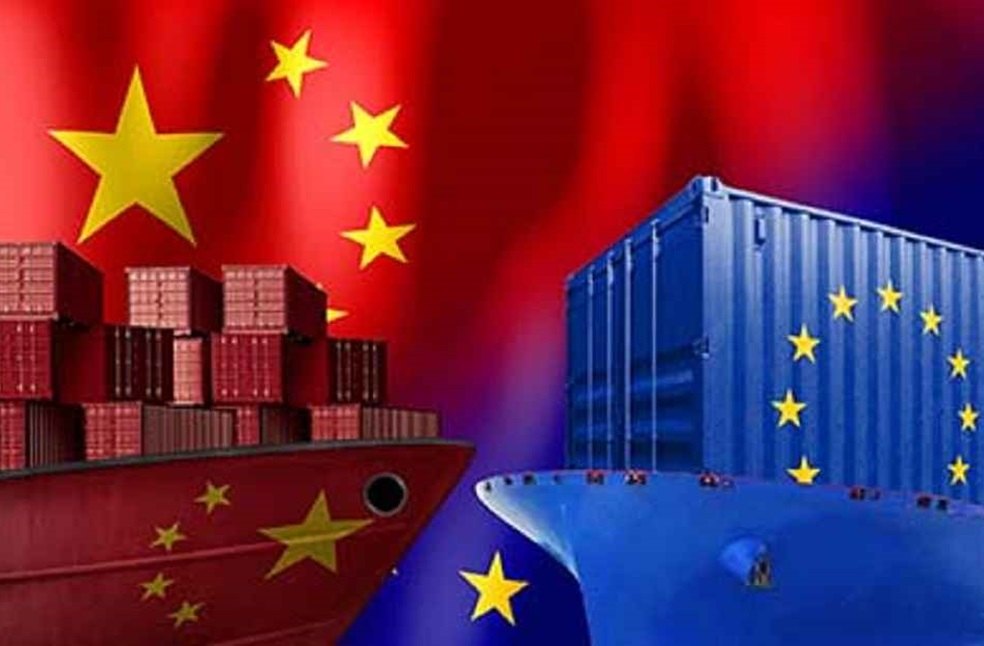
EU leaders have reached an agreement that the bloc must strengthen its trade defenses in response to a surge of Chinese exports, which Brussels has described as posing an existential threat to European industry. The officials also emphasized the importance of maintaining ‘constructive dialogue’ with Beijing.
There is an increasing consensus within the European Union that it is overly reliant on China, with officials warning that this dependence could leave the bloc exposed to economic coercion and supply chain disruptions.
The EU’s trade deficit in goods reached approximately 360 billion euros ($413 billion) last year, reflecting a significant imbalance in which Chinese exports far exceeded imports from the EU.
An EU official stated that leaders instructed the European Commission to continue engaging in constructive dialogue with main economic partners, though China was not explicitly mentioned. They also directed the executive to strengthen and expand the bloc’s trade defense instruments to ensure the EU has the necessary tools to safeguard its interests and reduce risks.
Spanish Prime Minister Pedro Sánchez emphasized the importance of balanced relations. He stated that Europe must remain pragmatic, ‘build bridges’ with major economies, and engage with potential partners such as China. One option under consideration to enhance the EU’s trade is the introduction of new instruments enabling sector-specific tariffs, including in areas such as chemicals and green technologies, drawing inspiration from measures associated with U.S. President Donald Trump. French President Emmanuel Macron has previously advocated for a European equivalent of Section 301, the U.S. trade mechanism used to impose broad tariffs, arguing that Europe’s ‘sovereignty is at stake.’
Germany maintains a cautious stance due to its high exposure to potential retaliatory measures, while Spain has sought to avoid escalating tensions as it continues to attract Chinese investment. Meanwhile, Irish Prime Minister Micheál Martin said ahead of the meeting that he wanted to understand “the shape and nature of any mechanisms” being proposed, while warning that Europe must fully consider the consequences of such measures.
Concerns over China’s economic dominance extend beyond the EU, with growing Western unease about Beijing’s control of rare earth minerals. The issue was also discussed at the G7 talks in France this week.
Brussels has repeatedly stressed the need for fair competition, pointing to the advantage Chinese firms enjoy through extensive state subsidies. Between 2005 and 2024, Chinese companies received three to eight times more government support than those in OECD countries, according to the OECD.
Despite a firmer stance, the EU has avoided escalating into a broader trade war. After imposing higher tariffs on Chinese electric vehicles in 2024, Beijing retaliated with anti‑dumping duties on European cognac and warned of further measures if new EU rules exclude certain foreign products from public contracts.
European Trade Commissioner Maroš Šefčovič has invited Chinese Commerce Minister Wang Wentao to Brussels later this month as the EU continues to seek dialogue to avoid escalation, although the visit has not been officially confirmed.
TRADE WORLD | India-UK Free Trade Agreement to Take Effect in July