


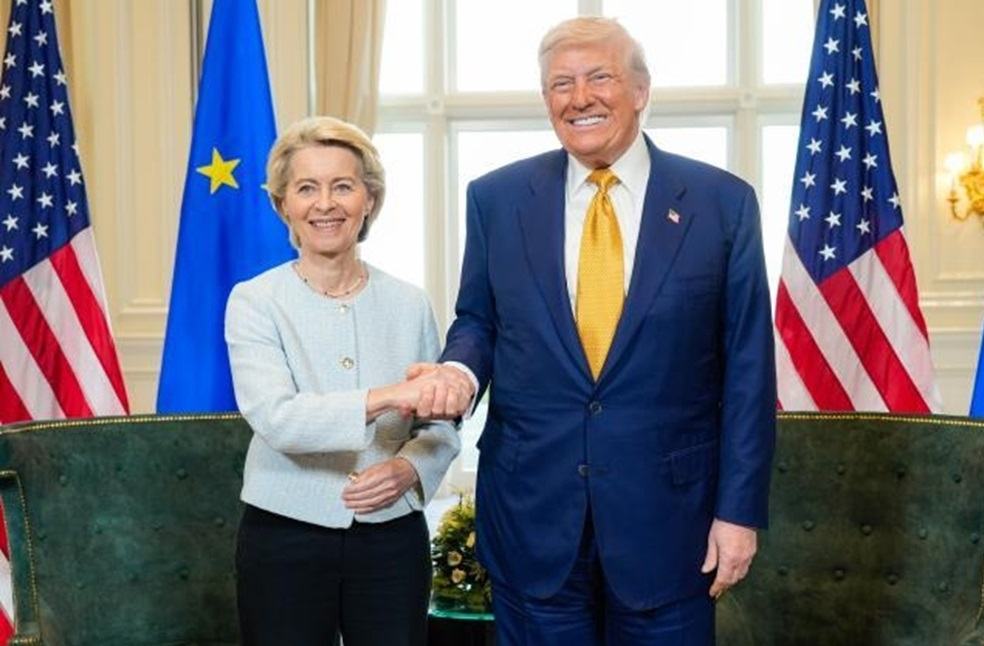
The U.S. is urging the EU to make a public commitment to a specific plan for easing import regulations and trade rules that Washington has opposed, a year after both sides reached a tariff-reduction agreement under President Donald Trump’s administration.
Brussels and Washington finalized a wide-ranging trade deal last August, with the EU agreeing to reduce duties on industrial products and certain agricultural goods, while the U.S. lowered tariffs on several EU imports, including automobiles, to 15%.
Both parties also pledged to cooperate in reducing or eliminating additional non‑tariff barriers.
According to Financial Times, citing sources familiar with the negotiations, the U.S. recently submitted a proposal to European officials outlining public commitments it would like Brussels to announce ahead of the agreement’s one-year anniversary.

Washington has repeatedly raised concerns over EU regulations, particularly those related to vehicle safety, food standards, and agricultural products. However, EU officials have shown limited support for issuing such commitments. A senior European Commission official stated that discussions with the U.S. on trade relations remain ongoing but noted that the Commission does not currently expect to sign a formal document containing future commitments.
The European Commission confirmed to the European Parliament this week that it had submitted a new proposal to the U.S. outlining potential tariff reductions on EU exports, including products such as wine, spirits, certain cheeses, and machinery. According to officials, the proposal covers approximately €115 billion in annual EU exports to the U.S.
The move highlights Washington’s continued efforts to seek trade concessions from its partners, despite recent pressure on the administration to reduce tariff levels following legal challenges and concerns over rising consumer costs ahead of the midterm elections.

While both sides have implemented the agreed tariff reductions, the U.S. has continued to criticize the EU for the slow pace of changes to regulations and standards affecting American goods.
The U.S.-EU trade framework announced last year included commitments to improve market access, including mutual recognition of vehicle standards. Washington has criticized EU regulations as barriers to American exports, citing the bloc’s €198bn goods trade surplus, while the EU highlights the U.S.’s €178bn services surplus.
The European Commission said it remains committed to implementing the agreed measures, including the removal of tariffs on U.S. industrial goods.
POLICY & LAW | U.S. to Impose 25% Tariffs on Most Brazilian Imports

