


Russia has commenced commercial oil exports from the Vostok Oil project in the Arctic following years of delays. The development marks one of Moscow’s largest efforts to expand oil production since the collapse of the Soviet Union, The Moscow Times reported. Russian energy giant Rosneft began loading ice-class tankers at the Bukhta Sever terminal on the Taimyr Peninsula in September.
The Vostok Oil project encompasses more than 13 oil fields across Taimyr and Eastern Siberia. Rosneft estimates that the project holds approximately 51 billion barrels of reserves, while its potential production capacity was previously projected at up to 2 million barrels per day.
However, production and export volumes are expected to remain considerably lower during the initial phase. According to the report, citing industry sources, the shipments could reach around 150,000 barrels per day in 2026, equivalent to approximately 500,000–700,000 tons per month.
Rosneft plans to raise exports to about 600,000 barrels per day, or roughly 30 million tons annually, in the second half of 2027. By 2030, the company expects production to reach approximately 1 million barrels per day.
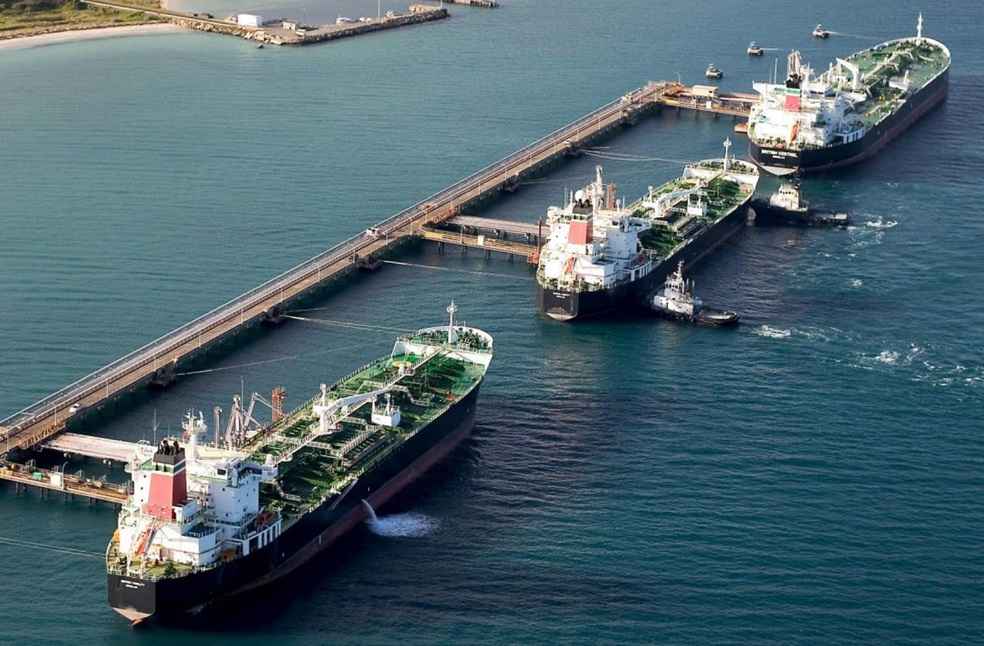
The ice-class tankers Akademik Gubkin and Valentin Pikul were the first vessels to take on oil at the terminal, while two other tankers, Vladimir Monomakh and Vladimir Vinogradov, were waiting to be loaded.
Rosneft launched Vostok Oil in 2019 as one of its flagship projects. Foreign companies were initially expected to take part, but their involvement ended after Russia launched its full-scale invasion of Ukraine and Western sanctions were imposed. BP, Trafigura and Vitol were among the companies previously linked to the project. After their withdrawal, Rosneft was left to develop the project largely using its own resources.

A key feature of the project is its ability to supply oil to Asian markets through the Northern Sea Route. Located in the Russian Arctic, the Bukhta Sever terminal relies on ice-class vessels to transport crude along the route.
The launch of Vostok Oil comes as Russia’s oil industry faces production challenges and declining output. Moscow expects the large-scale project to help sustain production levels while boosting oil exports, particularly to Asian markets.
Russian oil production has also been affected by Ukrainian drone strikes. In August, Ukraine targeted vessels and infrastructure at Russia’s southern ports, including Novorossiysk, a major hub for Russian oil exports through the Black Sea.
TRADE TECH | U.S. Proposes AI Safety Mechanism in Talks with China