



India’s textile industry expanded to nearly $190 billion in FY26 and is targeting $350 billion by 2030, supported by strong domestic demand, manufacturing investments and growing export opportunities, according to a report by Rubix Data Sciences.
The report said the sector remains one of the country’s largest sources of employment, while the government is evaluating a Rs 400 billion Textile Expansion and Employment (TEEM) Scheme to upgrade machinery, introduce advanced technologies and modernize traditional textile clusters.
The industry’s growth coincides with a recovery in overseas shipments. Textile exports, including handicrafts, rose 10.3% year-on-year between April and August 2026. The rebound follows a 2.7% decline in exports to $35.8 billion in FY26, even as imports increased 17.1% to $9.6 billion during the period.
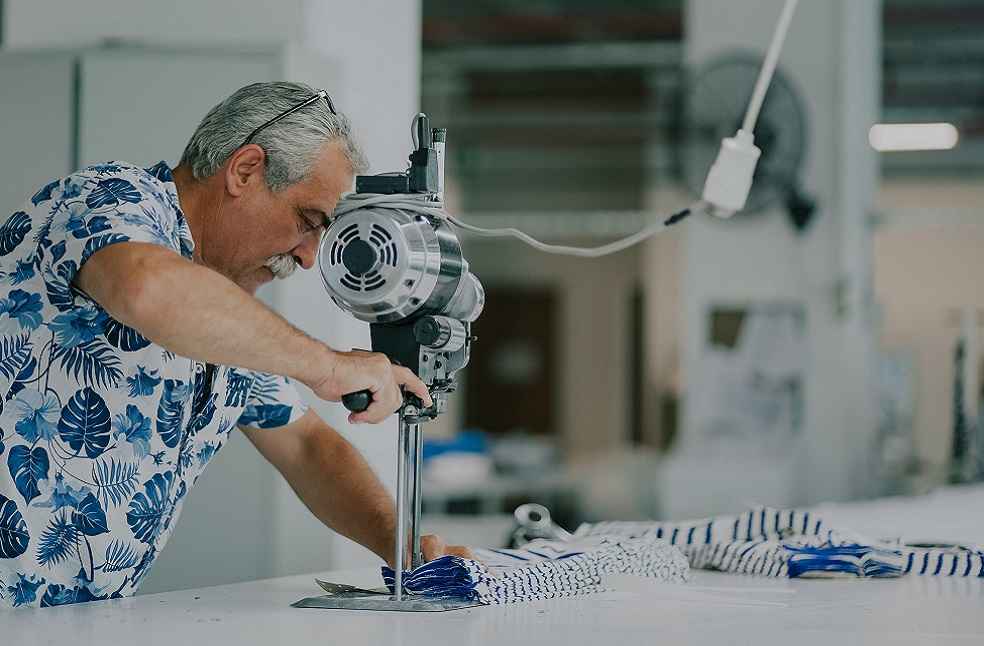
Despite the disparity in exports and imports, India remained a net textile exporter, with export earnings totaling nearly 3.7 times the value of imports. Readymade garments continued to dominate outbound shipments, accounting for 44% of total exports, while man-made fiber textiles contributed 15%.
Tushar Bhaskar, President of Rubix Data Sciences, said the industry continues to balance domestic growth with external challenges. He noted that India’s textile sector has demonstrated resilience, with exports rising 10.3% between April and August 2026 following a 2.7% decline in dollar terms in FY26. However, he cautioned that uncertainties in the U.S. market, a roughly 60% increase in cotton yarn prices, and ongoing freight disruptions have added industry pressures. These challenges underscore the need to diversify export markets and strengthen cost competitiveness.
According to the report, the United States remained India’s largest textile export market in FY2026, accounting for 31% of shipments, followed by the European Union at nearly 16%. However, trade conditions changed after the U.S. imposed an additional 10% duty under Section 301 measures in July 2026 related to forced-labor enforcement, while broader trade negotiations remained stalled.
In response, Indian manufacturers accelerated efforts to diversify export markets. Shipments to the U.S. declined by approximately 7% in FY2026, while exports to major European markets increased by 9%. Raymond Lifestyle plans to reduce the U.S. share of its exports from 65% to between 55% and 60% over the next two years. Kitex Garments also aims to lower its dependence on the U.S. market from nearly 100% to between 30% and 35% over the next two to three years.

Input cost pressures also weighed on the domestic textile value chain. Cotton yarn prices increased by around 60% to Rs 400 per kilogram in September 2026, compared with Rs 250 per kilogram at the beginning of the year. The rise coincided with a decline in domestic cotton output, which fell to 290.91 lakh bales in the 2025-26 season from 352.48 lakh bales in 2020-21. To support the industry, the government extended an exemption on the 11% import duty on cotton through October 31, 2026.
Investment activity across textile infrastructure projects also strengthened the sector’s growth trajectory. Proposed investments under the seven approved PM Mega Integrated Textile Region and Apparel (PM MITRA) Parks reached Rs 685.9 billion by August 2026, supported by significant expansion plans from major manufacturers, including Grasim Industries and Vardhman Textiles.
TRADE WORLD | India and U.S. Near Conclusion of Trade Agreement Negotiations