


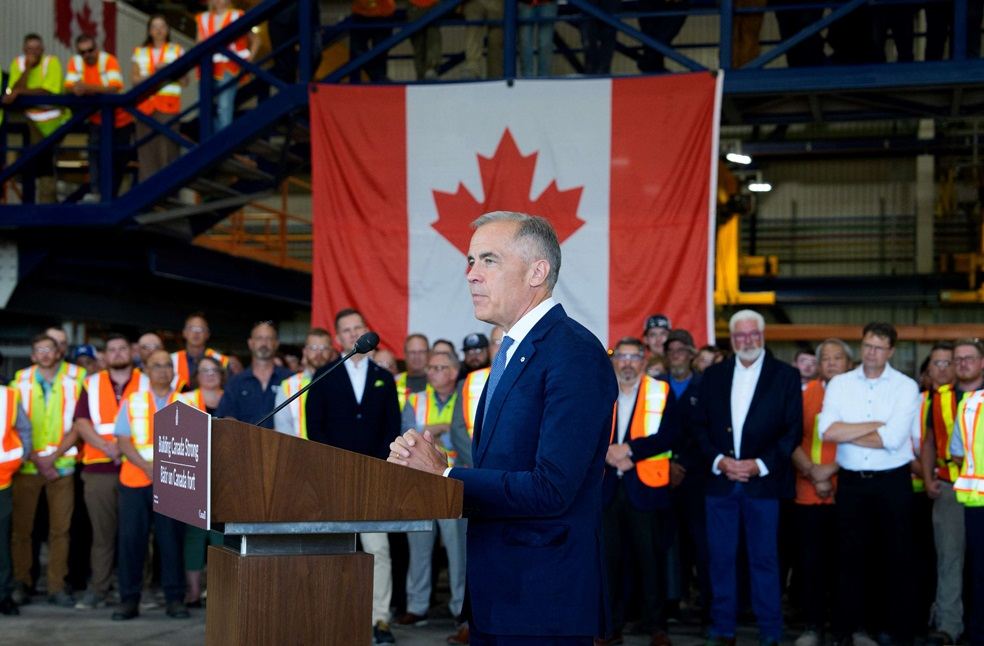
The Canadian government is seeking to reach an agreement with the Trump administration to avert a new round of U.S. tariffs on a broad range of Canadian exports, which are scheduled to take effect on Wednesday. Despite several weeks of negotiations, the prospects of reaching an agreement remained uncertain as of Monday.
Prime Minister Mark Carney described the discussions as ‘very delicate and intense’ and indicated his intention to speak directly with President Trump before the deadline.
If enacted, the new tariffs would affect approximately $20 billion worth of Canadian goods exported to the United States, covering items such as hockey sticks, certain apparel, wine, selected dairy products, and building materials such as cement and plywood. However, energy products, potash, fish, and critical minerals would be exempt from the tariffs.

According to U.S. Census Bureau data, Canada was the third-largest source of U.S. imports in 2025, with goods valued at more than $380 billion entering the country during the year.
The White House has stated that the tariffs are a response to what it describes as Canada’s “discriminatory treatment of American products,” emphasizing that the measures are intended to “level the playing field for crucial American exports: cars, alcohol, and dairy.”
The administration plans to impose the duties under Section 338 of the Tariff Act of 1930, a 96‑year‑old statute that authorizes the president to levy tariffs of up to 50% against any foreign country deemed to be discriminating against U.S. commerce.

Carney, in a statement, characterized the proposed tariffs as “the latest in a series of unilateral U.S. trade actions” that constitute a ‘direct violation’ of the U.S.–Mexico–Canada Agreement, signed during President Trump’s first term.
With Wednesday’s deadline approaching, senior Canadian officials have convened in Washington in an effort to reach an accord with their U.S. counterparts. The urgency of the discussions was underscored by Dominic LeBlanc, Canada’s minister responsible for U.S.-Canada trade relations, who had been in Washington for nearly a week and met with U.S. Trade Representative Jamieson Greer on Sunday.
TRADE WORLD | South Korea, U.S. Seek to Finalize $200B Investment Plan