


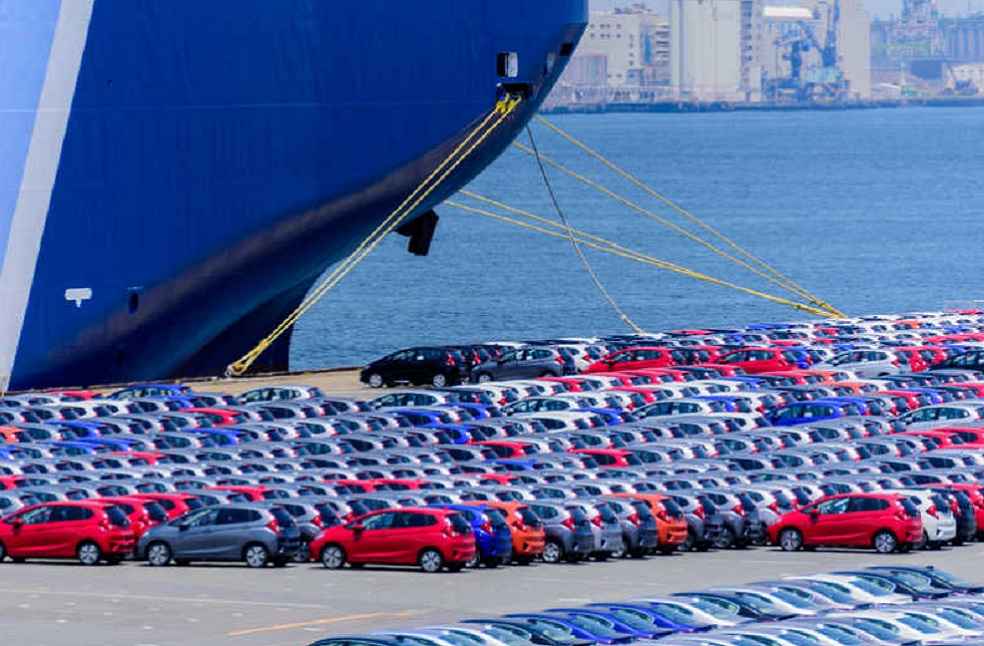
The European Union will introduce previously proposed import quotas next month for Chinese hybrid vehicles entering the bloc without tariffs.
The restrictions will also cover hybrid vehicles imported from Japan, Turkey, South Korea and the UK. However, the primary objective is to curb imports from China, following an October agreement with Beijing that has contributed to an increase in vehicle exports to the EU.
Under World Trade Organization (WTO) rules, the temporary quota system will remain in place for 200 days from December 1 while the EU conducts an investigation into imports of plug-in hybrid and battery-powered hybrid vehicles. The measure forms part of the bloc’s broader efforts to reduce its substantial trade deficit with China.

The measure would cap tariff-free imports of Chinese vehicles at 350,000 units in the first year, equivalent to roughly 191,000 vehicles over a 200-day period. Initial annual quotas would be set at 310,000 units for Japan, 230,000 for Turkey, 105,000 for South Korea, and 190,000 for the UK, which exported 166,000 hybrid vehicles to the EU last year. The Chinese quota represents approximately half of the hybrid vehicle imports from China expected by the EU over the next 12 months.
According to the figures, imports of Chinese electric vehicles into the EU increased sharply from 21,000 units in 2020 to 438,000 in 2024, when tariffs were imposed. Following the introduction of these tariffs, EV imports began to stabilize, while Chinese exports increasingly shifted towards hybrid vehicles. The EU reported that China’s global hybrid exports rose significantly from 191,000 units in 2023 to 1.124 million in 2025. To prevent a substantial increase in hybrid imports into the bloc, the EU is now introducing import quotas.
The volume restrictions are classified as ‘safeguard’ measures and apply to all major exporters of hybrid vehicles to the EU. Besides China, the import caps will also cover Mexico, Morocco, Serbia and the U.S., although the restrictions are most stringent for Chinese imports.

Several non-EU countries, including the UK, have reportedly raised concerns about the quota allocations. At a recent WTO Goods Council meeting last week, South Korea questioned whether the EU’s investigation had been conducted in a fair and transparent manner, while Japan, the UK, Switzerland and Turkey emphasized the importance of transparency and due process.
China’s Ministry of Commerce said it expects the EU to honor the consensus reached between the two sides and reiterated that it reserves the right to protect the legitimate interests of Chinese industries.
The European Commission argued that Chinese imports were affecting not only EU manufacturers but also reducing the market shares of other exporters, including Japan and South Korea. Meanwhile, the UK continues to challenge a 10% tariff on all electric vehicle exports to China, which is scheduled to take effect on January 1 under the 2020 Brexit Trade and Cooperation Agreement.
TRADE WORLD | Türkiye and Russia Explore New Trade and Cooperation Deals