


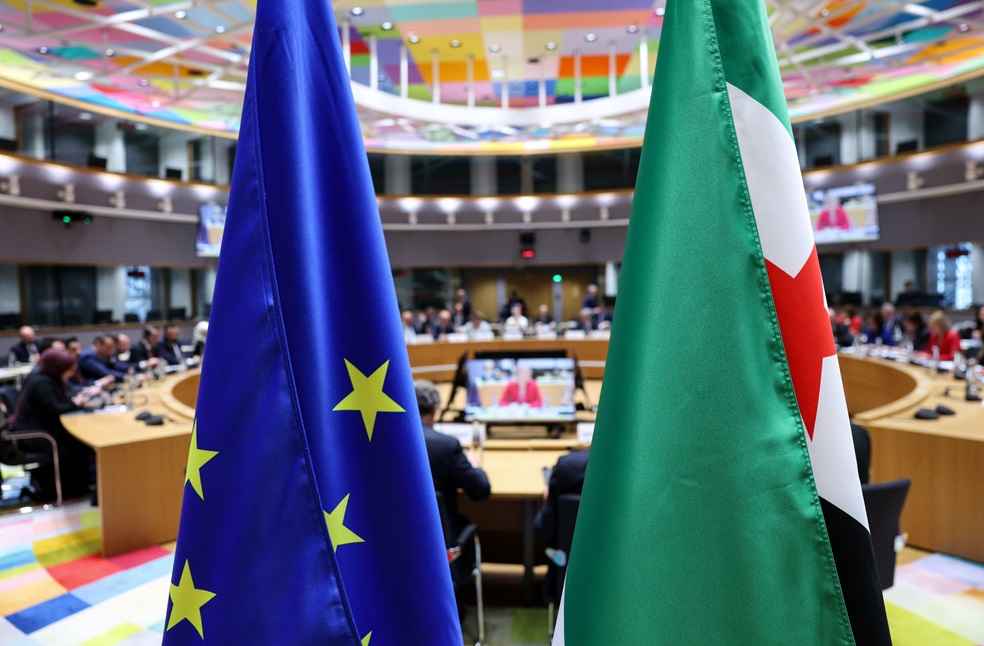
The EU Council on Monday restored the full application of the 1977 EU-Syria Cooperation Agreement, signaling a strategic move from short-term crisis management toward a long-term economic partnership. The Council’s decision lifts the partial suspension of the accord between the European Economic Community and Syria, effectively overturning the 2011 measure that had restricted parts of the deal in response to the Assad regime’s human rights abuses.
“The decision sends a clear political signal of the EU’s commitment to re-engage with Syria and support its economic recovery,” the council said in a statement.
The suspension measures, first imposed in 2011 and broadened in 2012, focused on trade-related provisions tied to Syrian exports such as oil, petroleum products, gold, precious metals, and diamonds.
According to the EU Council, the circumstances that originally justified the suspension ‘no longer exist’ following the fall of the Assad government in December 2024 and the EU’s earlier decision this year to remove economic sanctions on Syria, apart from those retained for security-related reasons.
The restored provisions will come into force next month after the European Commission formally notifies the Syrian authorities.
After meeting interim Syrian President Ahmed al-Sharaa in Damascus in January, European Commission President Ursula von der Leyen pledged that Europe would ‘do everything it can’ to assist Syria in its recovery efforts. The Council affirmed that the restoration of the agreement forms part of the EU’s broader strategy to support a peaceful and inclusive political transition in Syria while aiding the country’s socio-economic reconstruction.

The agreement, originally signed in 1977, serves as the foundation for trade and economic relations between the EU and Syria. The Council also reaffirmed the bloc’s commitment to promoting human rights, inclusive governance, and Syria’s reintegration into the global economic system.
Trade between Syria and the EU reached its peak in 2010 at more than 7 billion euros. However, by 2023, EU imports from Syria had fallen sharply to 103 million euros (around $120 million), while European exports to Syria totaled 265 million euros (approximately $310 million).
TRADE WORLD | Indonesia, Philippines Sign MoU to Boost Nickel Sector Cooperation