


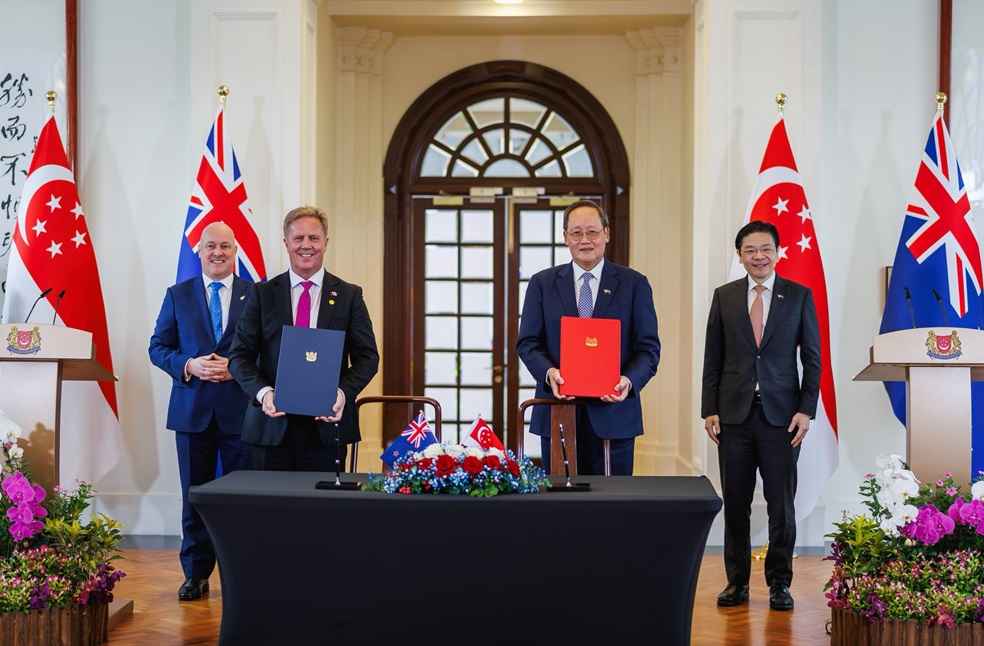
Singapore and New Zealand signed an Agreement on Trade in Essential Supplies (AOTES) on Monday amid energy and supply disruptions caused by the ongoing conflict in the Middle East.
According to reports, the accord represents the world’s first legally binding bilateral framework aimed at ensuring the continued flow of critical goods—including food, fuel, medical products, and key industrial materials such as chemicals and construction supplies—during periods of crisis.
The Agreement was signed during New Zealand Prime Minister Christopher Luxon’s visit to Singapore, where he met his counterpart, Lawrence Wong. It was formally concluded at the Singapore–New Zealand Annual Leaders’ Meeting by Singapore’s Minister-in-charge of Energy, Science and Technology, Tan See Leng, and New Zealand’s Minister for Trade and Investment, Todd McClay.
“This is the first agreement of its kind for both our countries—and also globally. It marks another breakthrough, and it sends a very clear signal: Even under strain, trusted partners will keep faith with one another,” said Lawrence Wong.
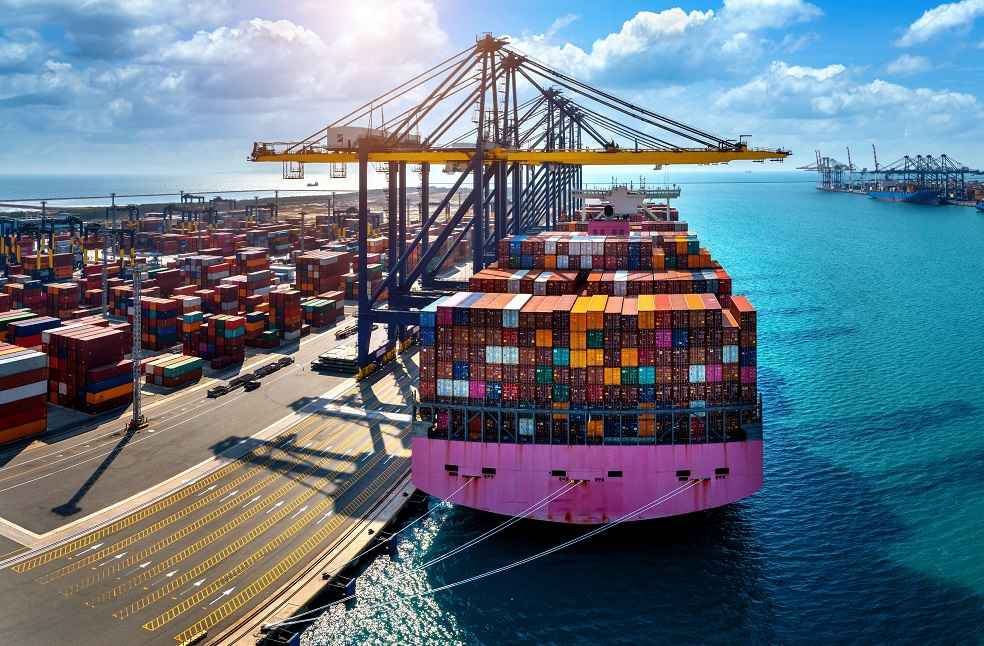
The framework ensures that neither Singapore nor New Zealand will impose export restrictions on each other for the agreed essential goods. It also strengthens cooperation on supply chain resilience and safeguards the movement of critical supplies such as food and fuel.
According to Singapore’s Ministry of Trade and Industry (MTI), both governments have pledged to avoid unnecessary restrictions on these items. The agreement will come into force once domestic ratification processes are completed in both countries and will be integrated into the existing bilateral free trade agreement.
It further establishes mechanisms to facilitate trade flows, enhance information sharing, and enable consultations before or during supply chain disruptions, thereby improving certainty and stability for businesses and consumers.
New Zealand sources roughly one-third of its fuel requirements from Singapore refineries, including diesel, which plays a key role in freight transport, agriculture, and food production. In return, New Zealand supplies about 14% of Singapore’s food imports, according to New Zealand’s Ministry of Foreign Affairs and Trade.
Dairy products are New Zealand’s largest export to Singapore, accounting for around 31.6% of total exports, followed by fruits and nuts; fats and oils; as well as meat and edible offal.
Christopher Luxon remarked that the latest step to shield one another from supply shocks and disruptions highlights the strong mutual support between the two countries.
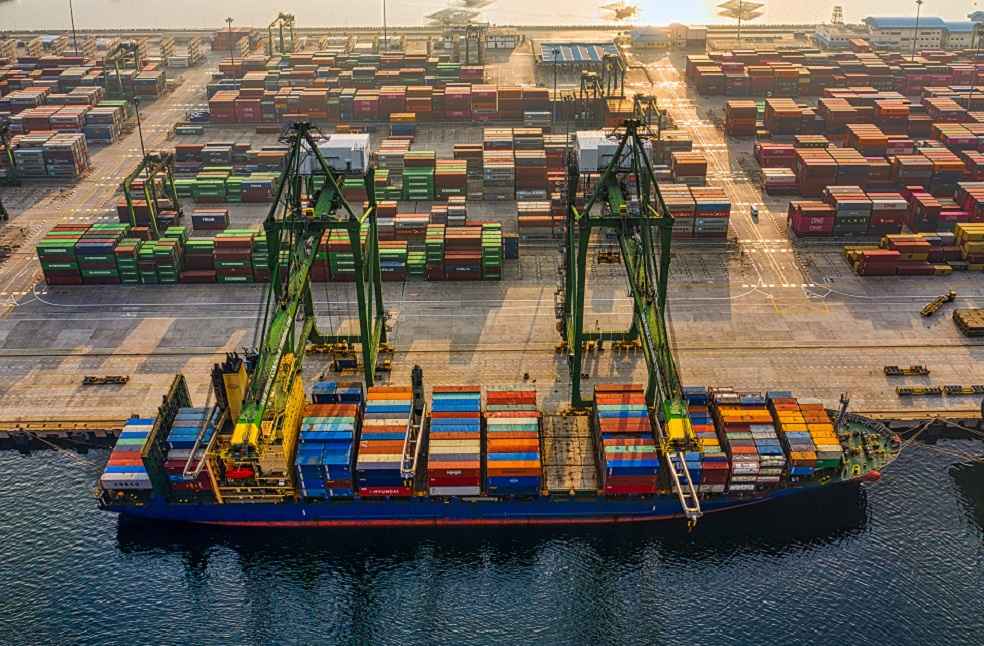
“It takes a longstanding trust and turns it into, really, a commitment to keep essential trade flowing in a crisis and a commitment to give businesses, governments, and the public confidence that trusted supply lines will remain open under huge pressure,” he added.
The agreement builds on the Comprehensive Strategic Partnership (CSP) signed in October 2025, which serves as a framework for deeper cooperation between the two countries across areas such as trade, security, innovation, and supply chain resilience.
Two additional initiatives under CSP have advanced between Singapore and New Zealand. The health ministries have signed a memorandum of understanding covering primary care, pandemic preparedness, and the resilience of healthcare supply chains, including medicines and medical devices. Separately, a trade agreement between the two countries’ ministries aims to streamline certification processes for agri-food products, strengthening food trade.
Both sides will also advance defense collaboration through mutual access to training facilities and are exploring cooperation in emerging areas such as unmanned technologies.
The leaders indicated that they would welcome the participation of additional countries in the framework in the future, with the aim of further strengthening resilient supply chains.
AUTOMOTIVE WORLD | U.S. to Raise Tariffs on Cars and Trucks from EU to 25%