



A Turkish defense technology firm has secured export agreements with five countries for its domestically developed unmanned nano helicopter, marking a notable step for Türkiye’s growing presence in high-technology defense exports.
The nano unmanned helicopter, named Nanoalp, has been developed by Uludogan Defense Industry Technology at Teknopark Istanbul. The project was supported by the Scientific and Technological Research Council of Türkiye (TÜBİTAK) through its Industrial R&D Projects Support Program and backed by investment from Teknopark Istanbul’s High Technology Fund.
Company Chairman Seyfeddin Cevdet Uludogan confirmed that the first export shipment has already been delivered to the United Arab Emirates. In addition, agreements have been signed with four other countries, and production activities are currently underway.
He noted that demand has increased following the successful completion of the research and development phase, with further interest coming from South Korea, Malaysia, Indonesia, and several countries in the Middle East.

Nanoalp is currently produced with a domestic content rate of around 60%, with plans to increase localization to 96% within one year. Uludogan said the system offers up to a 50% cost advantage compared to foreign equivalents while delivering comparable operational performance.
He added that similar foreign systems, often described as ‘bee drones,’ are not only expensive but are also frequently subject to export controls and embargo restrictions.
The platform falls within the nano unmanned aerial vehicle category, defined by systems weighing under 200 grams and measuring less than 25 centimeters. Such platforms are primarily used for reconnaissance, intelligence gathering, and search-and-rescue operations.
According to Uludogan, Nanoalp differentiates itself through fully autonomous flight capability, low acoustic signature, sensor fusion technology, high payload capacity, and a high degree of domestic production.
Designed to operate in challenging conditions, Nanoalp can function in GPS-denied or electronically jammed environments and is capable of executing pre-programmed missions independently.
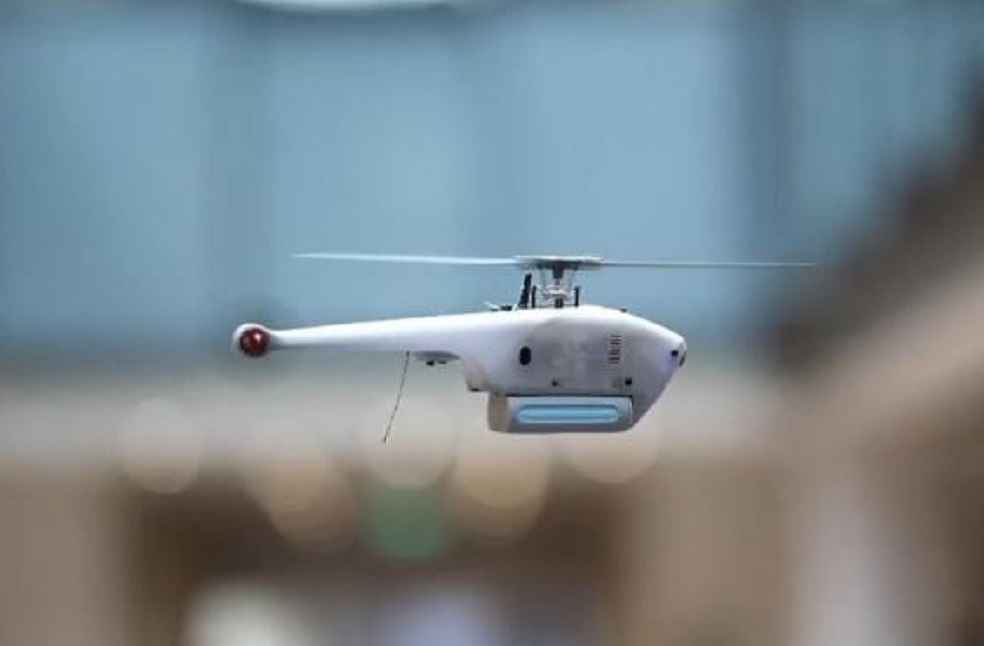
Weighing approximately 100 grams, the system can carry payloads of up to 350 grams, allowing it to operate effectively in confined spaces such as buildings, caves, and forested areas.
Uludogan said the nano helicopter can remain airborne up to twice as long as conventional drones and is significantly quieter, making detection difficult even at close range. He also noted that the same platform can be configured for both reconnaissance and intelligence missions, as well as kamikaze-style operations.
The domestic market for nano-class unmanned helicopters used in military reconnaissance, intelligence, and search-and-rescue missions in Türkiye is estimated at between $100 million and $150 million annually.
Uludogan said the development of Nanoalp reduces foreign dependency in critical defense technologies while keeping high-value-added production within the country.
“Our priority is to meet domestic needs first, and then expand into global markets with high-technology products,” he said, emphasizing the company’s long-term export-driven growth strategy.
METAL WORLD | China to Implement Export Licensing System for Steel Products
