


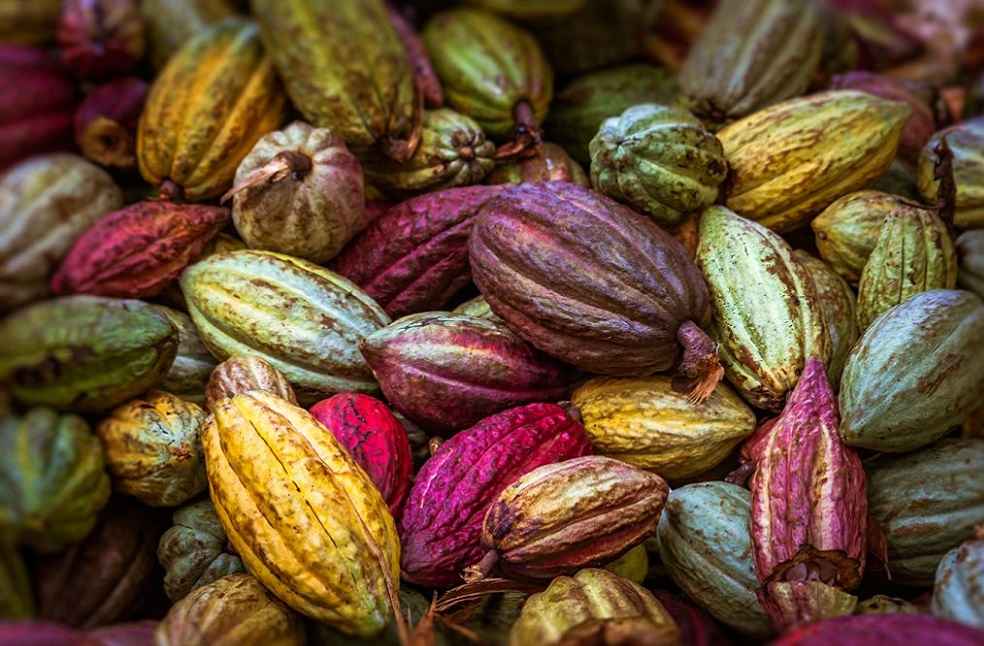
Nigeria earned N3.63 trillion from cocoa exports over a one-year period despite volatility and a recent slump in global prices, according to data released by the National Bureau of Statistics.
The earnings were recorded between June 2024 and June 2025, driven by sustained demand from key European markets, including the Netherlands, Belgium, Spain, and Germany. The data shows strong export momentum across multiple quarters, underscoring cocoa’s growing role in Nigeria’s non-oil trade.
In the first quarter of 2025, Nigeria exported raw cocoa beans worth N1.32 trillion, followed by N485.5 billion in the second quarter. In 2024, exports stood at N624.71 billion in the third quarter and rose sharply to N1.2 trillion in the fourth quarter.
According to the NBS trade report, cocoa export earnings in the first quarter of 2025 were more than 200% higher than the N421.78 billion recorded in the same period of 2024 and significantly above the 2023 level of N108.62 billion.
The bureau noted that superior-quality cocoa was one of Nigeria’s leading agricultural exports in the second quarter of 2025, valued at N277 billion, while standard-quality cocoa beans contributed an additional N208.5 billion.

The International Cocoa Organization reported that cocoa prices rebounded by about 12% from recent lows, reflecting a short-term recovery in global markets. Concerns remain over Nigeria’s production outlook. Exporters and farmers have warned that the country may struggle to meet its annual target of 500,000 tons.
ICCO has projected Nigeria’s cocoa output at 305,000 tons, while global cocoa grindings for the 2024/25 season are estimated at 4.60 million tons. The organization cited high input costs as a major constraint on processing margins, contributing to a year-on-year decline in grindings.
The Netherlands continues to play a central role in Nigeria’s cocoa trade, accounting for about 39.7% of total cocoa bean exports at an average price of $6,141 per ton.
The country has imposed zero import duty tariffs on raw cocoa beans from Nigeria, with expectations of importing around 112,000 tons valued at approximately N900 billion, or $687 million. Preferential tariff rates also apply to processed cocoa products, subject to compliance with customs and regulatory requirements.
In 2024, the Netherlands imported $809 million worth of cocoa beans from Nigeria. In the first quarter of 2025 alone, shipments to the country were valued at N344.17 billion, according to NBS data.

Industry forecasts point to mixed prospects. Statista’s 2025 outlook identified the Netherlands and Côte d’Ivoire as the world’s two largest cocoa processors, while ICCO projected global cocoa production for 2024/25 to rise by 7.8% year on year to 4.84 million tons.
Rabobank cited Nigeria’s Cocoa Association as projecting an 11% year-on-year decline in Nigeria’s 2025/26 cocoa production to 305,000 tons, down from an estimated 344,000 tons in the 2024/25 crop year. Nigeria’s July cocoa exports were reported to have fallen 22% year on year to 13,579 tons.
Meanwhile, Ghana’s Cocoa Board projected an 8.3% increase in Ghana’s 2025/26 cocoa output to 650,000 tons, up from 600,000 tons in the previous season.
The Nigerian government has reiterated its commitment to expanding the cocoa sector while ensuring full compliance with the European Union Deforestation Regulation.
Speaking at the Nigeria–EU Cocoa Roundtable on EUDR compliance in Abuja, the Senior Special Assistant to the President on Agribusiness and Productivity Enhancement said cocoa remains central to Nigeria’s economic diversification strategy.
He noted that cocoa accounts for about 29% of total agricultural exports and 5.6% of non-oil exports, adding that the government is prioritizing sustainability, value addition, traceability, and deforestation-free supply chains under President Bola Tinubu’s Renewed Hope Agenda.
BANKING & FINANCE | EBRD Makes First Iraq Investment With $100m Trade Facility