


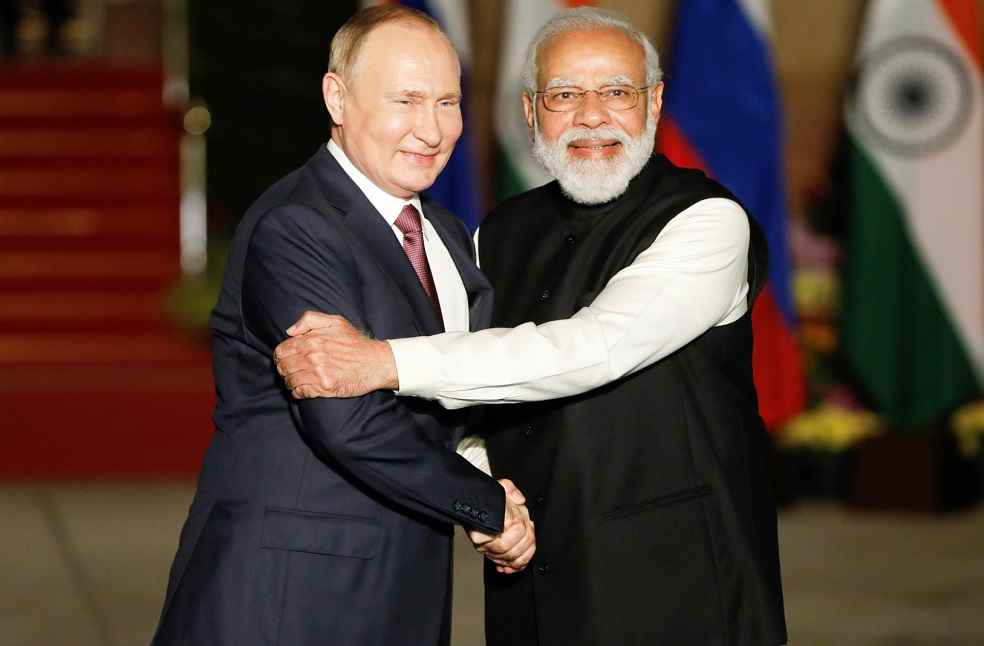
India has identified around 300 products with strong export potential to Russia as the two countries work toward achieving bilateral trade of $100 billion by 2030, a senior official said.
The identified products span key sectors including engineering goods, pharmaceuticals, agriculture, and chemicals. At present, India’s exports of these high-potential goods to Russia stand at about $1.7 billion, while Russia’s total imports in these categories are valued at $37.4 billion. The wide gap highlights significant untapped opportunities for Indian exporters.
“This stark disparity demonstrates the substantial complementary export space India can target,” the official said, adding that expanding exports would also help narrow India’s growing trade deficit with Russia, which stood at $59 billion. The commerce ministry selected these products after analysing India’s supply capabilities against Russia’s import demand across multiple sectors.
The official noted that the most promising areas align closely with India’s established global strengths. Engineering goods, pharmaceuticals, chemicals, and agriculture collectively match large segments of unmet demand in the Russian market.
Despite the expanding trade relationship, India’s share in Russia’s overall import basket remains modest at around 2.3%. Meanwhile, India’s imports from Russia have risen sharply over the past four years, climbing from $5.94 billion in 2020 to $64.24 billion in 2024.
This more than tenfold increase has been driven largely by mineral fuels, particularly crude oil, which surged from $2 billion in 2020 to $57 billion in 2024. Russian oil now accounts for nearly 21% of India’s total oil imports, reinforcing Moscow’s position as a major trading partner. Fertilizers and vegetable oils are among other key imports.
On the export side, agriculture and allied products show notable scope for expansion. India currently exports about $452 million worth of such products to Russia, compared with Russia’s global import demand of $3.9 billion in this segment.
Engineering goods represent one of the widest gaps. India’s exports in this category are valued at just $90 million, while Russia’s imports reach $2.7 billion. The official pointed to further opportunities as Russia seeks to diversify its sourcing away from China.
A similar pattern is seen in chemicals and plastics, where India supplies $135 million against Russia’s import demand of $2.06 billion. Pharmaceuticals also remain a strategic corridor.
While India exports $546 million worth of pharmaceutical products to Russia, the country’s total pharma imports amount to $9.7 billion, offering significant room for growth, particularly in generics and active pharmaceutical ingredients.
Beyond these high-value sectors, the official said India’s labor-intensive industries, including textiles, apparel, leather goods, handicrafts, processed foods, and light engineering, also hold substantial potential.
Russia’s large consumer base and India’s cost competitiveness could support stronger export growth across these segments in the coming years.
GLOBAL EVENTS | Vietnam–China International Trade Fair Opens in Tuyen Quang
