


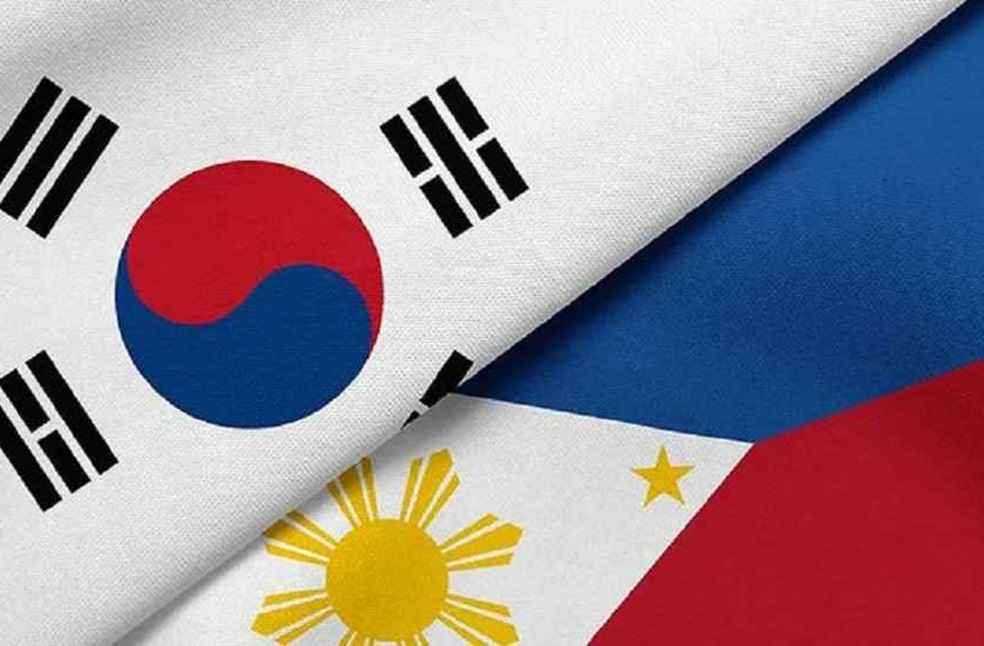
The Philippines and South Korea on Tuesday committed to fully leveraging their Free Trade Agreement (FTA) to strengthen trade and investment ties. The two nations signed 10 memorandums of understanding (MOUs) spanning defense, agriculture, law enforcement, tourism, education, and technology.
Philippine President Ferdinand R. Marcos and South Korean President Lee Jae-myung witnessed the signing of the agreements during their meeting at Malacañan Palace.
“We acknowledged the efforts of both sides to enhance bilateral trade and investment, and we look forward to realizing the full potential of the PH-ROK Free Trade Agreement for the benefit of both our peoples,” Marcos said at a joint press conference.

Lee stated that since the FTA came into effect in 2024, Korean investments in the Philippines have grown over five times, signaling a rising trend in bilateral trade and investment. He expressed confidence that the recent MOUs on intellectual property rights and the agricultural sector would help fully implement the FTA.
Marcos promised to back Korean companies entering the Philippine market and to help ease any difficulties they may encounter. Lee, in turn, pledged South Korea’s active involvement in the Philippine military’s modernization projects under the defense industry procurement agreement. He added that, through the MOU on digital cooperation, the two countries have broadened their science and technology partnership to include artificial intelligence and next‑generation communication infrastructure.

Lee added that the collaboration would serve as a solid foundation for accelerating the Philippines’ digital transformation while advancing Korea’s goal of becoming one of the world’s top three AI powers.
The Philippines and South Korea signed the free trade agreement in September 2023 to strengthen economic cooperation and trade ties. The FTA, which came into effect in December 2024, provides preferential duty-free access for 11,164 Philippine products, representing $3.18 billion or 87.4% of South Korea’s total imports from the Philippines.
The agreement also includes economic and technical cooperation, aimed at promoting trade and investment in areas including critical minerals processing, electric vehicle production, innovation, creative industries, and e-commerce.
POLICY & LAW | U.S. Lawmakers Push India to Remove 11% Cotton Tariff