



New global trade restrictions on sharks and rays mark a significant political step for conservation, but fresh research warns that tighter regulations alone are unlikely to halt overfishing or reverse population declines.
More than one-third of sharks and rays are now threatened with extinction, largely due to targeted fishing for fins, meat, gills, and liver oil, as well as bycatch from wider commercial fishing.
At a wildlife trade conference in Uzbekistan in late 2025, governments introduced stronger international trade limits covering more than 70 species, including whale sharks, oceanic whitetip sharks, wedgefish, devil rays, and gulper sharks.
The measures were adopted under the Convention on International Trade in Endangered Species of Wild Fauna and Flora, commonly referred to as CITES, which regulates trade in over 41,000 species.
Most listed sharks and rays can be exported only if countries prove trade is sustainable, while some highly threatened species face near-total restrictions.
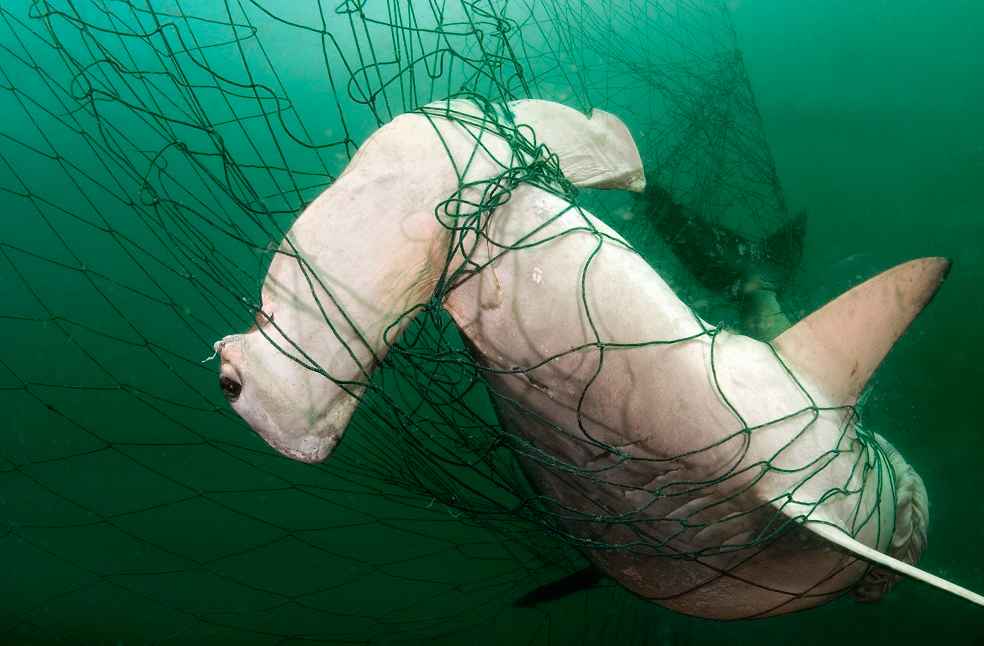
Researchers say the framework has the potential to reduce fishing pressure, but warn that the link between paperwork and real population recovery remains uncertain.
Research led by Hollie Booth of the Universities of Oxford and Bangor, published in Nature Ecology and Evolution, argues that international trade is only one driver of overfishing.
Many sharks and rays are caught unintentionally in fisheries targeting other species, and in small-scale coastal economies, they remain a valuable secondary catch sold locally or consumed domestically. These local pressures continue regardless of global trade rules.
Economic realities further complicate conservation efforts. In some regions, fishing is driven by income needs rather than market demand, meaning fishers may increase effort even if prices fall.
Researchers caution that trade restrictions can also produce unintended consequences, such as higher prices that encourage illegal trade or increased targeting of alternative species. Similar dynamics have been observed in wildlife markets involving ivory and pangolins.

Implementation challenges also vary widely between countries. While some nations have enforced effective management that helped species recover, others have adopted regulations that exist largely on paper without meaningful enforcement.
Experts warn that without strong domestic policies, monitoring, and support for small-scale fishers, new trade limits may fail to reduce mortality rates.
The study outlines three potential futures. In an optimistic scenario, CITES listings trigger broader reforms across fisheries management and consumer demand, leading to reduced overfishing and eventual population recovery.
A business-as-usual path could see minimal change, with legal and illegal trade continuing. In the worst case, stricter limits could push prices higher, expand black markets, and accelerate species decline.
Researchers conclude that new trade measures should be viewed as a starting point rather than a final solution. Long term success will depend on coordinated action across supply chains, fisheries management, and consumer behavior.
Conservation outcomes should be measured not by the number of new policies, but by real improvements in species abundance and community livelihoods.
IMEX SECTOR | Ukraine Seeks to Resume Poultry Exports to Moldova