


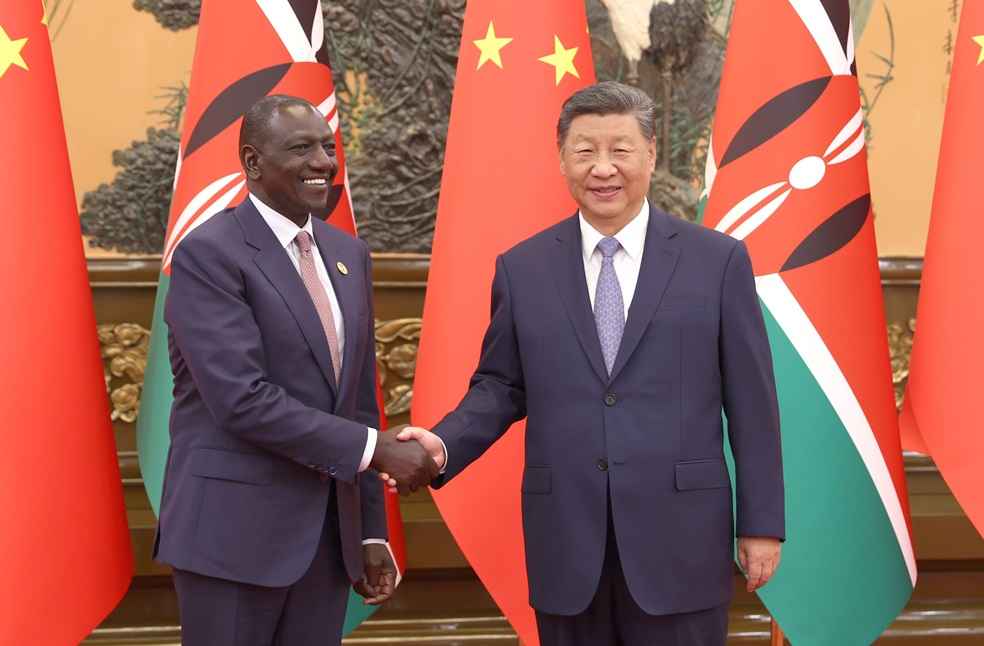
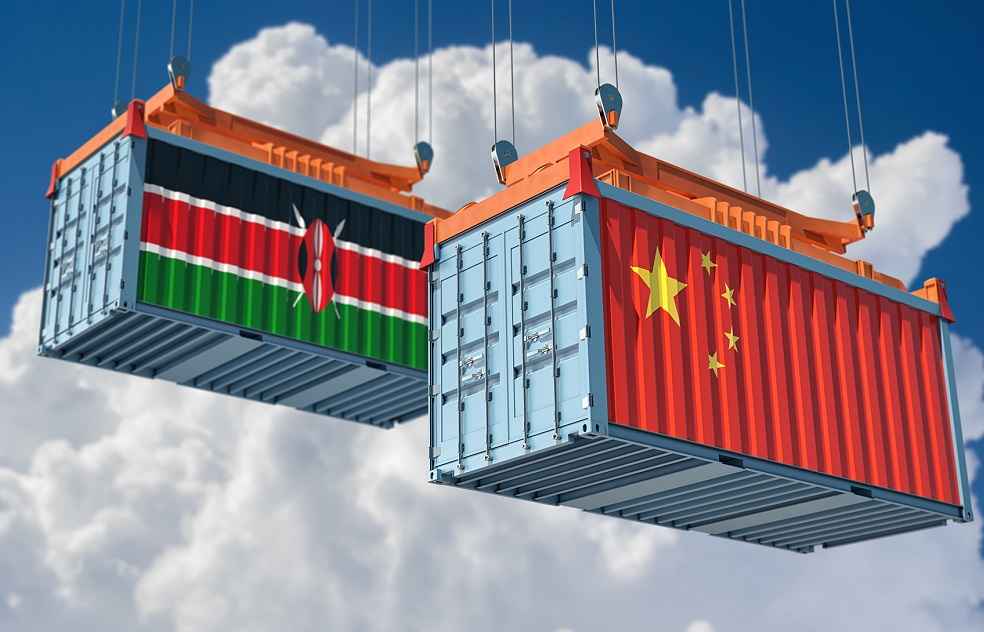
Kenya’s newly signed preliminary bilateral trade agreement with China, granting zero-duty access to 98.2% of Kenyan exports, signals a broader shift in Africa’s trade diplomacy as global commerce becomes increasingly shaped by tariffs, geopolitical rivalry, and competing development models.
The agreement follows a policy announcement by China in June last year to eliminate tariffs on nearly all imports from 53 African countries that maintain diplomatic relations with Beijing.
Covering between 98 and 100% of tariff lines, the initiative extends duty-free access beyond least developed countries to include middle-income economies such as Kenya, Nigeria, Egypt, and South Africa, reflecting Beijing’s intention to deepen and rebalance its economic engagement with the continent.
For Kenya, the implications are immediate. Trade and Investments Cabinet Secretary Lee Kinyanjui said the deal opens the Chinese market to a wide range of Kenyan products, particularly agricultural exports that underpin the domestic economy. He described the agreement as a corrective step that could gradually narrow Kenya’s long-standing trade imbalance with Asia.

Trade data highlight the scale of that imbalance. According to the United Nations COMTRADE database, Kenya exported goods worth $196.55 million to China in 2024, while imports from China reached $8.58 billion. The gap has fueled persistent concern in Nairobi over dependence on imported manufactured goods and the limited penetration of Kenyan exports in major global markets.
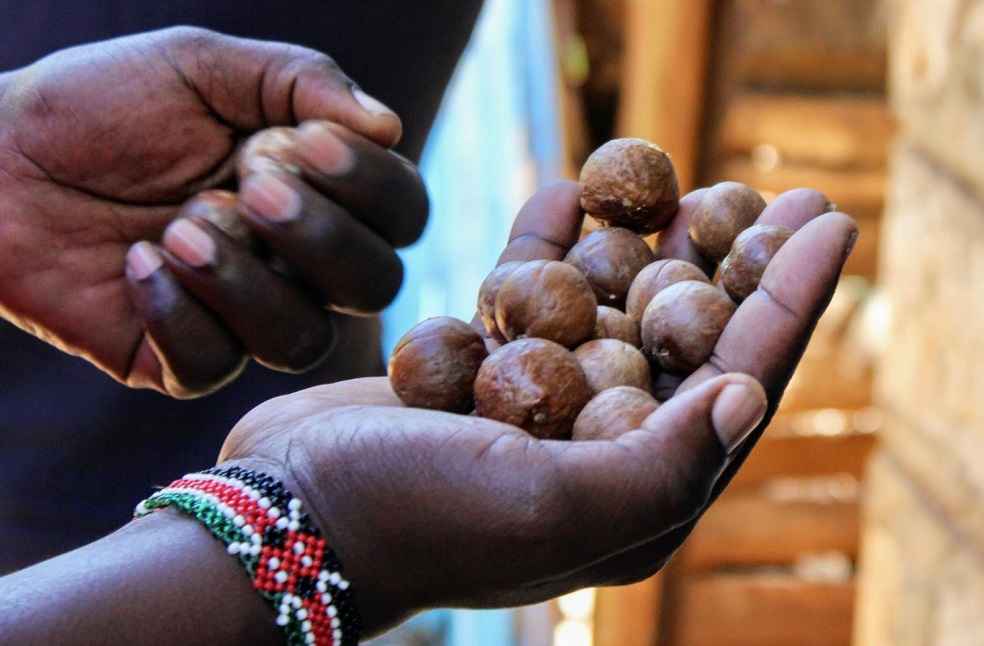
The Early Harvest phase of the agreement is designed to address this disparity by prioritizing agricultural products with strong demand potential in China, including avocados, tea, coffee, and macadamia nuts. Demand for these products has grown alongside the expansion of China’s middle class, offering Kenyan farmers and agribusiness exporters a rare opportunity for scale.
Kenya’s government has spent the past decade attempting to diversify exports beyond raw commodities and toward agro-processing and value-added goods. Zero-duty access to the world’s second-largest economy provides a test of whether that strategy can finally translate into sustained export growth.
Analysts say the agreement also reflects the increasingly geopolitical nature of trade policy. Hannah Wanjie, chief executive officer of Development Reimagined, said Kenya’s engagement with China must be understood as part of a broader effort to reduce dependence on traditional Western markets and financial institutions.
She argued that China’s tariff-free access offers African countries leverage in a global system where trade tools are often used for political pressure.
China’s zero-tariff policy was unveiled during high-level forums such as the China–Africa Economic and Trade Expo and meetings of the Forum on China–Africa Cooperation, underscoring Beijing’s intent to institutionalize its economic partnership with Africa rather than pursue short-term arrangements.
Dianah Ngui, an economist at the Kenya Institute for Public Policy Research and Analysis, said the policy is designed not only to boost trade volumes but also to address structural imbalances in China–Africa trade.
She noted that extending zero-tariff access regardless of income status makes China’s offer broader than Western trade frameworks, which often impose conditions linked to governance, human rights, or political alignment.
China has reinforced the initiative by introducing fast-track ‘green lanes’ for selected African agricultural exports and establishing a dedicated China–Africa trade cooperation fund, measures aimed at easing logistical and regulatory barriers that have historically constrained Africa’s ability to benefit from preferential market access.
The growing appeal of China’s trade terms has drawn attention in Washington. James Shikwati, director of the Inter-Region Economic Network, warned that African countries may face pressure to reduce engagement with China in exchange for continued access to Western markets.
The African Growth and Opportunity Act, first enacted in 2000, provides eligible African countries with duty-free access to the U.S. market for more than 1,800 products. On January 12, 2026, the U.S. House of Representatives voted to extend the program for three years to 2028, a move that now awaits approval by the Senate and President Donald Trump.
Shikwati described the extension as part of a strategic effort to counter China’s expanding trade footprint in Africa, arguing that the continent should not be forced to choose between partners if both arrangements offer tangible benefits.
For Kenya, the agreement arrives amid rising debt pressures, domestic economic constraints, and a global environment marked by protectionism and great-power rivalry. While zero-tariff access to China offers relief, it also places responsibility on Nairobi to ensure local producers can meet quality, volume, and regulatory standards.
ORGANIZATIONS NEWS | IATA World Cargo Symposium 2026 to Spotlight Trade Shifts