


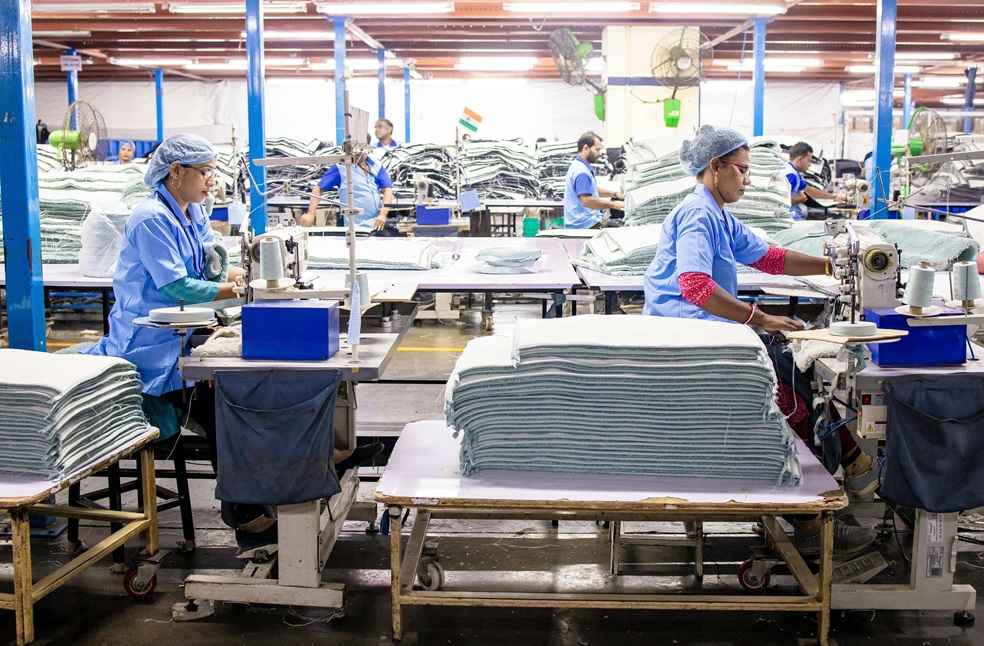
The U.S. government’s decision to cut import duties on Indian textile products to 18% from an earlier effective rate of 50% is expected to give a strong boost to India’s textile exports, particularly as competing suppliers in neighboring countries continue to face higher tariffs.
Industry bodies said the lower tariff will improve the price competitiveness of Indian textiles in the U.S. market, raising the prospect of a sharp increase in exports in the coming months.
According to a press release, the move is expected to significantly benefit exporters in Tiruppur, Karur, and Erode, along with open-end mills and spinning mills that supply yarn to these clusters, supporting broader growth across the textile value chain.
Exporters also pointed to the combined impact of the U.S. tariff reduction and anticipated duty-free trade agreements with the United Kingdom and European countries.
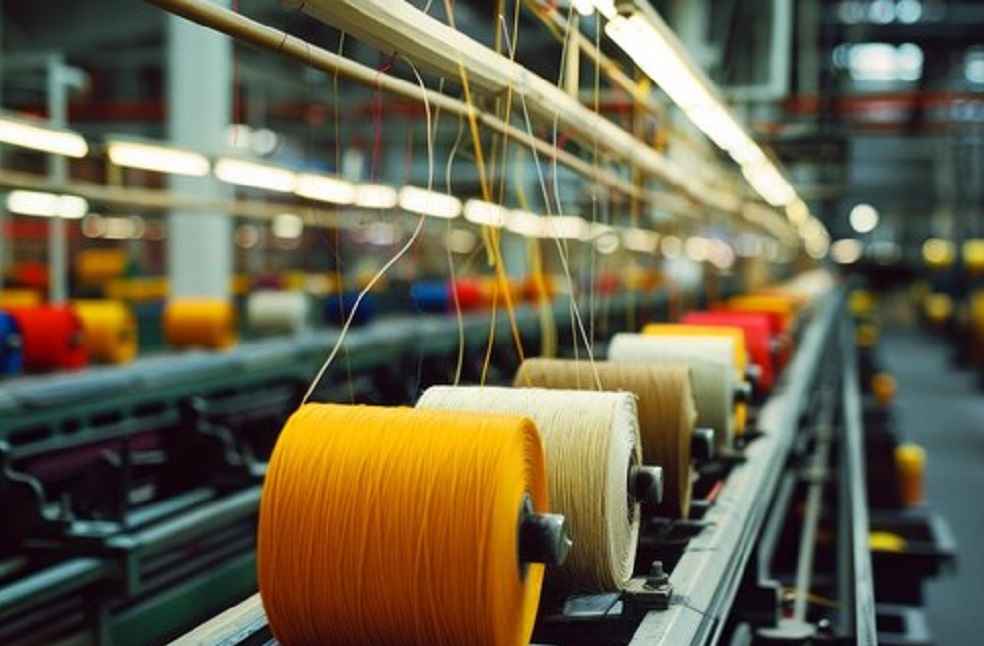
Together, these developments are expected to drive strong expansion in the sector and generate substantial employment opportunities across textile-producing regions.
G Arulmozhi, President of the OSMA, said the agreement marked a turning point for the industry. He expressed gratitude to Narendra Modi, Union Commerce and Industry Minister Piyush Goyal, Defence Minister Rajnath Singh, Finance Minister Nirmala Sitharaman, and Tamil Nadu Chief Minister MK Stalin for their role in facilitating what he described as a historic agreement for the textile sector.
The Confederation of Indian Textile Industry also welcomed the decision. CITI Chairman Ashwin Chandran said the tariff cut would allow Indian textile and apparel exporters to compete effectively once again in the U.S., which remains the single-largest market for India’s textile and apparel exports. He said the deal would help factories operate at full capacity and support a return to earlier levels of job creation.

Prime Minister Modi on Monday said he was pleased following a conversation with Donald Trump, noting that ‘Made in India’ products would now face a reduced tariff of 18%. In a post on X, Modi thanked Trump on behalf of India’s 1.4 billion people and said closer cooperation between the world’s two largest democracies would unlock significant opportunities for mutual growth.
The prime minister added that Trump’s leadership was important for global peace, stability, and prosperity, and said India looked forward to working closely with the United States to deepen bilateral ties.
The tariff cut follows a period of elevated trade barriers, after the U.S. initially imposed a 25% tariff on Indian goods and later raised it to 50%, citing India’s continued imports of Russian oil.
President Trump said on Monday that he and Modi had agreed on a trade deal under which the United States would lower the reciprocal tariff on Indian goods to 18 percent, easing pressure on exporters at a time of heightened global trade competition.
TRADE WORLD | Japan’s Exports of Agricultural, Food and Fishery Products Rise 12.8%