


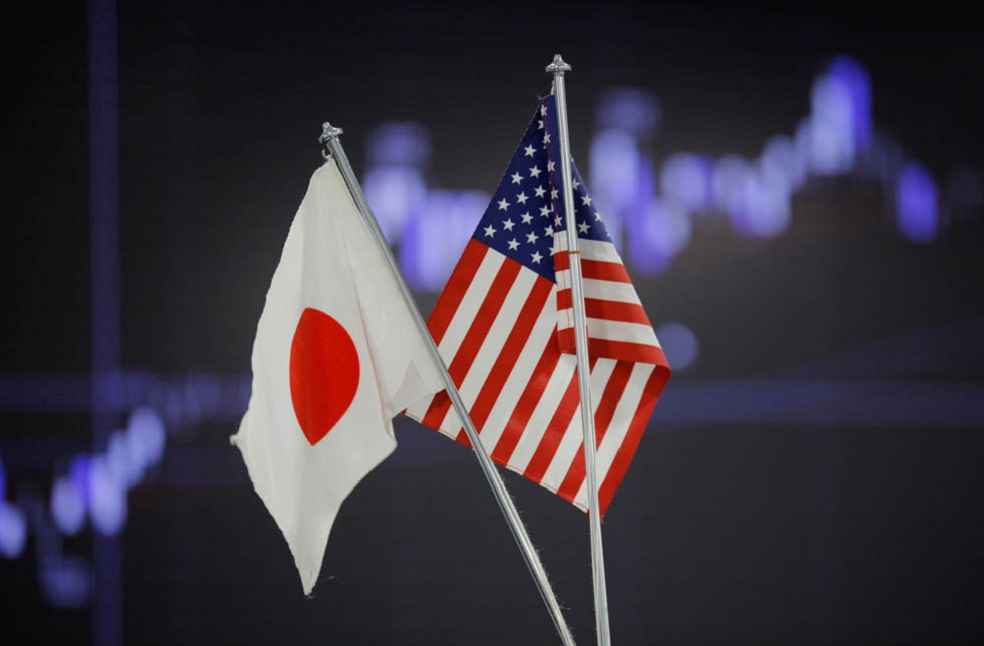
Japan’s exports to the United States declined sharply in December and weakened overall in 2025, reflecting the continued impact of higher tariffs and shifting trade flows, according to official data released Thursday.
Exports to the U.S. fell 11.1% in December to 1.81 trillion yen, or about $11.4 billion. During the same month, Japan’s trade surplus with Washington shrank 31.7% to 690.6 billion yen, equivalent to roughly $4.4 billion, finance ministry figures showed.
For the full year, exports to the United States dropped 4.1%, contributing to a 12.6% decline in Japan’s bilateral trade surplus with the U.S. to 7.5 trillion yen, or around $47 billion. The ministry attributed the narrowing surplus mainly to a fall in shipments of cars and auto parts, alongside higher imports of liquefied petroleum gas, cereals, and power-generating machinery.

The slowdown comes despite a trade agreement announced in July, under which Tokyo and Washington agreed to reduce tariffs to 15% from a previously feared level of 25%. The tariff cut included the auto sector, which accounted for about 30% of Japanese exports to the U.S. in 2024.
Japanese officials and business leaders have noted that the revised tariff level remains significantly higher than during the period before the second Trump administration, continuing to weigh on export competitiveness.
Japan’s broader trade performance also remained under pressure. The country recorded an overall trade deficit of 2.65 trillion yen in 2025, marking its fifth consecutive annual deficit, underscoring persistent challenges from energy imports, global demand fluctuations, and trade policy uncertainties.
TRADE TECH | CPA Launches Automated System to Speed Export-Import Trade