


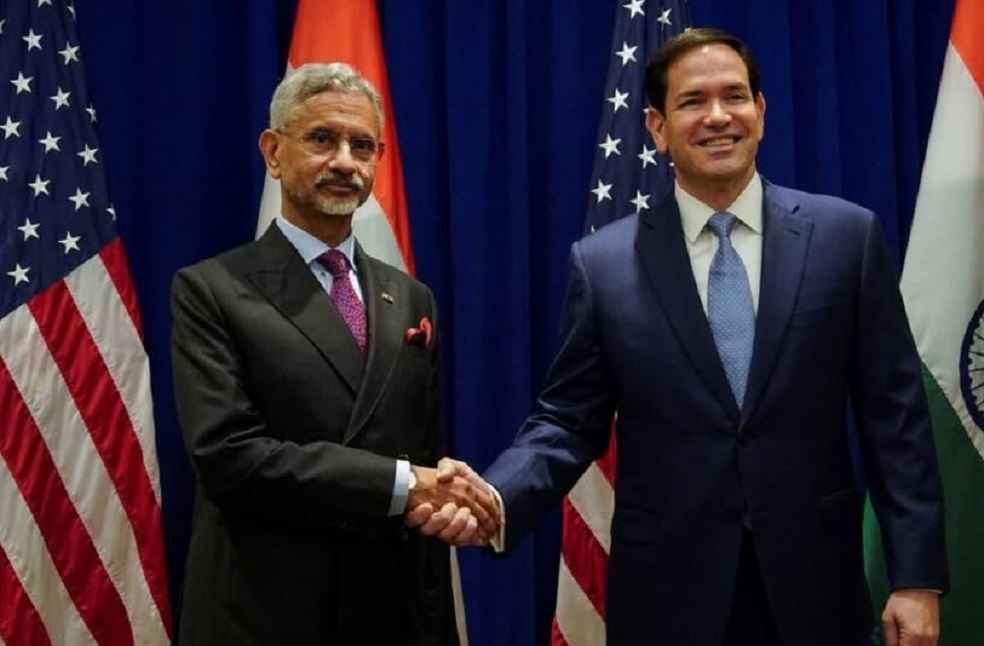
India and the United States are maintaining high-level engagement on trade and strategic cooperation, even as negotiations over a long-pending U.S.-India trade agreement remain unresolved.
External Affairs Minister S. Jaishankar spoke with U.S. Secretary of State Marco Rubio on Tuesday, with discussions covering cooperation in trade, critical minerals, nuclear energy, defence, and energy.
Jaishankar confirmed the exchange in a post on X, saying the two sides had a constructive conversation and agreed to remain in touch on these and other issues, signalling continued diplomatic engagement despite ongoing trade frictions.
The dialogue comes at a sensitive phase in India-U.S. economic relations. Negotiators from both countries have been working for more than a year to finalize a trade agreement aimed at lowering tariffs and addressing structural issues related to market access. Efforts have yet to yield a comprehensive deal.
India and the United States have set a goal of more than doubling bilateral trade to $500 billion by 2030. As part of this effort, New Delhi has committed to increasing purchases of U.S. energy supplies and defence equipment. Despite these intentions, negotiations stalled last year after both sides failed to bridge key differences.
The conversation also follows the recent assumption of office by Sergio Gor as the U.S. Ambassador to India, which has raised expectations of renewed diplomatic momentum.
Gor has indicated that India would be invited to join Pax Silica, a U.S.-led strategic initiative aimed at strengthening supply chains for silicon, advanced manufacturing, and artificial intelligence, while reducing strategic dependencies and safeguarding critical technologies.
Commenting on ties between Prime Minister Narendra Modi and U.S. President Donald Trump, Gor said that differences between close partners are natural and manageable, adding that both governments remain actively engaged.
Trade talks remain politically sensitive. Negotiations collapsed last year after disagreements persisted, prompting the United States to raise tariffs on Indian goods to 50% in August. India became one of the most heavily tariffed U.S. trading partners, with an additional 25% levy imposed over New Delhi’s continued purchases of Russian oil.
LEADERS SPOT | China and Canada Step Up Talks as Global Trade Faces Turbulence