


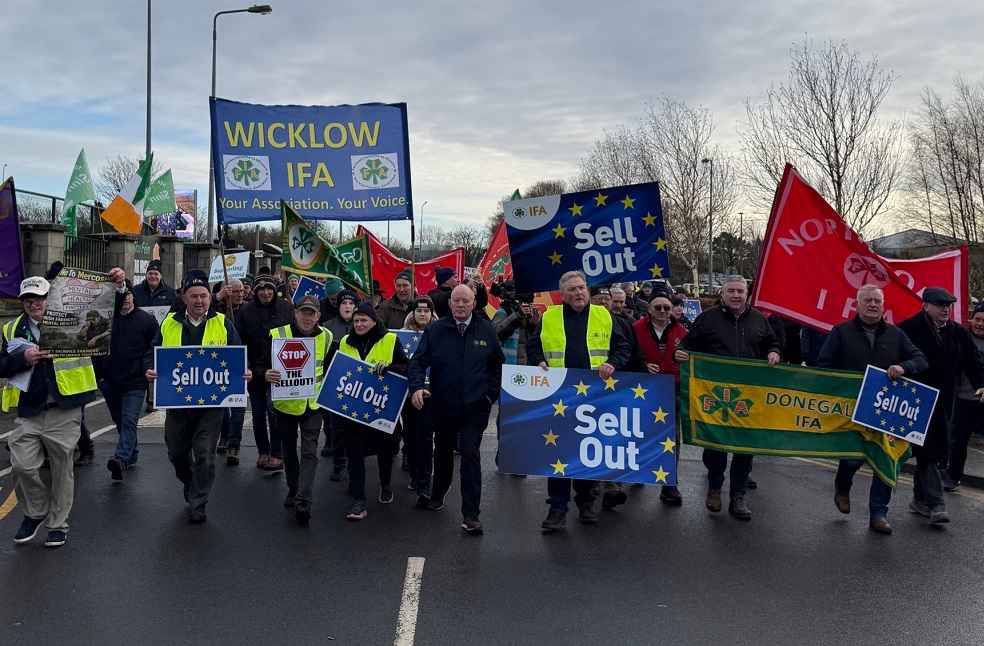
Thousands of Irish farmers staged protests across the country on Saturday against the European Union’s proposed trade agreement with the South American bloc Mercosur, a day after a majority of EU member states gave provisional approval to the long-negotiated deal.
In the central town of Athlone, long lines of tractors moved onto public roads as farmers from different parts of Ireland gathered to demonstrate. Protesters held placards reading ‘Stop EU-Mercosur’ and chanted slogans accusing European leaders of sacrificing farming interests in favor of industrial and export sectors.
The protests followed a vote on Friday in which Ireland, France, Poland, Hungary, and Austria opposed the agreement, but failed to block it due to insufficient support from other member states. The deal, which has been under negotiation for more than 25 years, would create one of the world’s largest free-trade areas, linking the 27-nation EU with Mercosur members Brazil, Argentina, Paraguay, and Uruguay.
Under the proposed agreement, Mercosur countries would export more agricultural products and minerals to Europe, while the EU would gain expanded access for machinery, chemicals, and pharmaceutical exports under reduced tariffs. Business groups across Europe have largely welcomed the pact, citing opportunities for export growth, but farmers in several EU countries argue it threatens domestic agriculture.
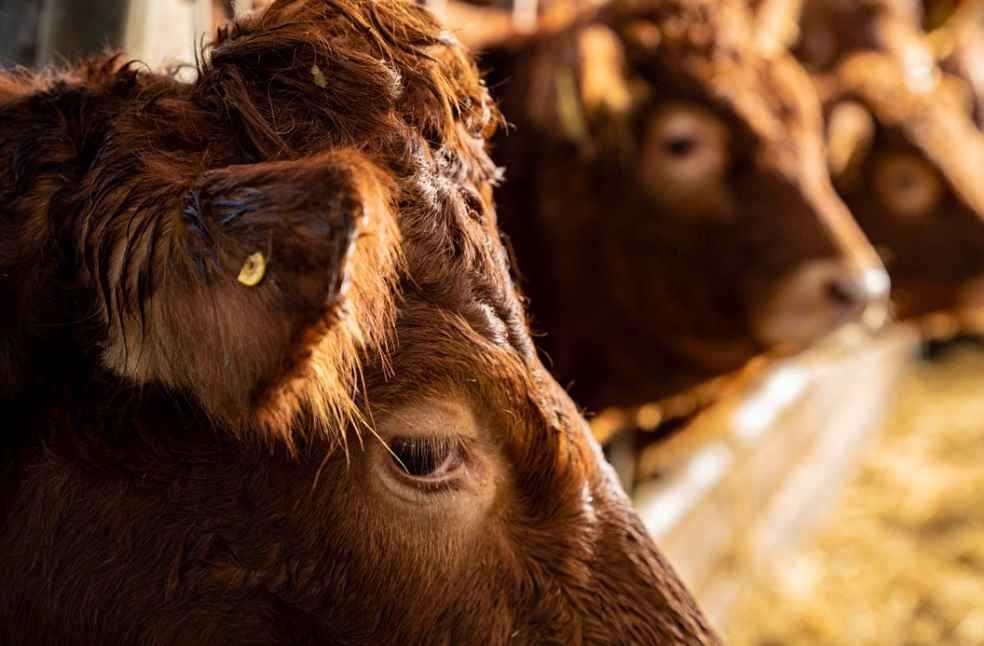
Irish farmers have been particularly vocal, warning that the agreement could allow up to 99,000 tons of additional low-cost beef to enter the EU market. Beef and dairy farming are major sources of employment in Ireland, and many farmers say profit margins are already under pressure. They fear cheaper imports, especially from Brazil, could further weaken farm incomes and accelerate the decline of rural communities.
The Irish Farmers’ Association (IFA) described the EU decision as ‘very disappointing’ and said it would intensify efforts to block the agreement when it reaches the European Parliament, which must still approve the deal before it can come into force. IFA President Francie Gorman said Irish members of the European Parliament should stand with the farming sector and reject the pact.

At the Athlone demonstration, farmers expressed deep concern about the long-term impact on rural Ireland. Joe Keogh, a farmer from Multyfarnham, said the agreement would damage farming communities and threaten the viability of family farms, arguing that agriculture was being sidelined despite its historical role in supporting European economies.
Food standards were another major issue raised by protesters. Earlier in the week, Irish Prime Minister Micheál Martin said he was concerned that beef imported under the deal might not meet the EU’s environmental and production standards. He said the government needed to be confident that strict rules imposed on European farmers would not be undermined by imports produced under less demanding regulations.
Protest signs reflected those concerns, with messages such as “Our cows follow the rules, why don’t theirs?” and “Don’t sacrifice family farms for German cars,” highlighting fears that agriculture is being traded off to secure advantages for Europe’s manufacturing sector.

The Irish protests followed similar demonstrations in Poland, France, and Belgium on Friday, pointing to broader unease among farmers across the EU. While some concessions and compensation measures have been discussed to ease the impact on European agriculture, both Ireland and France have said they will continue opposing the deal as it heads toward a potentially close and uncertain vote in the European Parliament.
For many farmers, the dispute is not only about trade but also about food quality and consumer trust. Niamh O’Brien, who travelled from Athenry in western Ireland to join the protest, said the agreement raised serious concerns for both producers and consumers, arguing that the consequences would extend beyond farm incomes to the standards of food on European tables.
AEROSPACE AND DEFENCE | U.S. Drops Restrictions on Chinese Drones After Policy Review