


South Korea has crossed the $700 billion mark in annual exports for the first time, reinforcing its status as the world’s sixth-largest exporting nation as global trade patterns are reshaped by geopolitics, technology shifts, and supply-chain realignment.
Provisional data released Monday by the Korea Customs Service and the Ministry of Trade, Industry and Energy showed cumulative exports reached $700 billion.
The milestone comes seven years after exports first exceeded $600 billion in 2018, representing the fastest progression between the two thresholds among major exporting economies. Only China, Germany, Japan, the Netherlands, and the United States have previously surpassed the $700 billion level.
The export performance reflected a sharply divided year. Shipments weakened in the first half amid domestic and global uncertainty, then rebounded strongly from June as policy clarity improved and demand for high-value industrial products recovered.

From June through November, exports hit record highs for each respective month, with September setting an all-time monthly record of $65.9 billion, according to government data.
Semiconductors were the primary driver of the rebound. Chip exports totaled $152.6 billion between January and November, up 19.8% year on year, accounting for nearly a quarter of total exports.
Officials attributed the growth to rising demand for AI server components and higher memory prices. The semiconductor trade surplus alone exceeded South Korea’s overall trade surplus during the same period.
Other manufacturing sectors also contributed. Automobile exports rose 2.0% to $66.0 billion from January to November, despite tariff-related pressures in the U.S. market.
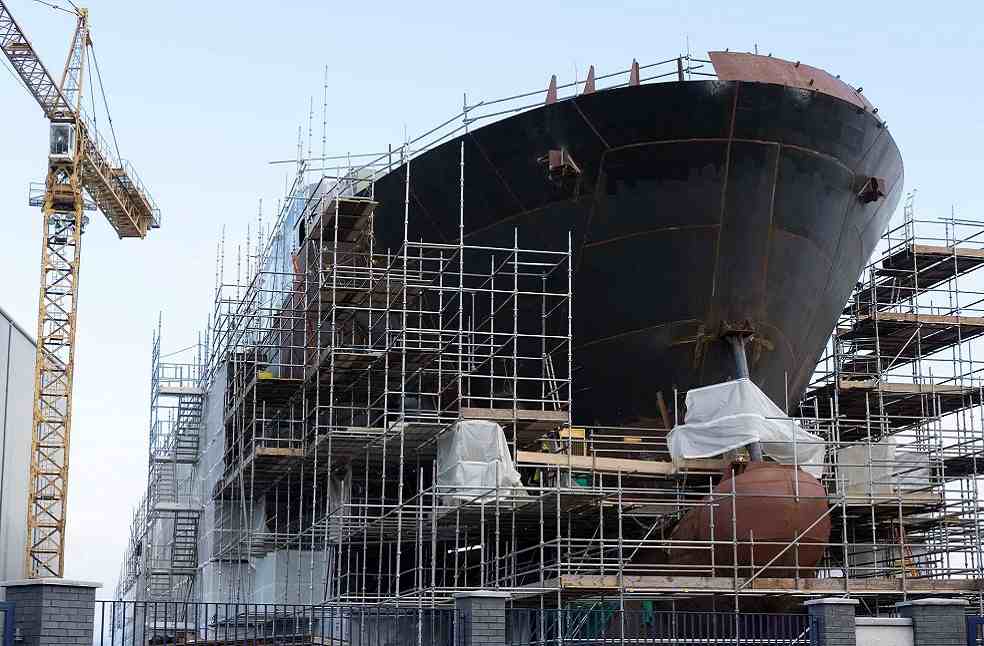
Shipbuilding exports surged 28.6% to $29.0 billion, driven by deliveries of high-value vessels such as LNG carriers ordered during the 2022–2023 upcycle. Biohealth exports increased 6.5% to $14.7 billion, supported by biosimilar approvals and contract manufacturing demand.
Export growth has also become more geographically diversified. China’s share of South Korea’s exports fell to 18.4% from 19.5% a year earlier, while the U.S. share declined to 17.3% from 18.6%. Exports to ASEAN member states rose to 17.2%, with shipments to the European Union and Latin America also edging higher.
Despite structural vulnerabilities, trade performance supported a solid external balance. From January 1 to December 28, energy imports totaled $117.4 billion, while the overall trade surplus reached $73.0 billion, according to customs data.
Foreign direct investment strengthened alongside export growth. The ministry said FDI notifications in 2025 exceeded $35 billion, topping the previous record set in 2024.
A growing share came from greenfield investments, including projects announced by Amazon Web Services in AI data centers, Renault in next-generation vehicles, and Amkor Technology in semiconductor back-end processing.
The government said it aims to sustain exports at or above $700 billion next year and attract more than $35 billion in inbound investment, focusing on manufacturing innovation, adjustments to trade structure, and stronger incentives for investment beyond the Seoul metropolitan area.
IMEX SECTOR | Vietnam Seafood Exports Surge in Singapore Market