


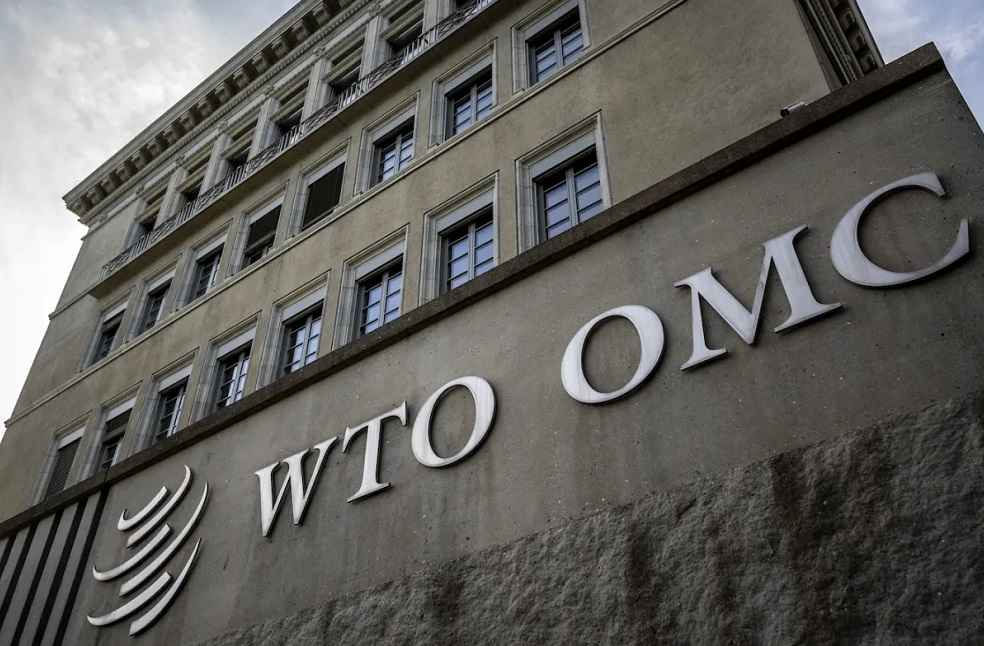
The United States has criticized the World Trade Organization, arguing that it is no longer a practical or effective forum for resolving modern trade disputes and has contributed to deep global trade imbalances.
In a policy paper outlining proposed reforms, the U.S. government said the WTO lacks the tools and authority needed to address current and emerging challenges in the global trading system.
The document claims that the WTO has overseen a system that has produced severe structural imbalances, leaving many countries exposed to economic dependencies and supply chain vulnerabilities.
According to the U.S., these imbalances stem from practices such as heavy state subsidies, wage suppression, currency manipulation, and labor and environmental abuses, with China identified as a major contributor. The paper links these factors to the persistent U.S. trade deficit, which Washington says it is determined to correct.

The U.S. also argues that the WTO is ill-equipped to deal with issues related to economic security and supply chain resilience. It maintains that the organization’s existing framework does not reflect the realities of today’s trade environment, particularly in the context of rising geopolitical tensions and widening economic disparities among member states.
A central point of criticism is the Most-Favored-Nation principle, which requires WTO members to apply the same tariff rates to all members for a given product. The U.S. describes this rule as outdated, saying it limits countries’ ability to tailor trade relationships to specific economic and strategic needs.
The paper contends that uniform treatment under MFN has enabled some countries to avoid fair competition, resulting in chronic trade surpluses that disadvantage deficit countries.
Washington is calling for a reassessment of how trading partners are treated, advocating a more flexible system that allows differentiated approaches based on individual circumstances.
The paper further calls for wide-ranging reforms to address the erosion of manufacturing capacity in the U.S. and other economies.

It argues that the current WTO framework has failed to ensure fair competition and has allowed certain countries to maintain economic models that contradict the organization’s stated principles.
Although India is not named directly, the U.S. criticises countries that oppose plurilateral agreements, which allow subsets of WTO members to negotiate sector-specific deals. The U.S. says such resistance has stalled progress on issues such as investment facilitation, limiting potential benefits for the global economy.
It also targets special and differential treatment provisions that give developing countries longer timelines and lighter obligations, calling for their removal on the grounds that they no longer reflect present-day economic realities.
The U.S. position signals potential strain in global trade relations, particularly with countries that benefit from existing WTO rules. As Washington pushes for reforms aimed at reducing trade deficits and restoring what it sees as fair competition, debates over the WTO’s future role are expected to intensify.
GLOBAL ROUNDUP | UN Adopts Negotiable Cargo Documents Convention to Boost Trade