



South Korea’s annual exports are on track to exceed $700 billion for the first time, marking a historic milestone driven by strong demand for semiconductors and ships, according to a new outlook from the Korea International Trade Association (KITA).
The 2025 Export-Import Evaluation and 2026 Outlook, released on Dec. 5 by KITA’s International Trade & Business Institute, estimates that total exports for 2024 will reach $704 billion, a 3% rise from last year. This would mark the highest export performance in the country’s history. The trade surplus is projected to hit $74 billion.
Semiconductors and shipbuilding provided the strongest lift. Chip exports are expected to reach their highest level ever, supported by surging demand for next-generation AI semiconductors, including high-bandwidth memory (HBM), and higher prices caused by limited production capacity. Ship exports, led by high-value LNG carriers ordered in 2022–2023, are forecast to grow more than 22% as deliveries accelerate.

KITA expects the positive momentum to extend into 2025. Exports are projected to rise 1% to $711 billion next year, while imports are forecast to grow 0.5% to $633 billion. The trade surplus is expected to widen to $78 billion.
Semiconductors will again play a central role, with exports predicted to climb 5.9% as AI-driven demand for inference chips and enterprise-grade solid-state drives (SSDs) increases. Computer-sector exports, including SSDs, are forecast to grow 7.8%, while wireless communication devices and displays are expected to expand 5.4% and 2.9%, respectively, supported by growth in foldable phones and wider OLED adoption.
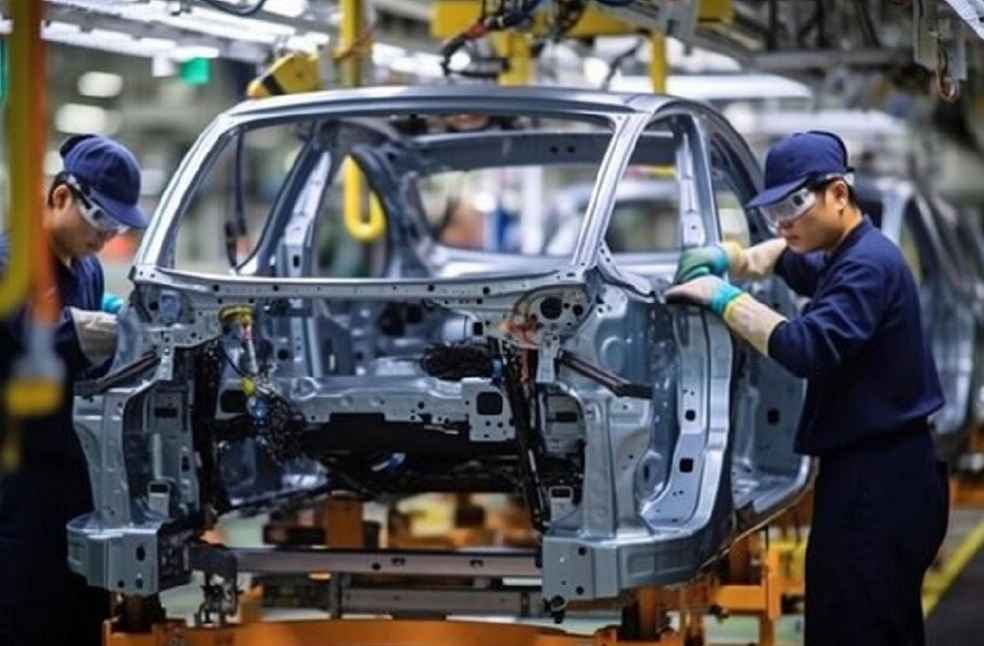
Several traditional pillars of Korean exports are expected to weaken. Automobile exports are projected to dip 1% due to this year’s high base and increased U.S. production by Hyundai and Kia, though a recent Korea-U.S. tariff agreement is seen as reducing downside risk.
More serious challenges are expected in energy and materials. Falling oil prices, projected to settle in the mid-$50 range for Brent crude, are expected to cut petroleum product exports by 13.3%.
Petrochemical exports are forecast to drop 6.1% amid oversupply from China’s new capacity and falling feedstock costs. Steel exports are projected to decline 2% due to sluggish global demand and growing protectionism.
Jang Sang-sik, director of KITA’s International Trade & Business Institute, said IT products, especially semiconductors, would remain the primary engine of export growth next year.
But he warned that geopolitical and policy risks, including the launch of a new U.S. administration and potential revisions to the USMCA trade pact, require Korean exporters to diversify toward markets in the Middle East and ASEAN while expanding the base for consumer-goods exports.
TRADE WORLD | Pakistan and Kyrgyzstan Expand Bilateral Cooperation with New Accords
