


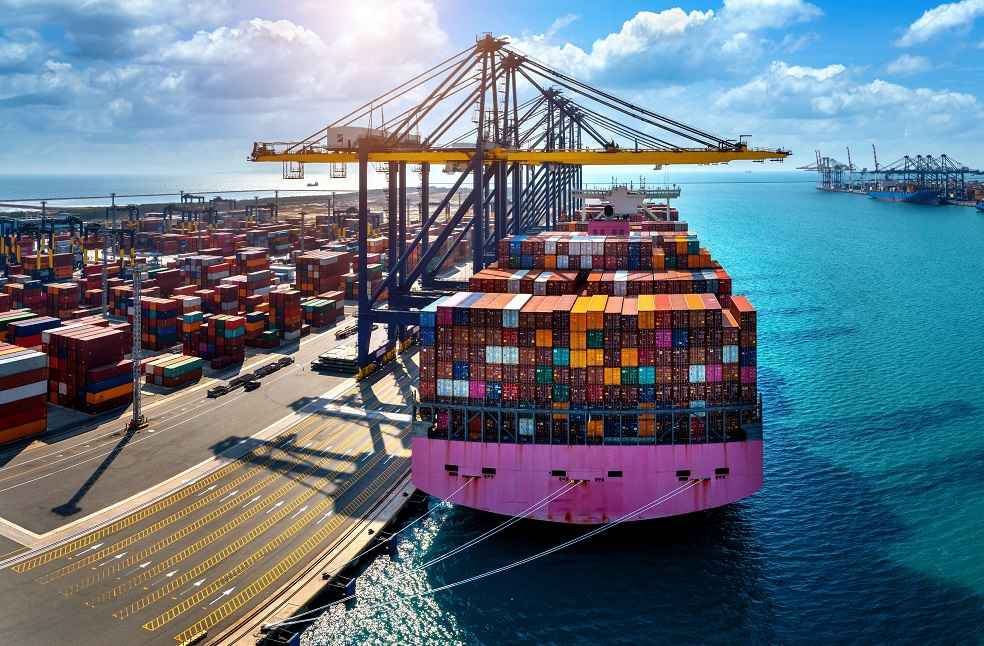
Prime Minister Phạm Minh Chính has called on Vietnam’s logistics industry to speed up its green transition and digital transformation, and to reduce costs to match global averages.
Addressing the Vietnam Logistics Forum on 29 November, he said the sector must lift its performance to achieve a growth rate of 15 to 16% and contribute 6 to 7% of GDP next year.
Chính noted that the industry had a successful year, helping push the country’s import–export turnover to 900 billion dollars. He stressed the need for decisive action to remove long-standing bottlenecks and ensure steady, sustainable expansion.
“Logistics plays a key role in the country’s economic growth. It earns annual growth of 15 to 16% and contributes 4.5 to 5% of GDP, but we have yet to build giant enterprises and key national logistics centers,” he said.
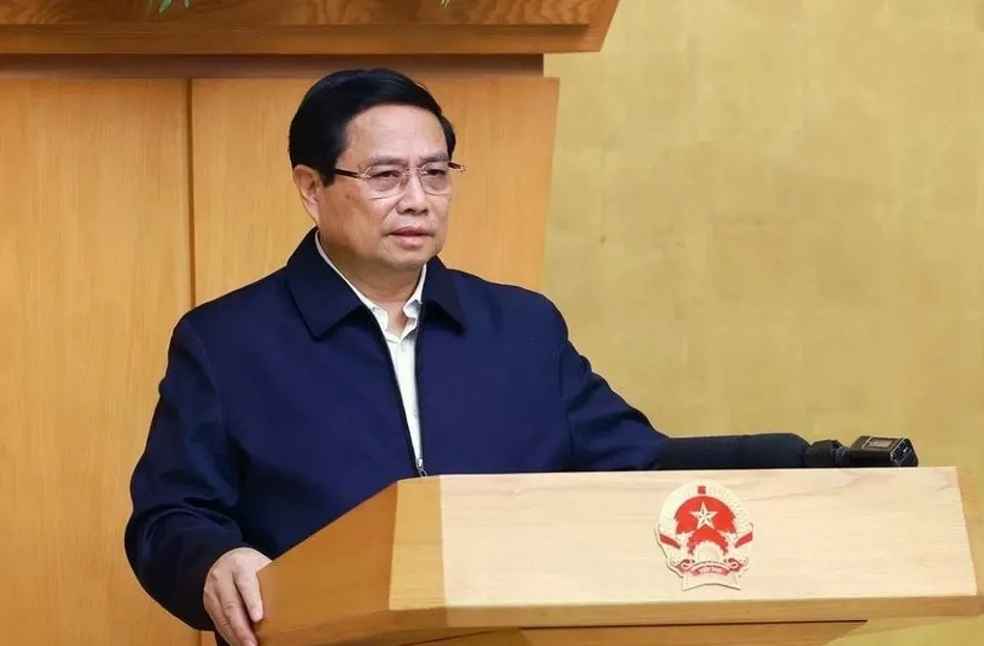
The Prime Minister said the country needs a comprehensive mechanism to help the sector operate more efficiently and cut costs from the current 16% to the global average of 11 to 12%. Achieving this would save an estimated 45 billion dollars in import–export revenue.
He called for strong reforms, clear policy frameworks, green and smart infrastructure, international cooperation, low-carbon development, and higher-quality human resources.
Minister of Industry and Trade Nguyễn Hồng Diên said the sector has not fully leveraged the country’s geography and natural advantages. He pointed to low competitiveness, weak regional links, slow progress in digitalization and green transition, and limited shared data systems.
Đào Trọng Khoa, chairman of the Vietnam Logistics Business Association (VLA), said the industry is being shaped into a ‘mega’ sector with projected revenues of 250 to 280 billion dollars by 2035, aiming to enter the world’s top 30 through the growth of green logistics and free trade zones.
Trần Thanh Hải, deputy director general of the Agency of Import and Export under the Ministry of Industry and Trade, noted that major infrastructure projects are underway, including the national 3,000-kilometer expressway network, Long Thành International Airport, Gia Bình Airport, and the Lào Cai–Hải Phòng Railway.
He said the Government and local authorities should accelerate the development of free trade zones and revive the East–West Economic Corridor linking Thailand, Laos, Myanmar, and Vietnam.
Thomas Sim, president of the International Federation of Freight Forwarders Associations (FIATA), said global logistics is shifting rapidly toward smart operations. He highlighted the rise of smart ports, intelligent customs systems, green logistics solutions, and digitally-enabled workforces.
Vietnam, he said, is entering a decisive phase with the rollout of its national action plan to enhance logistics competitiveness and its 2025–2035 strategy with a vision to 2050.
Sim said Vietnam has clear potential to become ASEAN’s next smart multimodal hub, given its position at the intersection of global manufacturing and regional corridors.

By integrating Liên Chiểu Port, Đà Nẵng International Airport, inland logistics centers, and cross-border infrastructure along the East–West Economic Corridor, the country could anchor itself as a next-generation logistics powerhouse.
He added that full adoption of e-bills of lading, smart customs connectivity, a nationwide interoperable digital logistics ecosystem, and alignment with international digital standards are essential.
Vietnam could also lead ASEAN’s green transition through investments in green ports, electric and alternative-fuel fleets, renewable-powered warehouses, and emissions-reporting systems.
FIATA, he said, is ready to support Vietnam with training in multimodal transport, green logistics, digital trade skills, and management.
Lê Thành Hưng, director of Đà Nẵng City’s Priority Infrastructure Project Management Board, said three investor groups have registered bids to build container terminals at Liên Chiểu Port. The bidding is set for 24 December.
Vice chairman of Đà Nẵng’s People’s Committee Lê Quang Nam said the city has all the conditions needed to become a global logistics hub, supported by two international airports, Đà Nẵng and Chu Lai, and deep-sea ports including Liên Chiểu, Kỳ Hà, Chu Lai, and neighboring Dung Quất.
METAL WORLD | UAE Gold Trade Soars, Solidifying Its Global Hub Status