


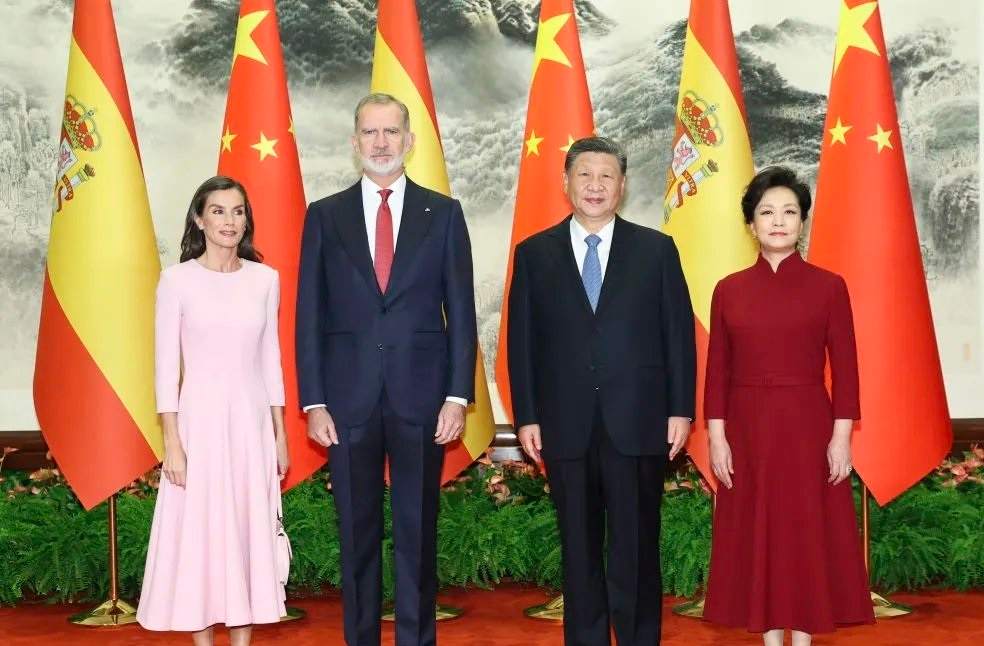
Chinese President Xi Jinping has pledged to boost imports and strengthen trade cooperation with Spain amid growing tensions with Europe.
He made the commitment during a meeting with Spain’s King Felipe in Beijing on Wednesday.
“China is willing to import more high-quality products from Spain, explore cooperation potential in emerging fields such as new energy, the digital economy, and artificial intelligence, expand mutual investment, and create more landmark projects,” Xi said.
“Both sides can also complement each other’s strengths and jointly explore third-party markets such as Latin America,” he added.
This marks the first visit by a Spanish monarch to China since 2007. As part of Felipe’s three-day state visit, he also traveled to Chengdu in Sichuan province to participate in the Spain-China Business Forum.

In discussions with Xi, King Felipe acknowledged that Chinese investment has played a key role in advancing Spain’s economic growth and green transition. He expressed Madrid’s interest in deepening collaboration with Beijing across trade, industrial development, technology, and environmental sectors.
Despite ongoing challenges such as trade tensions and the war in Ukraine, Spain’s diplomatic efforts have helped establish it as a prominent European economy to foster strong ties with China. King Felipe’s visit follows Prime Minister Pedro Sanchez’s trip to Beijing just six months earlier, marking his third visit as head of government.
In 2023, China ranked as Spain’s largest trading partner outside the European Union. However, similar to other Western countries, Spain maintains a notable trade deficit with China. The same year, Chinese investment in Spain remained strong, totaling $1.7 billion.
Spain has been entangled in the trade tensions between China and the European Union. The nation was particularly affected by a Chinese anti-dumping probe into pork and related products, which was widely regarded as a response to EU tariffs on Chinese-made EVs.
Additionally, Spain was one of the few Western nations to maintain relationships with Chinese technology infrastructure companies, including Huawei Technologies. However, in August, Madrid moved to cancel a deal involving Huawei’s fiber-optic equipment due to pressure from Brussels.
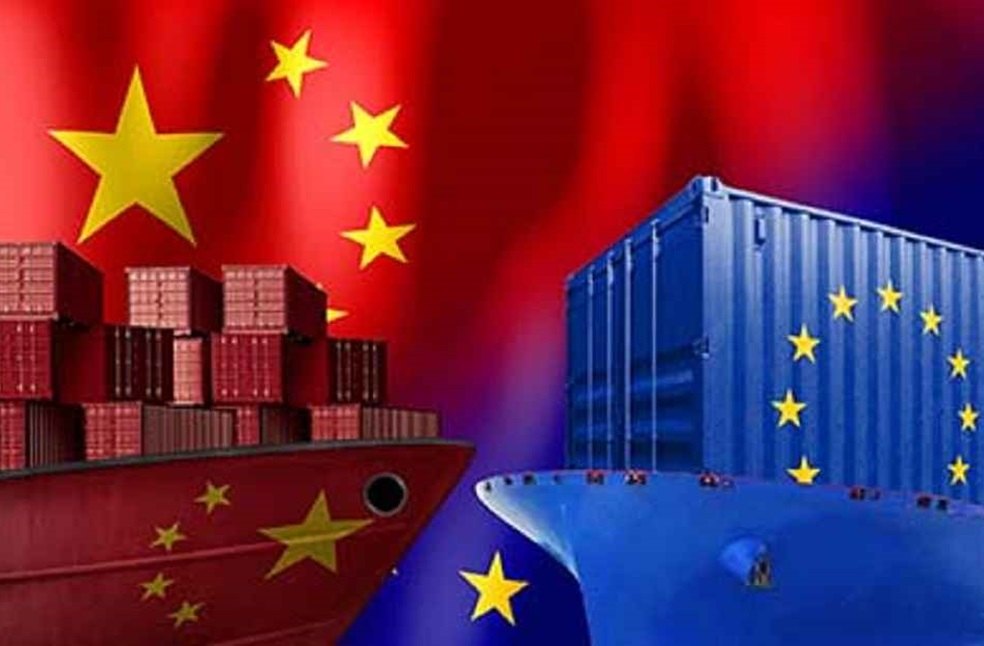
While Madrid continues to navigate its relationship with Beijing cautiously, EU-China ties remain strained.
Although China withdrew its expanded rare earths control policy in October, the restrictions introduced in April are still in place. In response, Brussels is collaborating with Beijing to develop an export licensing framework aimed at securing a steady supply of these critical minerals for manufacturing and defense industries.
LEADERS SPOT | Canada’s Sidhu Begins Three-Day India Visit to Boost Trade Ties