


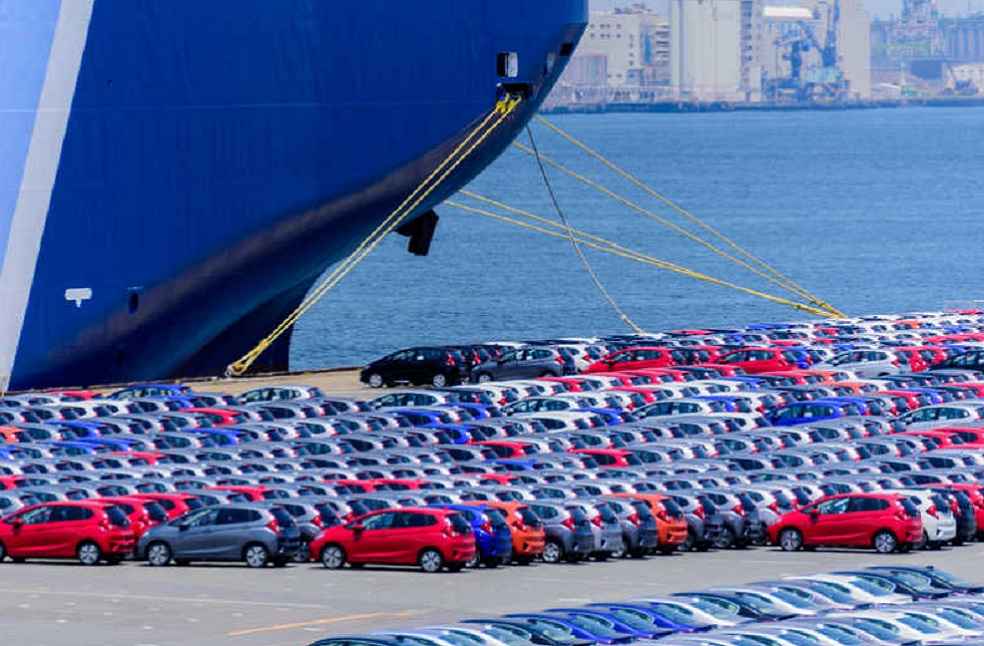
Türkiye is setting its sights on achieving a record $43.7 billion in automotive exports in 2026, as outlined in the 2026 Presidential Annual Program. The country plans to strengthen its global market presence while advancing its green and digital transformation in the automotive sector.
The program prioritizes the development of next-generation production technologies to enhance competitiveness in both the automotive and supply industries.
Domestic technological capacity will be reinforced across all stages, from design to production, ensuring alignment with the global shift toward sustainable and digital mobility.
Authorities will track the progress of projects under the Mobility Vehicles and Technologies Roadmap, regularly reviewing performance metrics and updating action plans to stay aligned with evolving industry trends.
As part of the Horizon Europe Ecomobility Project, Türkiye will establish secure communication protocols between autonomous or connected vehicles and central systems, supported by the necessary infrastructure for data exchange and evaluation.
Hydrogen and clean mobility technologies will take center stage in this transformation. Pilot production of a fuel-cell truck platform is slated for completion in 2026, with road testing to follow within the same year.
Efforts under the Hydrogen-Based Carbon-Neutral Internal Combustion Engine Development Project will continue, including three hydrogen fuel-cell component tests aimed at advancing domestic expertise in this field.
To ensure regulatory alignment, Türkiye will maintain compliance with European Union type-approval standards.
TUBITAK’s National Metrology Institute will play a crucial role in inspecting electric vehicle charging stations nationwide, while collaborating with the Turkish Standards Institution (TSE) to develop and standardize national protocols that meet international benchmarks.
The program also highlights Türkiye’s push toward a circular economy in automotive manufacturing. By 2026, 70% of a key R&D project focusing on recovering materials from end-of-life solar panels and lithium batteries to create new products will be completed.
Additionally, the EU-supported SAFELOOP and STREAMS initiatives will help expand national capabilities in batteries, sensors, control units, electric motors, and automotive software.
By 2026, the automotive industry’s share in Türkiye’s total manufacturing exports is projected to increase to 16.1%, underscoring its continued role as a driving force in the country’s economy and its growing influence in the global mobility landscape.
BUSINESS GENERAL | Pakistan, Iran Boost Trade Cooperation Toward $10 Billion Goal