


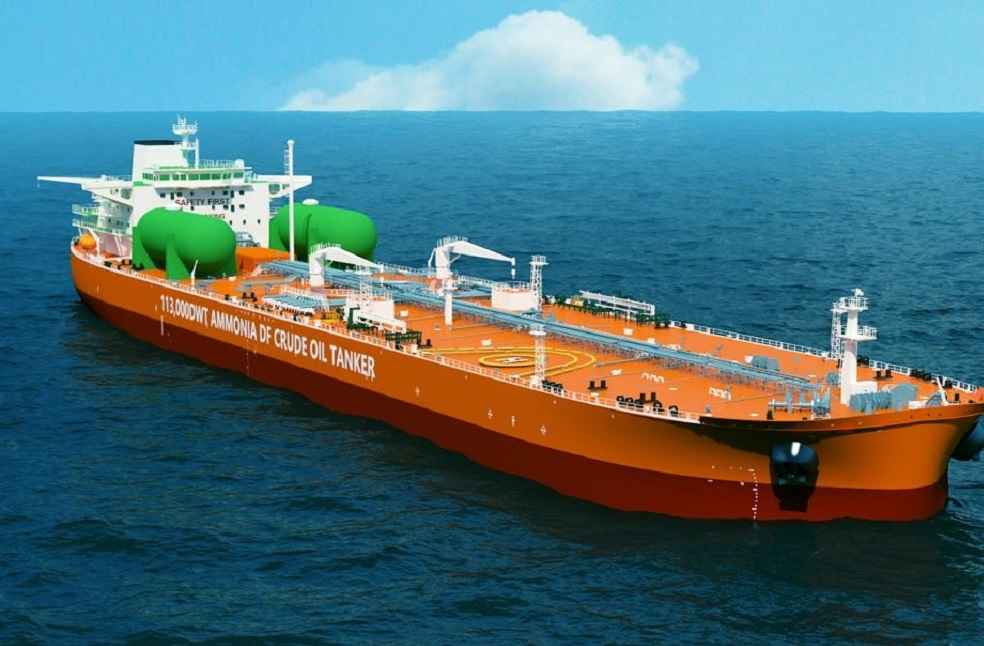
The Indian government is transforming its ports into centers for green hydrogen export and production. Minister for Ports, Shipping, and Waterways Sarbananda Sonowal stated this during the India Maritime Week (IMW) in Mumbai on Tuesday.
Sonowal said more than 12 million tons of green hydrogen-based e-fuel capacity has been announced nationwide. “Our ports are evolving into centers of green hydrogen production, bunkering, and export,” he stated.
“With a strategic position along key global trade routes, India is well-placed to emerge as a hub for green shipping corridors, connecting domestic and international markets through clean energy trade,” he added.
Vijay Kumar, Secretary of the Ministry of Ports, Shipping, and Waterways, added that India is rapidly becoming a key player in the global green hydrogen economy.
Fertilizer Industrial Services
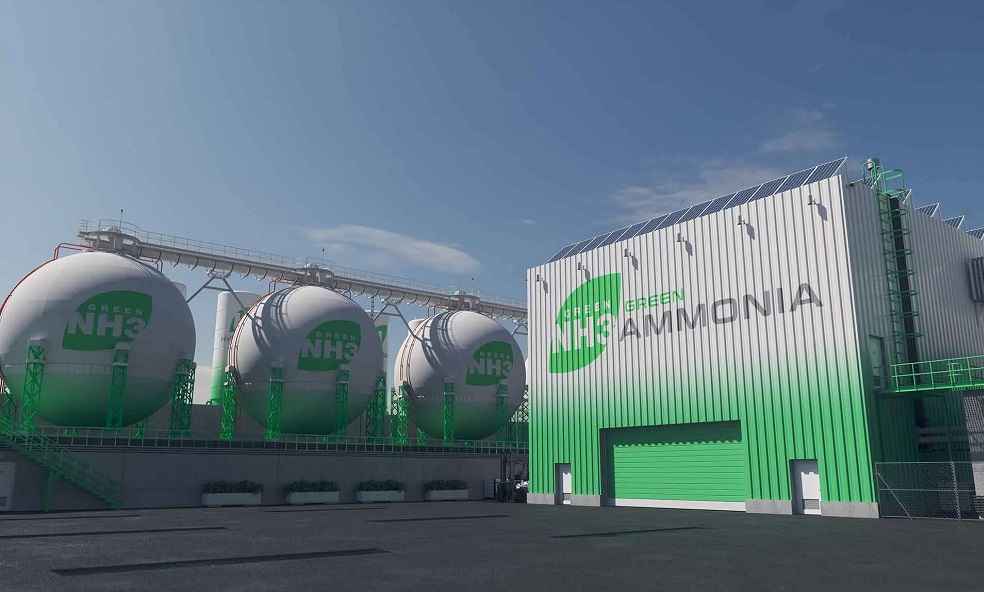
He highlighted that tenders issued by the Solar Energy Corporation of India (SECI) have helped achieve cost-competitive green fuel production, with prices as low as $571 per ton of green ammonia, among the lowest globally.
Kumar also noted growing international interest in India’s green fuel exports. “Several ministers at IMW 2025 have expressed their intent to import green ammonia and other green fuels from India. We aim to become a leading global supplier of green hydrogen,” he said.
The government has recently approved an investment of ₹69,725 crore ($8 billion) to strengthen India’s shipbuilding and maritime ecosystem, which Sonowal said “lays the foundation for a golden era in India’s maritime sector, positioning the nation among the top five maritime powers by 2047.”
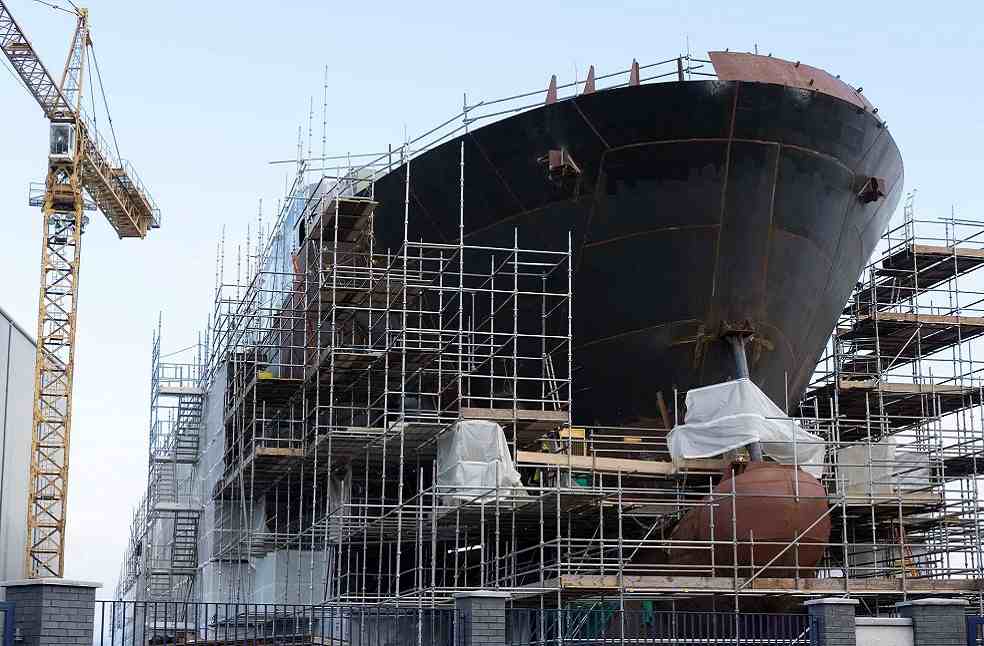
A further ₹19,989 crore in budgetary support has been allocated for a shipbuilding development scheme for FY26–FY36. Sonowal added that Sagarmala Finance Corporation, India’s first maritime-focused NBFC, and the ₹25,000 crore maritime development fund will support the sector’s green transformation.
As part of India’s Net Zero 2070 vision, the government aims to cut carbon emissions per ton of cargo by 30% by 2030 and 70% by 2047. Sonowal said flagship initiatives such as the Sagarmala Program, Maritime Vision 2030, Harit Sagar Guidelines, and Maritime Amrit Kal Vision 2047 are leading this transition.
Kumar added that major ports are already moving toward cleaner energy. “Around 60% of power at our major ports should come from renewables by 2030. Ports have been directed to electrify more than 50% of their vessels, vehicles, and equipment by 2030, and over 90% by 2047,” he said.
On the investment front, India’s largest private port operator, Adani Ports and Special Economic Zone (APSEZ), signed two memorandums of understanding (MoUs) worth ₹53,000 crore for projects at the upcoming Vadhavan Port. One MoU worth ₹26,500 crore covers participation in offshore projects, while another of the same value is for developing container terminals.
On Monday, APSEZ also signed an MoU to invest ₹43,500 crore for expanding Dighi Port in Maharashtra. Meanwhile, the Indian Railway Finance Corporation committed ₹20,000 crore in financial support for the Vadhavan project. Taiwan’s Evergreen Marine and UAE-based Gulftainer Company signed MoUs worth ₹10,000 crore and ₹4,000 crore, respectively, to develop terminals at the port.
Valued at ₹76,220 crore, the Vadhavan Port project is set to become one of the world’s top 10 ports upon completion. Jawaharlal Nehru Port Authority (JNPA) holds a 74% stake, with the remaining 26% owned by the Maharashtra Maritime Board (MMB).
Located in Maharashtra’s Palghar district, the all-weather greenfield deep draft port will be India’s 13th major and largest container port. The first phase is expected to be completed by 2029, with an annual handling capacity of 298 million metric tons (MMT), including 23.2 million twenty-foot equivalent units (TEUs). The project follows a public-private partnership (PPP) model for terminal development.
TRADE TECH | DGFT to Launch Digital Lab Portal for India’s Trade Clearances