


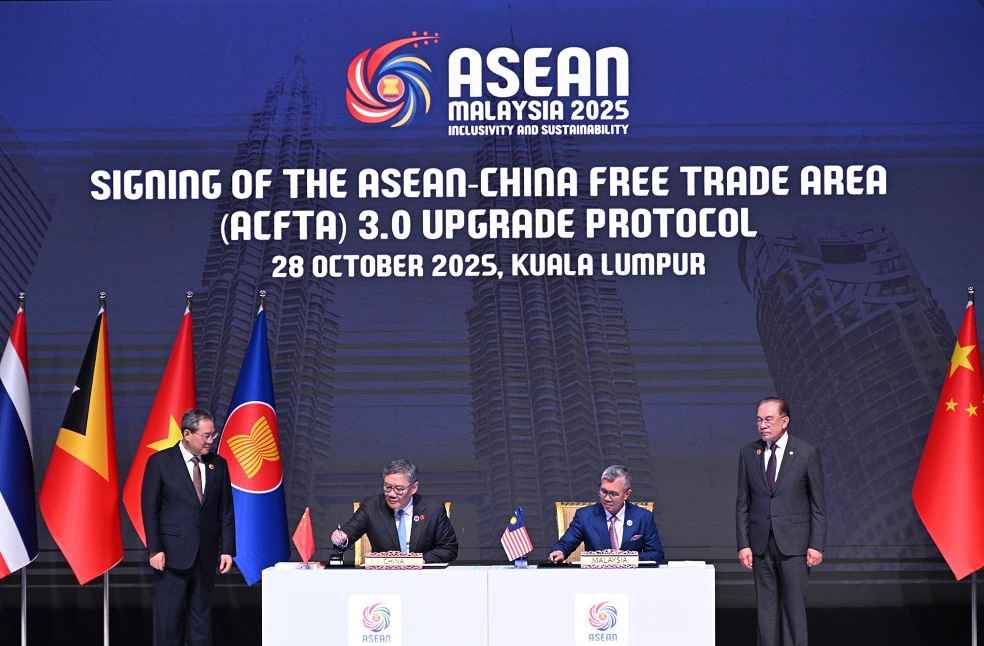
China and the Association of Southeast Asian Nations (ASEAN) have signed an upgraded version of their free trade agreement, expanding cooperation to include the digital and green economies as well as emerging industries.
The signing took place during an ASEAN leaders’ summit in Malaysia, marking the launch of what both sides call the ‘3.0 version’ of the pact. The 11-member ASEAN bloc remains China’s largest trading partner, with bilateral trade reaching $771 billion in 2023.
Negotiations for the upgraded deal began in November 2022 and concluded in May this year, shortly after the United States, under President Donald Trump, imposed sweeping tariffs on imports from several countries. The original ASEAN-China Free Trade Area came into force in 2010.
The new agreement is expected to improve market access across agriculture, digital commerce, and pharmaceuticals, reinforcing China’s efforts to deepen regional engagement amid growing global trade friction.
While Beijing promotes openness, other major economies have criticized its expanding export restrictions on rare earths and critical minerals.
Both sides are also members of the Regional Comprehensive Economic Partnership (RCEP), the world’s largest trading bloc, covering about one-third of global GDP and population.
Malaysia hosted an RCEP summit in Kuala Lumpur on Monday, the first in five years, highlighting renewed regional focus on trade cooperation as a counterbalance to rising tariff barriers.
TRADE WORLD | Bangladesh, Pakistan Revive JEC After 20 Years to Expand Trade Ties