


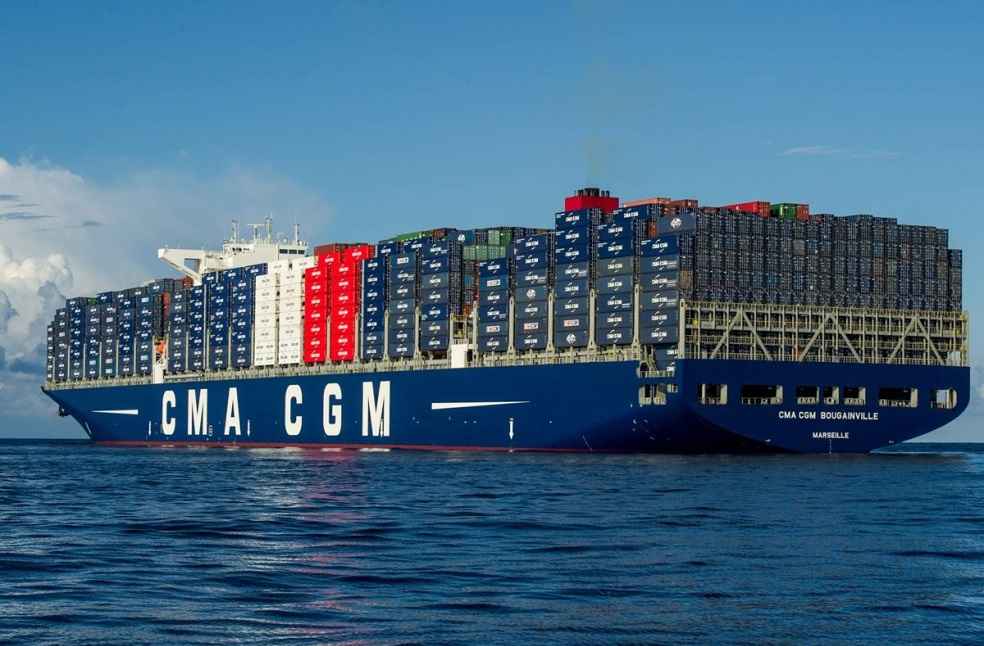
The global container shipping industry is preparing for heavy financial losses as the United States enforces new tariffs on Chinese-built and Chinese-operated vessels.
Maritime analytics firm Alphaliner estimates that leading carriers could collectively incur up to $3.2 billion in additional costs by 2026, with the new measures set to take effect on October 14.
The tariffs, imposed by the U.S. Trade Representative (USTR) under Section 301 of the Trade Act, are part of Washington’s broader strategy to counter China’s influence in shipbuilding and restore competitiveness to the American maritime sector.
Under the plan, Chinese-owned or operated vessels entering U.S. ports will face charges of $50 per net ton (NT) per voyage, rising by $30 each year through 2027.
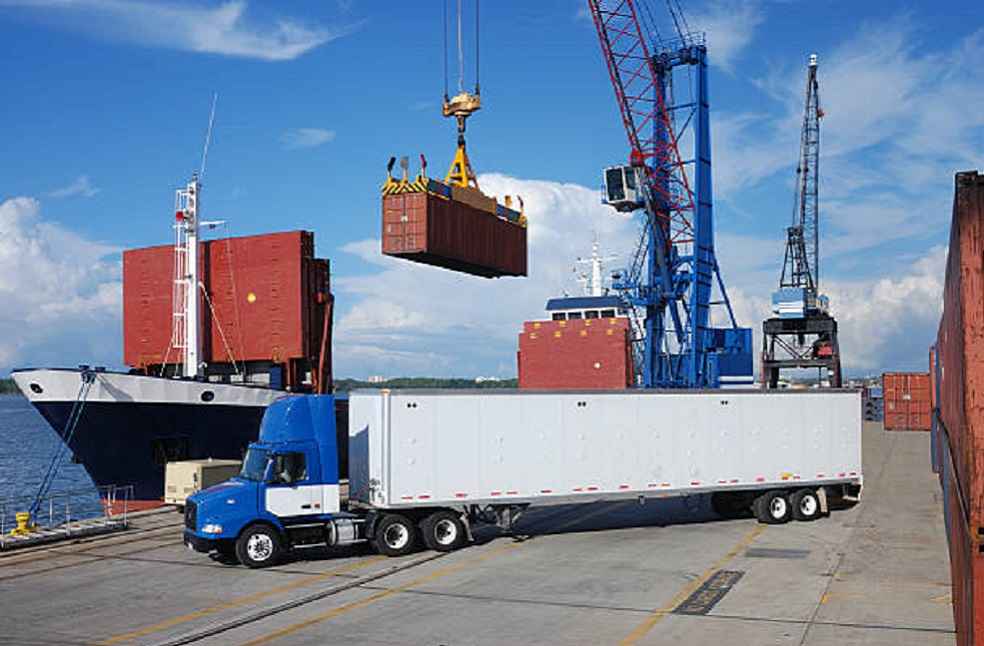
The measures also apply to non-Chinese carriers operating Chinese-built vessels exceeding 4,000 TEU or 55,000 DWT, which will be subject to an initial fee of $18 per NT or $120 per TEU in 2025, with annual increments of $5.
Each vessel is limited to five chargeable voyages per year, and the two fee structures cannot be combined. Carriers that invest in U.S.-built ships may receive a three-year suspension of these charges as an incentive.
Among those most affected is China’s COSCO Group, which could face up to $1.53 billion in fees, nearly half of the total projected burden for the world’s top ten carriers.
Other heavily impacted companies include ZIM Integrated Shipping ($510 million), Ocean Network Express ($363 million), and CMA CGM ($335 million), largely due to their use of Chinese-chartered tonnage.

Freepik | 3DdarkZone
Within the Gemini Cooperation alliance, Maersk is expected to bear a modest $17.5 million in fees, while Hapag-Lloyd may pay about $105 million, reflecting the latter’s limited reliance on Chinese-owned vessels.
A major driver of the tariff exposure is Seaspan, a Hong Kong-based tonnage provider operating 54 vessels totalling 0.62 million TEU in U.S. trade lanes.
Alphaliner estimates that Seaspan-linked deployments could contribute roughly $1.31 billion in total fees across affected carriers. The company is reportedly relocating its corporate base to Singapore, potentially allowing clients to avoid classification under the Chinese ownership criteria.
Not all carriers are vulnerable. Evergreen and HMM are expected to avoid the tariffs altogether, with HMM’s predominantly Korean-built fleet (23 of 25 ships) providing a natural shield from the new restrictions.
The cost gap among operators is stark: Alphaliner calculates that COSCO could face additional expenses of $2,121 per TEU on U.S.-bound services, compared with just $26 per TEU for Maersk.
Despite the scale of the fees, major carriers have sought to reassure stakeholders that the impact on service networks and freight rates will remain limited. Most have adjusted vessel deployment strategies during the 180-day grace period that began April 17.
For instance, MSC withdrew the 9,411-TEU MSC JEONGMIN, owned by Shanghai’s Bank of Communications Leasing, from its ‘California Express’ route to the U.S. West Coast, with its final call at Los Angeles on August 3.
The current tariff framework represents a scaled-down version of an earlier plan unveiled in April 2025, featuring lower fees and selective exemptions intended to reduce China’s dominance in global shipbuilding without causing widespread trade disruption.
As the October 14 implementation date approaches, global carriers continue to refine their operations, balancing regulatory compliance, cost control, and service continuity amid an increasingly politicized shipping environment.
TRADE WORLD | Pakistan’s Import Data Under IMF Scrutiny Over an $11B Gap