


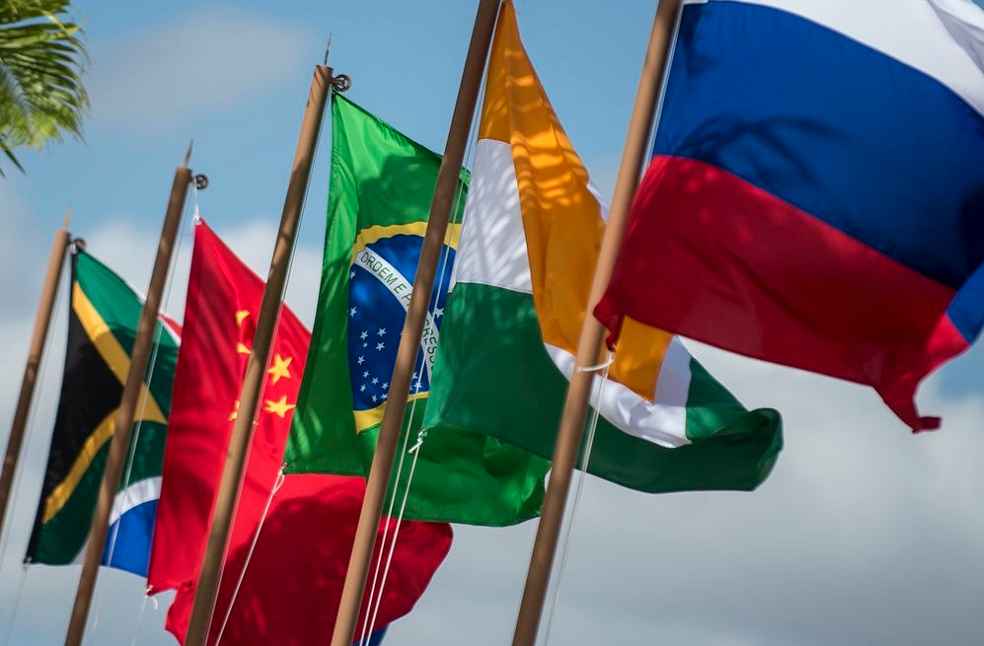
Nations belonging to the BRICS bloc have raised alarm over the growing imposition of steep tariffs and non-tariff barriers, warning that such restrictive practices threaten to disrupt global trade and marginalize the Global South.
The concerns were expressed in a joint statement issued after the annual meeting of BRICS foreign ministers, held on the sidelines of the 80th UN General Assembly in New York on Friday. The session was chaired by India, which will assume the BRICS chairship in 2026.
In their communiqué, the ministers expressed concern over the ‘indiscriminate rising of tariffs and non-tariff measures, or protectionism,’ particularly when used coercively. They cautioned that such steps undermine World Trade Organization (WTO) rules, risk fragmenting supply chains, and inject uncertainty into global economic activity.

The BRICS grouping, comprising Brazil, Russia, India, China, South Africa, Egypt, Ethiopia, Indonesia, Iran, and the UAE, emphasized that unilateral measures could further marginalize developing economies.
India’s External Affairs Minister S Jaishankar, who hosted the meeting, said BRICS must reinforce the multilateral trading system at a time when “rising protectionism, tariff volatility and non-tariff barriers impact trade flows.” Writing on X, he stressed that the bloc should advocate peacebuilding, dialogue, and international law while continuing to press for UN reforms, particularly changes to the Security Council. He highlighted technology, innovation, food and energy security, climate action, and sustainable development as priorities for India’s chairship.
The ministers extended full support to India’s upcoming leadership and welcomed the standalone meeting of BRICS foreign ministers to be held in the country in 2026.
Alongside trade concerns, the statement strongly condemned the April 22 terrorist attack in Pahalgam, Jammu and Kashmir, which claimed 26 lives. The ministers reaffirmed their commitment to combating terrorism in all its forms, rejecting any association of terrorism with religion or ethnicity, and calling for zero tolerance and accountability for perpetrators and supporters alike.
The meeting took place amid heightened trade tensions following the United States’ decision to impose 50% tariffs on India, including a 25% punitive duty linked to its Russian oil imports. This makes India the highest tariff-facing nation in Asia, with Brazil being the only other country globally facing similar levels.
In a parallel meeting, the IBSA grouping, comprising India, Brazil, and South Africa, also criticized ‘discriminatory’ unilateral tariffs, calling them inconsistent with WTO norms. The three nations reaffirmed their commitment to a transparent, inclusive, and rules-based multilateral trading system while underscoring the urgent need for UN Security Council reform.
TRADE TECH | India May Relax E-Commerce FDI Rules to Boost MSME Export Growth