


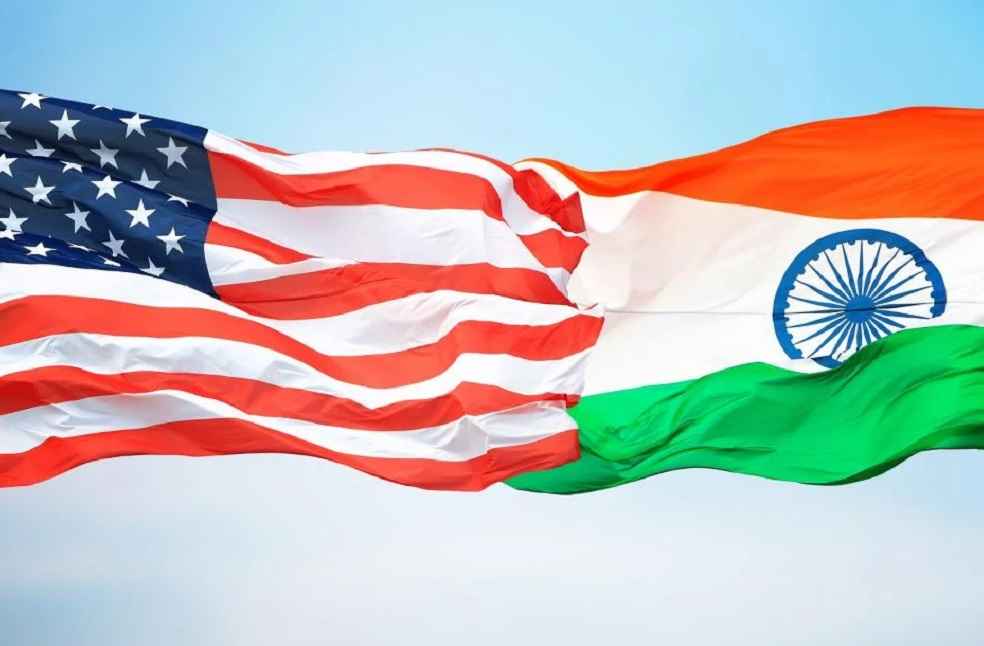
India and the U.S. have agreed to accelerate efforts toward a mutually beneficial trade pact, reviving negotiations that had stalled in recent years. Officials from both sides met in New Delhi on Tuesday, with discussions led by Brendan Lynch, the chief negotiator for the U.S., and Rajesh Agarwal, special secretary in India’s department of commerce.
The meeting focused on resuming talks where they had left off, with both governments committing to pushing forward with the aim of concluding a bilateral trade agreement (BTA) at the earliest. “It was decided to intensify efforts to achieve the early conclusion of a mutually beneficial trade agreement,” India’s commerce and industry ministry said in a statement.

Trade relations were strained after former U.S. president Donald Trump imposed a punitive 25% tariff on Indian exports in response to New Delhi’s purchase of Russian oil. This was in addition to the existing 25% reciprocal duty, creating a cumulative 50% tariff effective August 27. The move hit India’s labor-intensive sectors hard, including textiles, engineering goods, gems and jewellery, and agriculture, prompting New Delhi to push for duty concessions as part of the new trade deal.
According to people familiar with the talks, the agenda covered long-pending issues such as tariff parity, wider market access for Indian exports like pharmaceuticals and seafood, and U.S. concerns over India’s Quality Control Orders, which Washington has repeatedly described as non-tariff barriers.
For India, relief for exporters remains the top priority, while Washington is seeking broader reforms to ensure stability and predictability in trade relations. Trade experts, however, caution that progress will be limited unless the U.S. withdraws the additional 25% duty linked to Russian oil purchases.
“Unless Washington rolls back the additional 25% tariff linked to Russian oil, no meaningful progress can be made,” said Ajay Srivastava, co-founder of the Global Trade Research Initiative. He noted that the tariff is tied to an ongoing U.S. Supreme Court case, making any immediate relief unlikely. Srivastava added that while the U.S. is pressing India to open sensitive sectors such as agriculture, dairy, e-commerce, and patents, New Delhi is unlikely to compromise on areas that affect the livelihoods of millions of farmers or undermine its regulatory autonomy.
India has nonetheless shown flexibility by offering to cut tariffs on more than 95% of U.S. industrial goods, which do not touch its core red lines. Observers say the outcome of these negotiations will depend on how both nations balance their strategic priorities with domestic economic and political realities.
IMEX SECTOR | Vietnam Seeks Sustainable Export Gains in Closing Months of 2025