


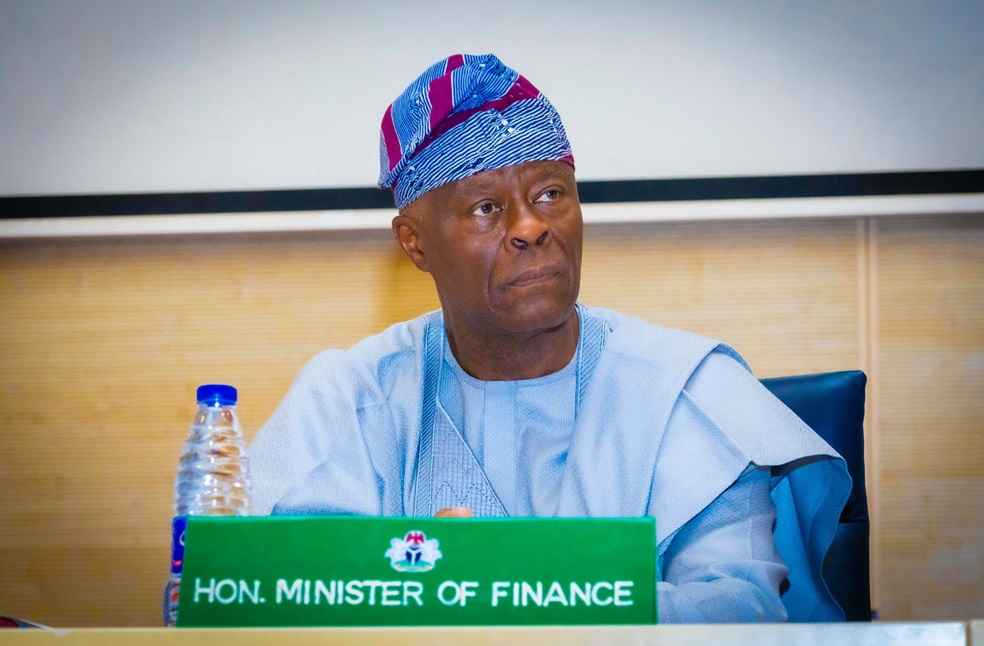
The Federal Government of Nigeria has put a hold on the enforcement of the recently introduced 4% Free on Board levy (FOB) by the Nigeria Customs Service on all imported goods.
Wale Edun, the Minister of Finance and Coordinating Minister of the Economy, has ordered the Nigeria Customs Service to halt the implementation of the 4% FOB charge. The directive was outlined in a circular titled ‘Suspension of the Implementation of Four Percent FOB Charge by the Nigeria Customs Service,’ dated September 15 and signed by Raymond Omachi, the Ministry’s Permanent Secretary for Special Duties.
“Pursuant to the powers vested in the Honourable Minister of Finance under Part III, Section 12 of the Nigeria Customs Service Act, 2023, as Chairman of the Board of Customs, I hereby direct the immediate suspension of the collection of the four percent FOB recently levied on all imports,” the circular reads.
Edun stated that the levy introduced by the Customs posed a threat to trade facilitation, economic stability, and the overall business environment in Nigeria.
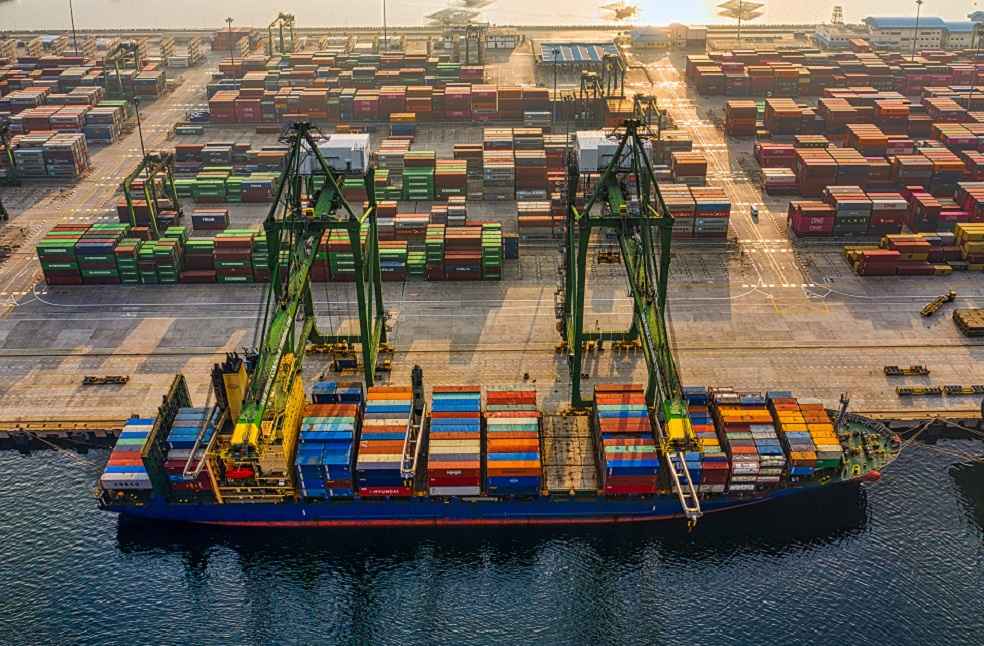
The minister noted that the suspension was prompted by widespread objections from manufacturers, importers, and clearing agents, who warned that the levy could intensify inflation, weaken trade competitiveness, and discourage investment. Several stakeholders also expressed concern that the charge would hinder efforts to reduce the cost of doing business in Nigeria.
He added that the move would pave the way for broader engagement with stakeholders and a thorough evaluation of the levy’s structure and its potential economic impact.
The 4% FOB levy was established under Section 18(1)(a) of the Nigeria Customs Service Act, 2023, which stipulates that the Customs Service must collect no less than 4% of the FOB value of imports, in line with global standards.
This levy was designed to replace existing charges, including the 1% Comprehensive Import Supervision Scheme (CISS) and the 7% cost of collection previously received by Customs. The Nigeria Customs Service estimated that the new levy would generate N1.07 trillion toward its 2025 revenue goal of N6.58 trillion. However, critics warned that the policy could add an extra N2.84 trillion in costs for businesses already grappling with high operational expenses.
The Ministry of Finance clarified that the suspension is not a cancellation but a temporary halt to allow for a reassessment of the levy’s potential impact. The government is expected to engage in further consultations with stakeholders and trade associations to develop a more balanced approach that avoids placing excessive pressure on businesses.
The FOB levy was initially implemented in February but was suspended following widespread public backlash. It was later reinstated in early August, when the Nigeria Customs Service integrated the 4% charge into its cargo clearance procedures.
AEROSPACE AND DEFENCE | Top 7 Countries Leading Global Arms Trade and Exports Market