


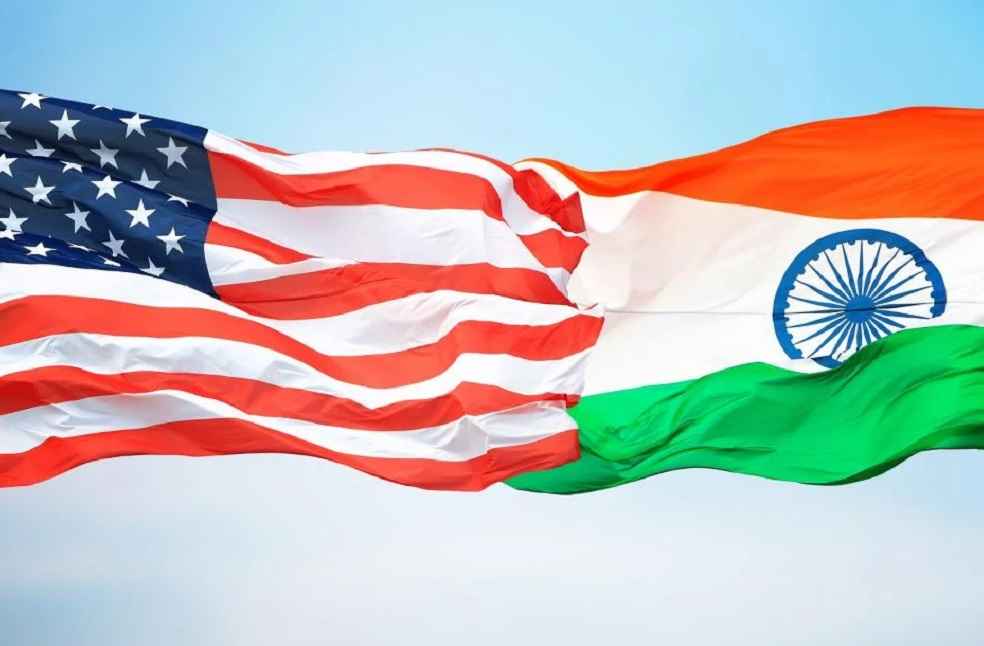
U.S. President Donald Trump issued an executive order on Wednesday imposing an additional 25% tariff on Indian imports, raising the total U.S. duty on goods to 50%. According to the executive order, the newly imposed tariffs will be implemented in 21 days, while the previously declared 25% tariffs are scheduled to begin on Thursday.
In his executive order, Trump stated that Russia’s ongoing military operations in Ukraine created a ‘national emergency,’ making it ‘necessary and appropriate’ to impose increased tariffs on India, a significant importer of Russian petroleum.
“I find that the Government of India is currently directly or indirectly importing Russian Federation oil,” Trump said.
On Tuesday, President Trump criticized India for being an unfavorable trading partner and declared his intention to substantially increase tariffs within 24 hours due to India’s continued purchase of Russian oil.
Trump justified the tariff hike by referencing national security and foreign policy issues, along with applicable trade legislation, asserting that India’s importation of Russian oil represents an ‘unusual and extraordinary threat’ to the United States.
“Accordingly, and as consistent with applicable law, articles of India imported into the customs territory of the United States shall be subject to an additional ad valorem rate of duty of 25%,” the order states.
With the new additional tariffs, India now ranks among the countries facing the highest tariff rates from the United States.

India’s Ministry of External Affairs (MEA) swiftly issued a response to Trump’s executive order, strongly criticizing the tariffs as ‘unfair, unjustified, and unreasonable.’
An official spokesperson for the Ministry asserted that India has been targeted by the United States and the European Union for its continued oil imports from Russia. The spokesperson emphasized that the government will take all necessary measures to safeguard its national interests and economic security.
India and the United States conducted five rounds of trade discussions prior to Wednesday’s declaration. In April, U.S. Vice President JD Vance visited New Delhi to actively lead the negotiations.
TRAVEL & TOURISM | New U.S. Visa Bond Requires Up to $15,000 from Certain Travelers

