


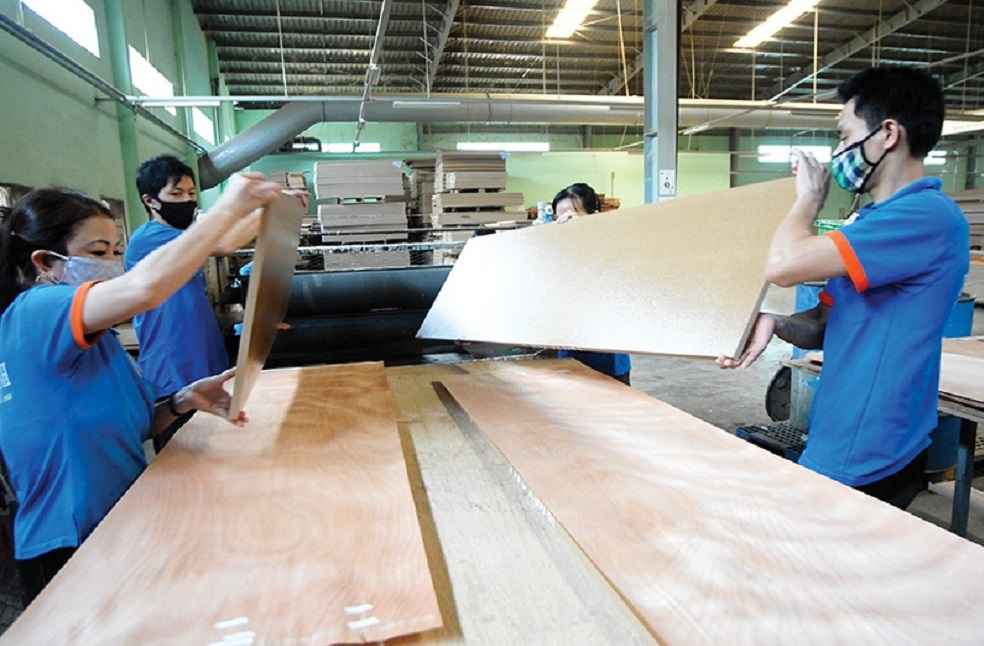
Vietnam’s wood industry is facing increasing pressure from global economic uncertainties and evolving trade regulations, prompting local enterprises and authorities to reassess strategies and pursue diversification to maintain the development pace.
Once a robust export sector, the industry is now grappling with stricter import requirements and rising protectionist measures from key markets, particularly the United States. According to Nguyen Liem, Chairman of the Binh Duong Furniture Association, notable changes in trade policies across importing nations have become evident since the beginning of the year.
Although Vietnam exports wood products to over 160 countries and territories, the United States remains its largest market, contributing nearly half of the sector’s total export value. Recent anti-dumping and countervailing duty investigations launched by the U.S. Department of Commerce into Vietnamese plywood imports have raised concerns, placing over 130 timber-processing and exporting companies under scrutiny.

Despite these headwinds, the Ministry of Agriculture and Environment (MAE) has set an ambitious export target of $18 billion for the wood sector in 2025. In the first half of the year, exports of timber and forest products reached $8.2 billion, an 8.9% increase compared to the same period in 2024.
Still, global geopolitical tensions and new regulatory frameworks are posing risks to these goals. In addition to U.S. actions, the European Union has enacted several new policies, including the EU Deforestation Regulation (EUDR), the Carbon Border Adjustment Mechanism (CBAM), and the Corporate Sustainability Reporting Directive (CSRD), all of which impose stringent environmental and traceability standards.
Meanwhile, changes in Japanese policy are affecting Vietnam’s wood pellet exports, with new requirements for certified sourcing and fluctuations in electricity pricing impacting costs and competitiveness.
Domestically, the industry is also contending with rising raw material costs due to global supply limitations. Huynh Quang Thanh, Director of Hiep Long, noted that the cost of imported wood has increased, placing greater pressure on production budgets. Additionally, Vietnam faces stiff competition from global players such as China, Malaysia, and Indonesia, whose mature processing industries offer lower prices and more efficient supply chains.

Industry and Government Response
In response to U.S. investigations, the Vietnam Timber and Forest Product Association (VIFOREST) has committed to participating in hearings to defend the local plywood industry, arguing that its exports complement rather than harm U.S. manufacturers. Simultaneously, the MAE is working with U.S. counterparts to seek a resolution through dialogue and technical explanations.
Experts are also urging Vietnamese wood businesses to reduce their reliance on traditional markets and explore emerging regions such as the Middle East, South Asia, Africa, Latin America, and Eastern Europe, where demand for furniture and value-added timber products is on the rise.
Expanding to New Markets
Among emerging destinations, the Middle East, particularly the United Arab Emirates and Qatar, presents strong potential. These countries have a growing demand for luxury indoor and outdoor wooden furniture, driven by hospitality and real estate investments. Vietnamese companies are encouraged to attend trade expos like Index Dubai, partner with local distributors, and obtain global certifications such as FSC and PEFC to boost trust and access.
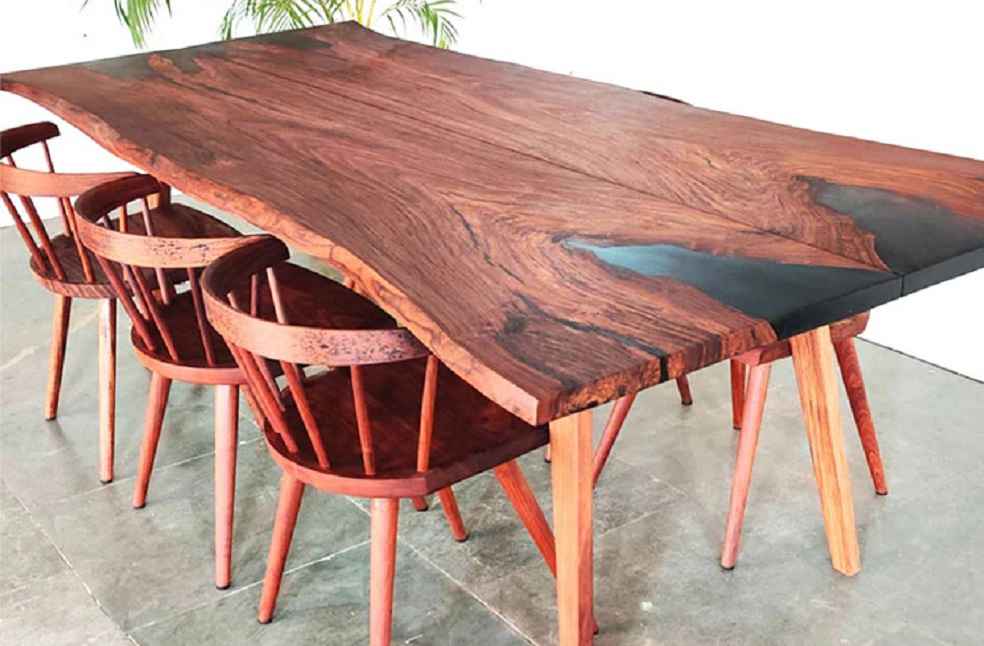
India has also emerged as a promising market, with its rapid urbanization, rising disposable income, and preference for compact, modular furniture. E-commerce platforms like Amazon India and Flipkart have proven lucrative for Vietnamese exporters of lightweight, space-efficient designs tailored to apartments and office spaces.
Furthermore, ongoing Free Trade Agreement (FTA) negotiations between Vietnam and India could soon lower import tariffs from 10% to 5%, significantly enhancing the competitiveness of Vietnamese wood products in the Indian market.
BUSINESS GENERAL | Morocco’s Imports Surge Faster Than Exports Amid Rising Domestic Demand
