


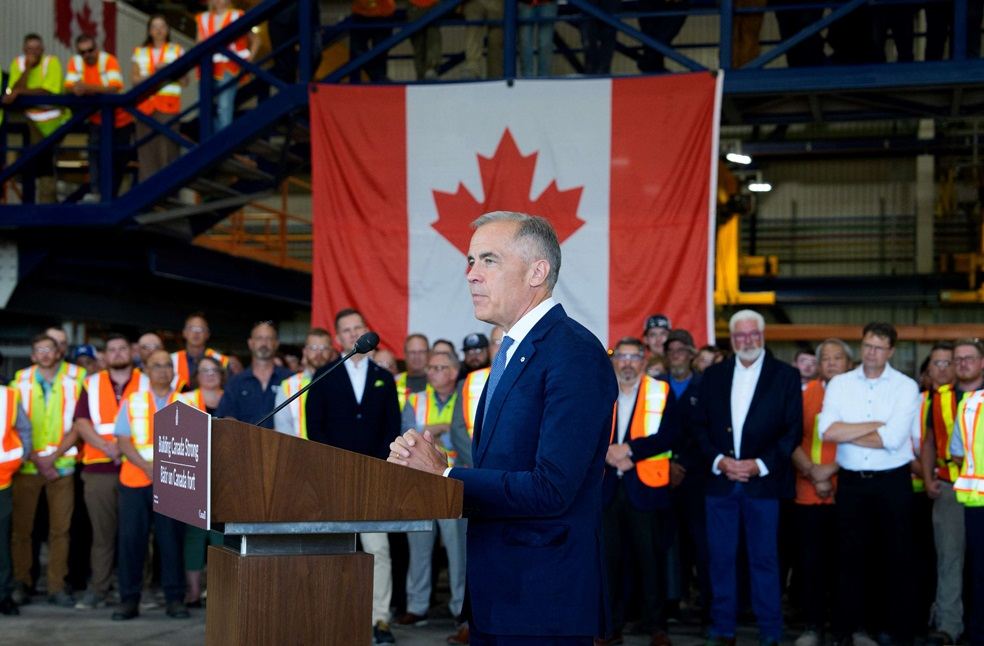
Canadian Prime Minister Mark Carney is implementing a range of trade protections to support Canada’s steel industry against foreign imports. The new measures include tighter restrictions on steel imports, even from nations with free trade agreements, as part of a broader effort to shield domestic mills from market disruptions.
Carney made the declaration on Wednesday in Hamilton, presenting it as support for the steel industry, which has been hit by layoffs and reduced production in the weeks following the steep import tariffs imposed by the U.S.
Carney also outlined that his government will allocate $1 billion from the Strategic Innovation Fund to support new development projects within the steel sector. Additionally, $70 million will be invested in workforce training programs to help steelworkers upgrade skills and adapt to evolving industry demands.
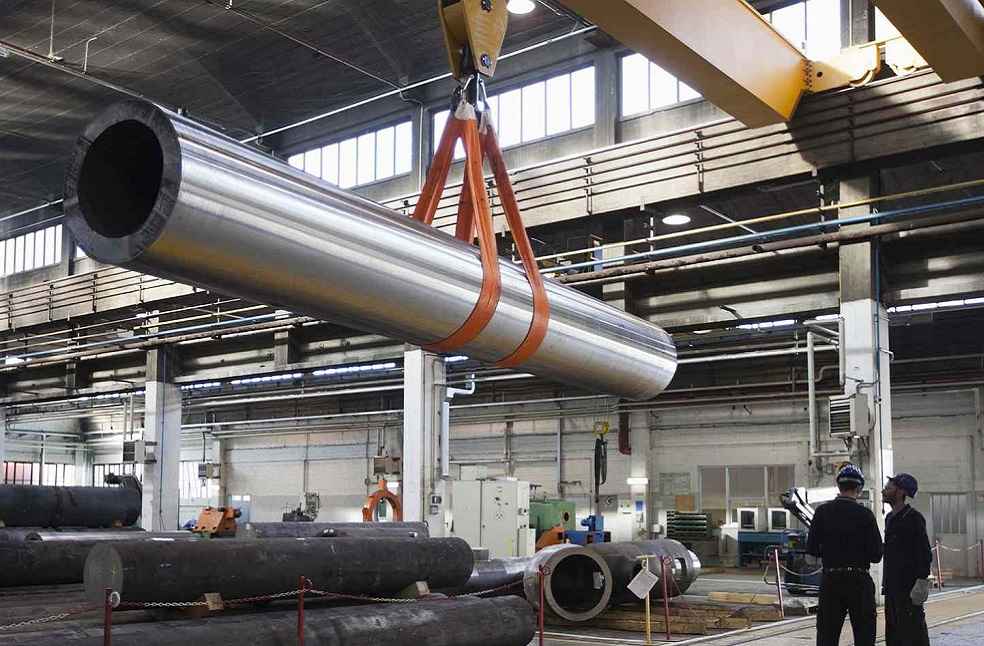
“We must rely more on Canadian steel for Canadian projects, and those shifts start today,” Carney said while pledging to enforce controls by the end of the month.
Carney stated that the new set of policies is intended to boost the use of steel produced within Canada and promote growth across the domestic industry. He noted that Canada has traditionally maintained a more open stance toward steel imports compared to nations like the United States and European countries. However, the sector is now facing a significant transformation, as foreign manufacturers increasingly gain advantages through unfair competitive practices.
According to Carney, steel products from countries without free trade agreements, such as China and Turkey, will face reduced quota limits, capped at 50% of the 2024 volumes. Imports exceeding those thresholds will incur a 50% tariff.
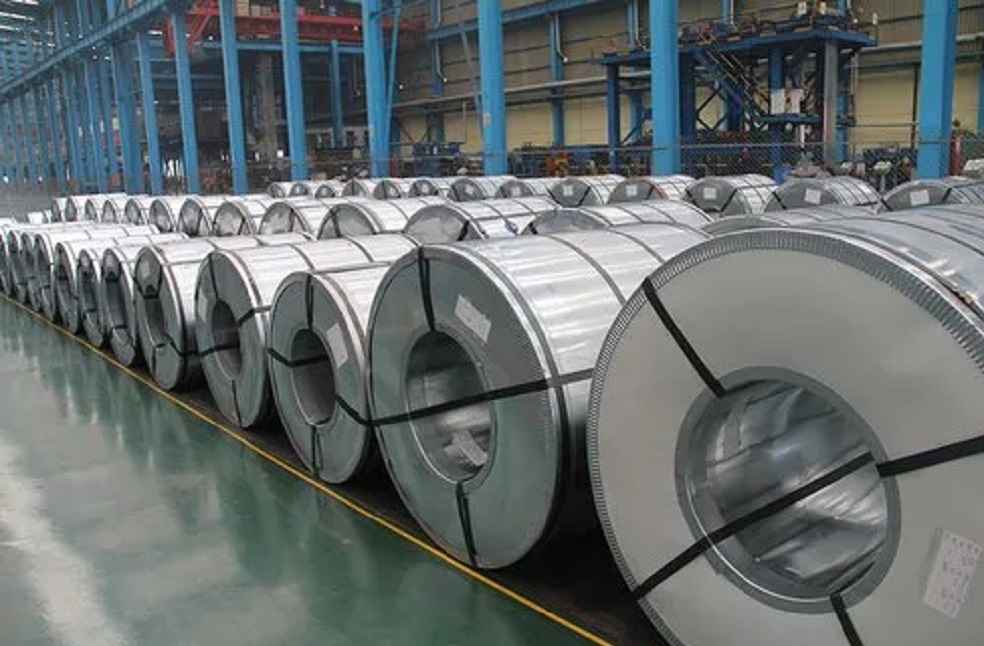
In addition, the federal government plans to extend similar measures to free trade partners, excluding the U.S. and Mexico, with a 50% tariff applied to steel imports that go beyond 2024 levels.
Carney also confirmed that Canada will introduce a separate 25% tariff on any imports from nations other than the U.S. that contain steel originally melted and poured in China, to curb the indirect entry of subsidized steel into the Canadian market.
Carney emphasized that Canada’s new administration will place Canadian steel at the forefront of major infrastructure projects, including the construction of homes, ports, bridges, energy systems, and defense-related facilities. Furthermore, he shared upcoming changes to the federal procurement process that will require contractors working with the government to use Canadian steel in the projects.
TRADE WORLD | New U.S. Trade Agreement with Indonesia Eases Tariffs on Exports