


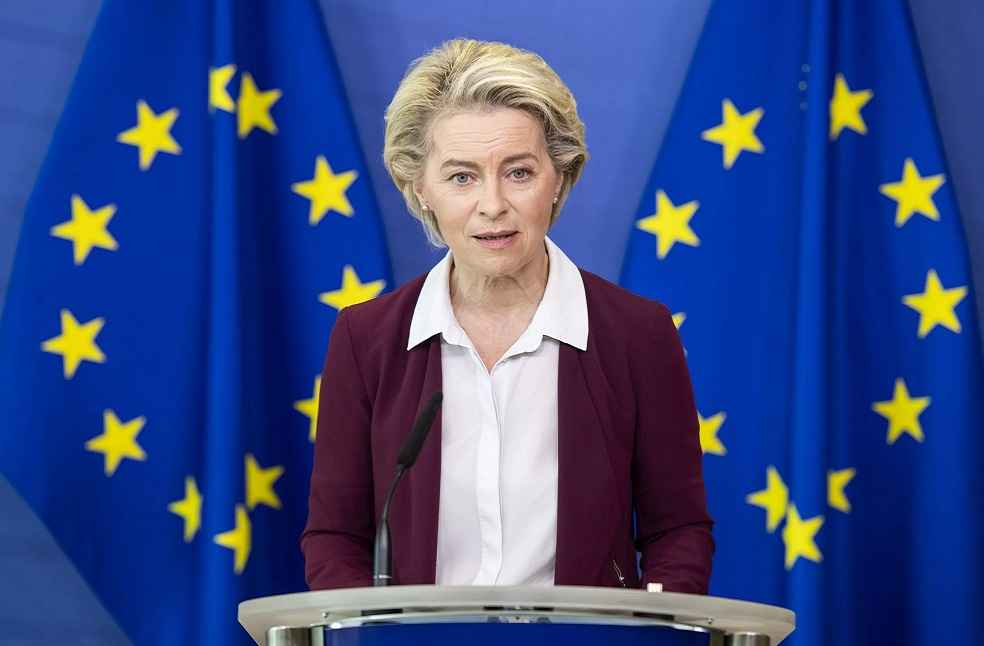
European Commission President Ursula von der Leyen has called on EU leaders to spearhead a new trade cooperation framework with Asian countries, presenting it as a step toward reforming or even redesigning the World Trade Organization (WTO), which has long been strained by gridlock.
Speaking at the EU summit in Brussels on Thursday, von der Leyen outlined options for deeper trade ties, notably with members of the Comprehensive and Progressive Agreement for Trans-Pacific Partnership (CPTPP)—a regional trade pact that includes 11 Pacific Rim countries and the UK. She framed this potential cooperation as a response to the WTO’s prolonged dysfunction.
“The WTO hasn’t worked for years,” said German Chancellor Friedrich Merz during a press conference after the summit, citing years of stagnation under successive U.S. administrations.
Von der Leyen described the proposed initiative as a means to restore confidence in rules-based global trade, arguing that the EU must take the lead. “This is a project we should truly engage in. CPTPP and the European Union, that’s my team,” she said.
While acknowledging the WTO’s enduring value, von der Leyen stressed the need to address its limitations. “We can think about this as the beginning of redesigning the WTO, of course, understanding what should be reformed positively within it,” she noted.
Asked whether the United States should participate, von der Leyen said, “As far as I understand, the Americans left the CPTPP at a certain point,” referencing the U.S. withdrawal from the trade pact during the Trump administration.

The initiative reflects growing frustration over the WTO’s inability to resolve disputes or advance major negotiations. The organization’s Appellate Body has been non-functional since December 2019, when the U.S. began blocking new appointments, effectively crippling the two-tier dispute resolution system.
Although 57 WTO members, including the UK, Paraguay, and Malaysia, have joined the Multi-Party Interim Appeal Arbitration Arrangement (MPIA) to replicate the Appellate Body’s function, this mechanism covers only about 57.6% of global trade and does not tackle the WTO’s broader structural issues.
Key negotiations on issues such as agricultural reforms and the elimination of harmful fisheries subsidies remain deadlocked due to conflicting positions from major players, including the U.S., China, Japan, and the EU itself.
TRADE TECH | China Condemns Taiwan’s Export Blacklist of Chinese Tech Firms
