


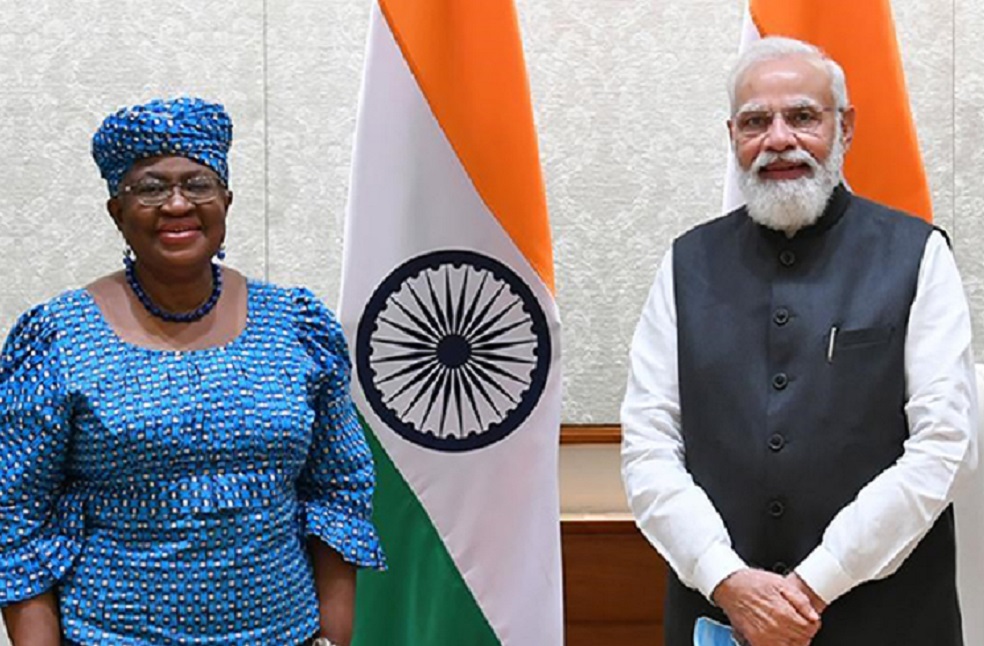
World Trade Organization (WTO) Director General Ngozi Okonjo-Iweala on Friday called on India to take a leading role in driving reforms at the WTO, warning that the global trading system must remain rules-based rather than drift toward a power-based order.
Speaking at the inaugural session of the 30th CII Partnership Summit 2025 in Visakhapatnam, she said the world is undergoing major shifts in trade and that India is well-positioned to benefit from them.
“India should be a leader in the reform process at the WTO. India should be a leader, making sure that we do not stay in a system that becomes more power-based instead of rule-based. We must do the work that is necessary to give reform a chance. We must correct old wrongs and seize opportunities that are emerging,” she said.
Okonjo-Iweala noted that global supply chains are being reconfigured, with India emerging as a key beneficiary. She highlighted the rapid expansion of green trade and digitally delivered services, stating that the latter is growing at 6 to 8% and is now worth almost $5 trillion.
She said India has a strong opportunity to build further momentum since it is already performing well in digitally delivered trade. She added that South-South trade is rising again, giving India additional room to expand.
The WTO chief said India is playing a major role in ongoing reforms and can help shape a more flexible system that allows smaller developing economies to benefit. She urged India to work with the global community to strengthen a system that has delivered for the world but can still do more, especially for developing nations.
Okonjo-Iweala praised India’s economic performance, describing it as the fastest-growing large economy in recent years, with growth exceeding 6% in 2024–2025.
She said the momentum is expected to continue, supported by strong domestic demand, steady investment, and stable macroeconomic conditions. She congratulated Prime Minister Narendra Modi, the government, and citizens for this progress.

Emphasizing the continued importance of multilateralism, she said that even with rising bilateral partnerships, the world still needs strong global institutions. “You cannot have global growth without global trade growth. You cannot even have growth in India without trade growth,” she said, adding that global financial stability depends on trade stability.
She warned that the world is facing the biggest disruptions in global trade in eight decades, marked by unprecedented challenges and an undermining of trade rules.
Addressing long-standing concerns raised by India and other developing countries, she acknowledged unresolved issues such as public stockholding, limited integration of developing economies, and unfulfilled ministerial mandates. She said the failure of the Doha Round created frustration and mistrust that still linger.
She stressed that repeating past grievances will not help and that the world now has an opportunity to build resilience and capture emerging gains through constructive reform.
METAL WORLD | Norway Opposes EU Safeguard Measures on Ferroalloy Imports