


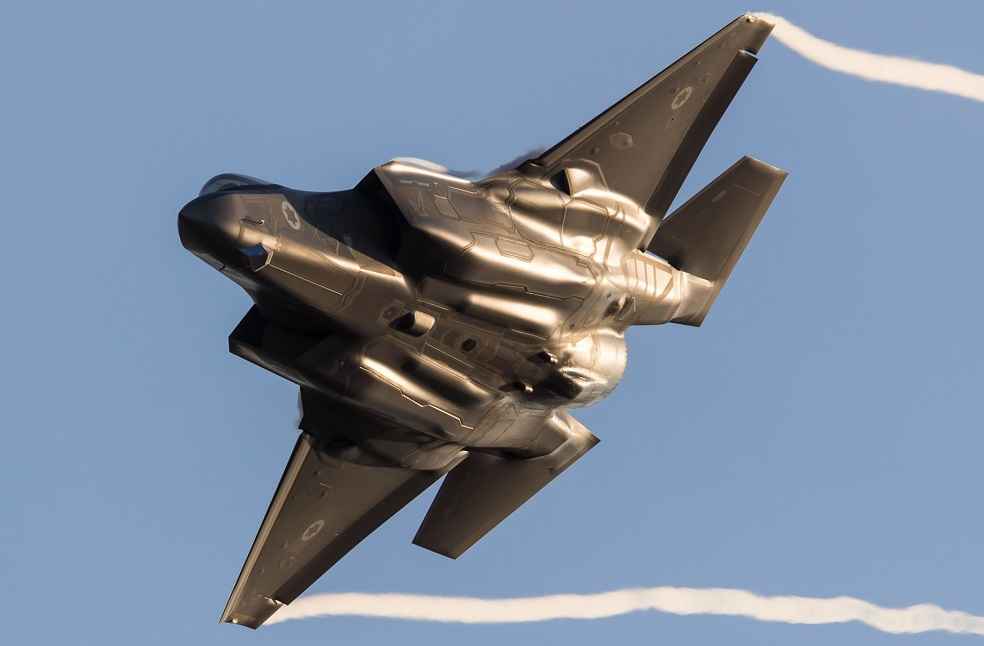
The United Kingdom’s High Court has decided that British-made parts for U.S.-built F-35 fighter jets can still be sent to Israel. The court rejected a legal case by human rights groups who were concerned that the parts could be used in potential breaches of international law in Gaza.
The case, brought by the West Bank-based rights group al-Haq and the Global Legal Action Network against the UK’s Department for Business and Trade, aimed to stop the export of all British components used in F-35 aircraft accessible to Israel. The claimants argued that these parts risk being used in the ongoing conflict in Gaza, where they allege international law is being breached.
The court concluded that the matter falls within the remit of the UK government, not the judiciary. In their judgment, the two presiding judges stated that the court was not being asked whether the UK should export arms to Israel, but whether the country was legally obligated to withdraw from a multilateral defence collaboration, the F-35 program, based on potential use of UK-made components in the conflict.

“Under our constitution, that acutely sensitive and political issue is a matter for the executive, which is democratically accountable to parliament and ultimately to the electorate, not for the courts,” the ruling stated.
The UK had previously suspended around 30 arms export licences to Israel in September 2023 due to concerns that UK-manufactured weapons could be used in ways that breach international law in Gaza. It maintained its participation in the F-35 program, which involves supplying parts to a global component pool. Israel, as a program partner, has access to this shared supply.
The government argued that exiting the program would carry serious defence and diplomatic consequences, including potentially undermining UK relations with the United States and NATO, and risking broader international stability. Business Minister Jonathan Reynolds was described in the judgment as being faced with the “blunt choice” of accepting the F-35 carve-out or withdrawing entirely from the collaboration.
UK industry contributes roughly 15% of each F-35 aircraft, according to the Campaign Against the Arms Trade.

Despite the ruling, several human rights organizations strongly criticized the decision. Amnesty International and Human Rights Watch, which intervened in the case, expressed disappointment and concern over the implications for civilians in Gaza.
Sacha Deshmukh, Chief Executive of Amnesty International UK, remarked: “The horrifying reality in Gaza is unfolding in full view of the world: entire families obliterated, civilians killed in so-called safe zones, hospitals reduced to rubble, and a population driven into starvation by a cruel blockade and forced displacement. This judgment does not change the facts on the ground, nor does it absolve the UK government of its responsibilities under international law.”
Human Rights Watch’s UK Director, Yasmine Ahmed, said the decision highlighted the erosion of legal protections. “Judicial deference to the executive in this case has left the Palestinians in Gaza without access to the protections of international law, despite the government and the court acknowledging that there is a serious risk that UK equipment might be used to facilitate or carry out atrocities against them,” she said.
Oxfam, which also submitted evidence, described the continued licensing of parts for jets involved in attacks on Gaza as ‘unconscionable.’
The UK government affirmed that it would maintain ongoing reviews of its defence export licensing. A government spokesperson stated, “The court has upheld this government’s thorough and lawful decision-making on this matter.”
Lawyers representing the human rights groups are now assessing the possibility of appealing the ruling.
IMEX SECTOR | China Partially Lifts Ban on Seafood Imports from Japan