


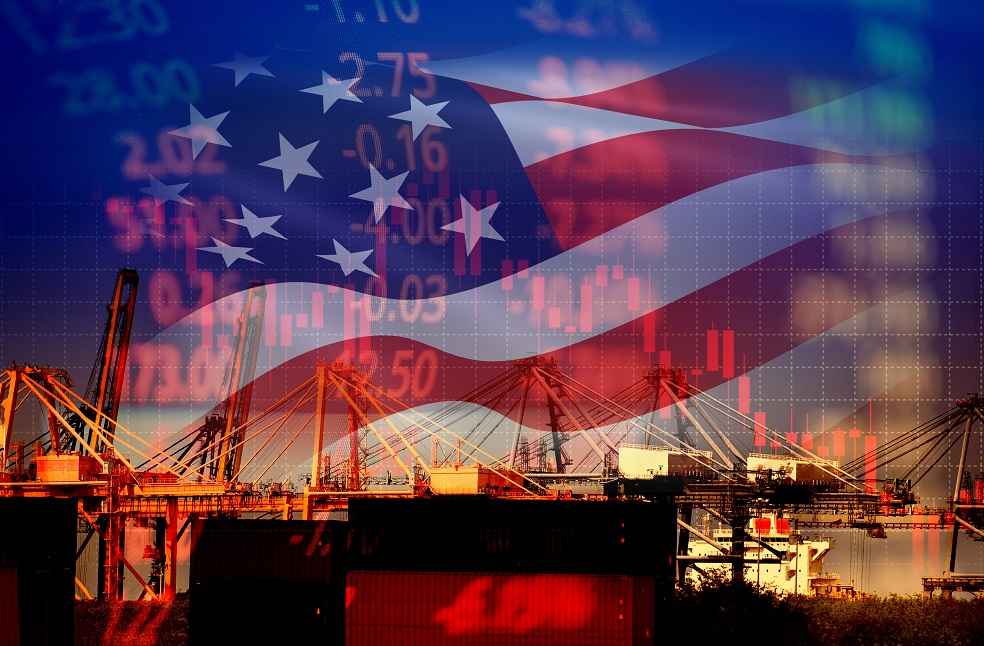
U.S. imports of goods continued to exceed exports last year, pushing the nation’s trade deficit to a record high despite the broad tariffs implemented by U.S. President Donald Trump.
Official data show that the gap between imports and American exports grew by 2.1% from 2024, reaching approximately $1.2 trillion (£890 billion).
The growing deficit contradicts the central goal of the White House, which argued that America’s dependence on imported goods has weakened domestic manufacturing and threatened national security.
The increase occurred even though trade with China—one of the first targets of U.S. tariffs—fell sharply.
Last year, Trump imposed tariffs of at least 10% on goods from nearly every nation. He argued the levies would strengthen U.S. manufacturing and help American companies compete abroad.
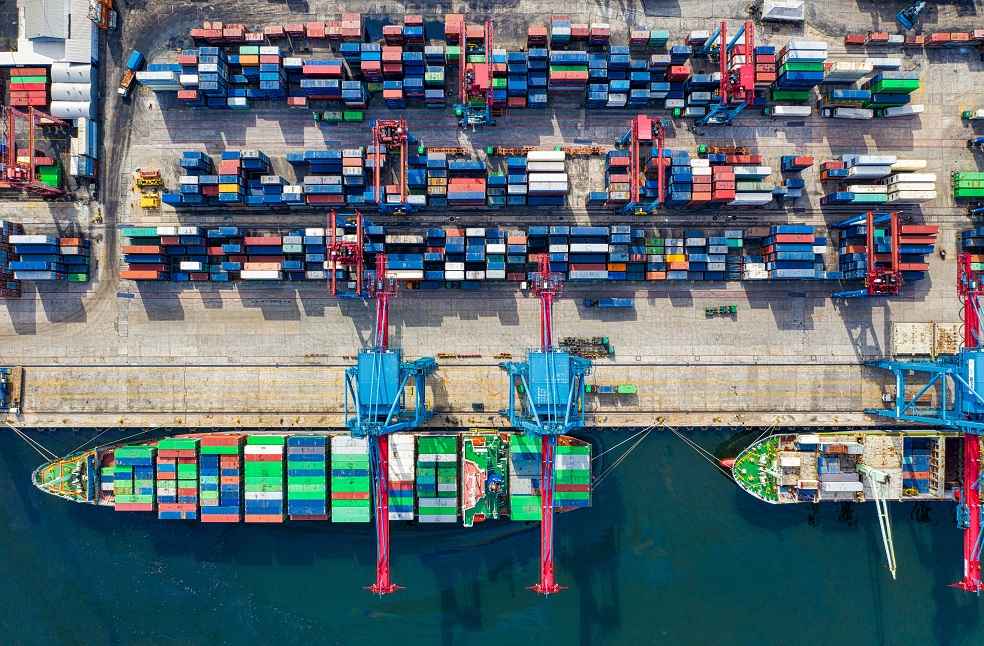
The tariffs—much higher than the rates agreed under previous trade deals—caused significant disruption for businesses and the global economy.
Imports of goods—many of which U.S. companies had stockpiled early last year to get ahead of Trump’s tariff measures—rose to a record $3.4 trillion, according to the Bureau of Economic Analysis. Rising demand, fueled in part by business investment in artificial intelligence, drove a surge in imports of computer parts and equipment.
Exports also climbed to a new high, even though shipments of food, cars, and auto parts—sectors most affected by the trade measures—declined.
U.S. trade with China, covering both imports and exports, fell, cutting the trade deficit with the country by about 30% to $202.1 billion, the smallest gap in roughly two decades. However, the U.S. still saw record trade deficits with several other countries, including Mexico, Vietnam, and Taiwan.

Overall, the combined deficit in goods and services—which includes areas like travel and digital services—stood at $901.5 billion last year, nearly unchanged from $903.5 billion in 2024.
The White House has acknowledged that its measures will take time to yield results, but frequent changes to the tariffs under Trump have added uncertainty to the strategy.
Trump has leveraged the threat of tariffs as a bargaining tool in international negotiations. Most recently, he issued an executive order allowing the U.S. to impose extra taxes on countries that keep trading with Iran.
Meanwhile, the Supreme Court is reviewing a lawsuit by businesses and states against the duties, a case that could overturn much of last year’s tariffs. If the administration loses, White House officials have indicated they would reintroduce the measures through alternative mechanisms.
AUTOMOTIVE WORLD | U.S. ITC Probes CUSMA Auto Rule Impact on U.S. Jobs and Trade