



The United States has agreed to lower tariffs on Indian exports to 18% under a new trade agreement, down from the effective 50% levy, according to an announcement by U.S. President Donald Trump. In return, India will reduce both tariff and non-tariff barriers on American products to zero.
Previously, Indian goods entering the U.S. were subject to a 25% reciprocal tariff along with an additional 25% penalty. Washington had linked the extra levy to India’s continued purchase of Russian crude oil despite U.S. objections following the Russia-Ukraine conflict.
The revised tariff structure is expected to make Indian exports more price-competitive in the American market and improve their relative position against other exporting countries.
Under the new framework, India now faces lower tariffs than several major exporters to the U.S., including China, Pakistan, Indonesia, Bangladesh, and Vietnam. The reduced rate gives Indian manufacturers an advantage as their products will attract lower import taxes compared to competitors in many emerging markets.
According to the White House, Brazil currently faces the highest U.S. tariff at 50%, followed by Myanmar and Laos at 40% each. China’s exports are subject to a 37% tariff, while South Africa faces a 30% rate.
Among developed economies, the European Union, Japan, South Korea, and Switzerland benefit from lower tariffs of around 15%, and the United Kingdom faces just 10%.
In Southeast Asia, India’s new tariff rate is lower than that applied to Bangladesh and Vietnam, which face 20% duties, and slightly below Malaysia, Cambodia, Thailand, and Pakistan, which are taxed at around 19%.
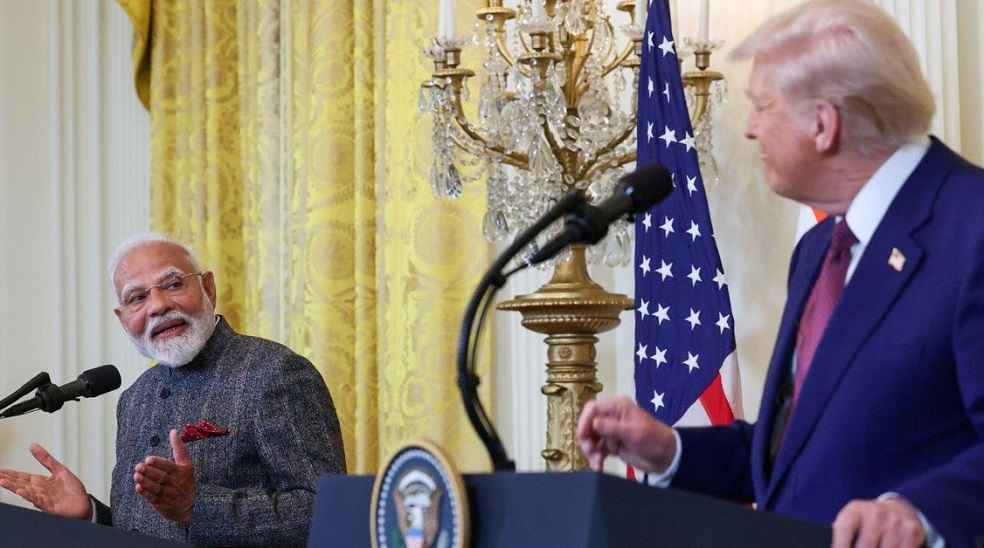
Following a phone conversation with Indian Prime Minister Narendra Modi, President Trump wrote on his social media platform Truth Social that the two leaders discussed trade and efforts to end the war between Russia and Ukraine.
Trump claimed that Modi had agreed to stop buying Russian oil and to increase purchases from the United States and potentially Venezuela.
Shortly after, Modi welcomed the tariff reduction in a post on X, saying he was pleased that ‘Made in India’ products would now face a reduced tariff of 18% and thanked Trump on behalf of India’s 1.4 billion people. The Indian prime minister did not refer to any commitment to cut or halt imports of Russian oil.
India remains one of the largest buyers of Russian crude, importing roughly 1.5 million barrels per day. Data from energy analytics firm Kpler, cited by CNN, indicates that Russian oil accounts for more than one-third of India’s total crude imports.
POLICY & LAW | Vietnam’s Food Safety Inspections Stall Agri-Imports at Borders
