


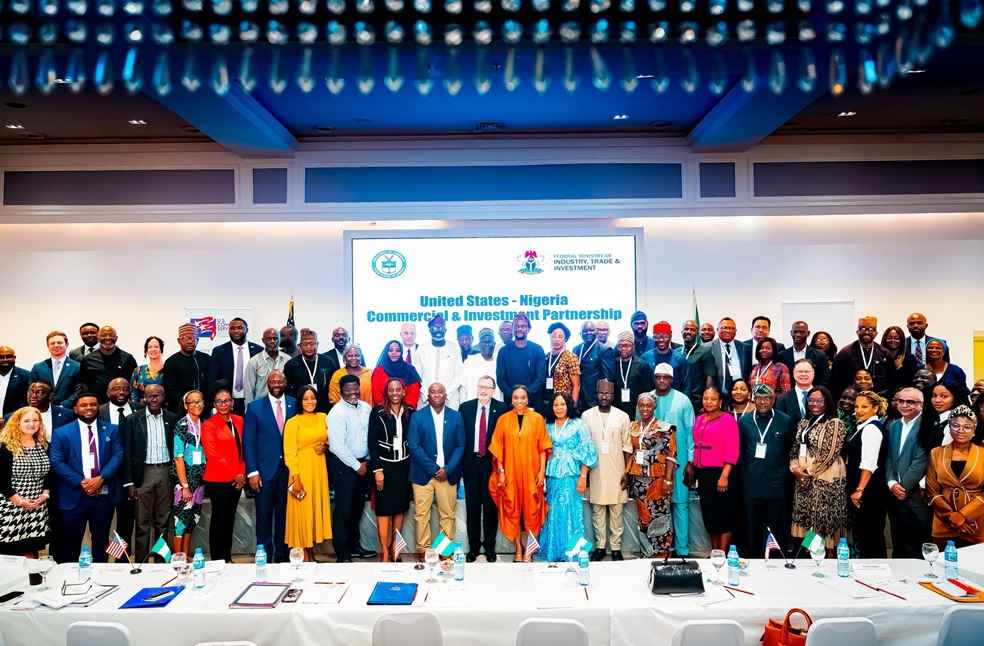
The United States and Nigeria took a crucial step to broaden the economic ties by launching working group meetings under the U.S.–Nigeria Commercial and Investment Partnership (CIP). The initiative was inaugurated in Abuja on Tuesday, where senior officials and private sector stakeholders from both countries gathered to promote commercial collaboration and explore new avenues for trade and investment.
The Commercial and Investment Partnership was established through a five-year Memorandum of Understanding signed by U.S. Commerce Secretary Gina Raimondo and Nigerian Minister Dr. Jumoke Oduwole in July 2024. The CIP aims to strengthen bilateral relations by tackling sector-specific challenges and promoting job creation in both nations.
The meeting was headed by four officials: U.S. Ambassador to Nigeria Richard Mills; Julie LeBlanc, Senior Commercial Officer at the U.S. Department of Commerce; Nigerian Minister, Oduwole; and Ambassador Nura Rimi, the ministry’s Permanent Secretary.

During the inauguration, U.S. Ambassador to Nigeria Richard Mills expressed that the CIP is a central focus of his tenure, and he is deeply pleased to witness the official launch of the working groups.
“The CIP underscores the United States’ strong commitment to further enhancing our bilateral commercial and investment ties, fostering economic growth, and creating opportunities that benefit people across both our great nations,” he added.
U.S. Deputy Assistant Secretary for the Middle East and Africa, Thomas Bruns, emphasized that boosting cooperation in growth sectors, such as infrastructure, agriculture, and the digital economy, can drive shared prosperity, generate employment opportunities, and lay the groundwork for long-term, inclusive economic development.

The inaugural meeting prioritized three newly established working groups focused on agriculture, the digital economy, and infrastructure—sectors considered essential for long-term economic development. Each group comprised business delegates from both nations and began its work by appointing leadership and identifying non-tariff obstacles to trade and investment.
The primary objective of the group is to support job creation, strengthen private sector involvement, and advise policymakers to address major challenges within these vital sectors.
LEADERS SPOT | Chinese Premier Warns of Rising Global Trade Tensions