


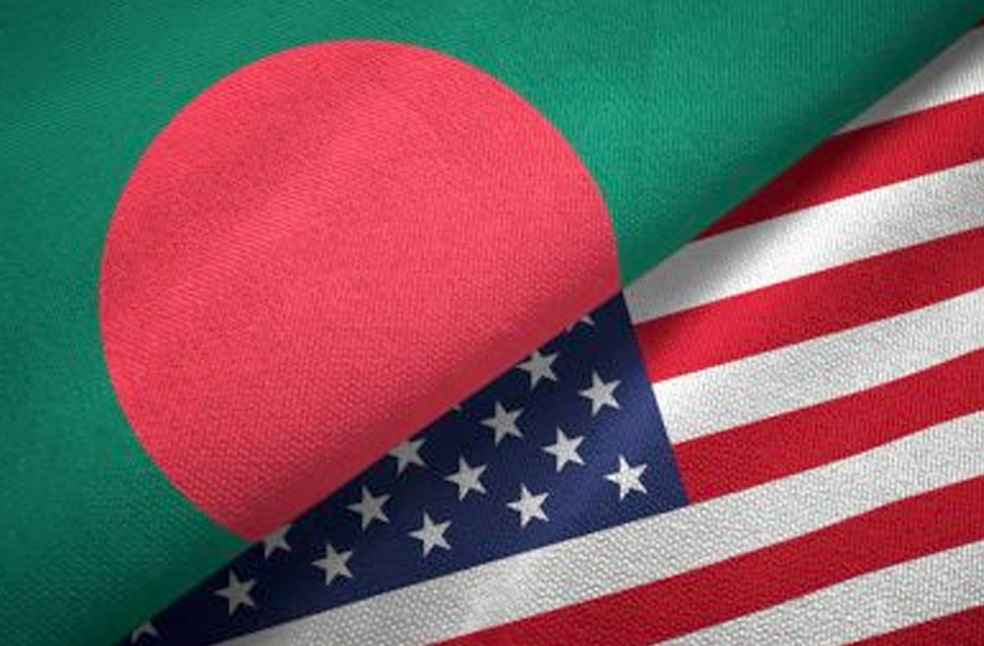
The U.S. and Bangladesh on Monday finalized the United States–Bangladesh Agreement on Reciprocal Trade, marking a step toward stronger bilateral economic relations. Under the revised framework, Bangladeshi exports to the U.S. market will face a 19% tariff—slightly lower than the 20% imposed in August and well below the original reciprocal rate of 37%.
The agreement was signed by U.S. Trade Representative Jamieson Greer and Bangladesh’s Adviser for Commerce, Textiles and Jute, and Civil Aviation and Tourism, Sheikh Bashir Uddin, in the presence of Bangladesh Commerce Secretary Mahbubur Rahman and Assistant U.S. Trade Representative Brendan Lynch.
The pact, signed after more than nine months of negotiations, introduces special exemptions allowing certain apparel and textile products to enter the U.S. market duty-free, provided they are manufactured using American cotton or synthetic fibers.
According to the Commerce Secretary, the United States has granted duty-free or reduced-duty access to 2,500 Bangladeshi products, while Bangladesh has extended similar concessions to 4,400 American products.
“Committed to establishing a mechanism for certain textile and apparel goods from Bangladesh using U.S.-produced cotton and man-made fiber to receive zero reciprocal tariff in the U.S. market,” Bangladesh’s interim chief adviser, Muhammad Yunus, said.
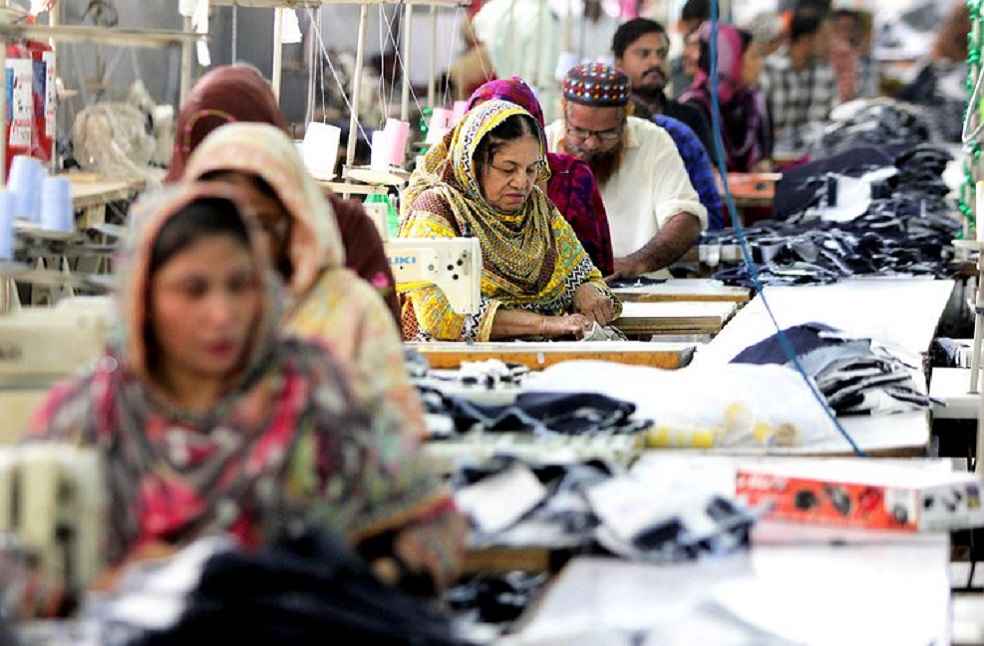
The apparel industry is the cornerstone of Bangladesh’s economy, making the country the world’s second-largest clothing exporter after China. The sector contributes over 80% of Bangladesh’s total export earnings and provides employment to approximately four million workers.
Under the new agreement, Bangladesh has committed to providing broader preferential access to U.S. industrial and agricultural products, including chemicals, medical devices, machinery, automobiles and their components, ICT equipment, energy supplies, dairy, beef, poultry, nuts, and fruits. Both countries will also work to eliminate Bangladeshi non-tariff barriers that hinder trade and investment.
Measures include recognizing vehicles that meet U.S. federal safety and emissions standards, accepting U.S. Food and Drug Administration certifications and prior approvals for pharmaceuticals and medical devices, and lifting import restrictions or licensing requirements on U.S. remanufactured products and parts.
In addition, Bangladesh will facilitate trusted cross-border data flows, support a permanent WTO ban on customs duties for electronic transmissions, adopt science- and risk-based systems for safe American food and agricultural imports, liberalize the insurance sector, digitize customs procedures, and implement regulatory practices.
Furthermore, the two countries also recognized recent and forthcoming commercial agreements in sectors including agriculture, energy, and technology. These agreements encompass the procurement of aircraft, the purchase of approximately $3.5 billion in U.S. agricultural commodities such as wheat, soy, cotton, and corn, and energy imports projected to total around $15 billion over the next 15 years.
ORGANIZATIONS NEWS | IATA World Cargo Symposium 2026 to Spotlight Trade Shifts