



Russia has cited a newly concluded free trade agreement between Indonesia and the Eurasian Economic Union (EAEU) as proof that Moscow favors market liberalization over protectionist tariff policies. The move stands in indirect divergence from the trade approach of U.S. President Donald Trump.
Indonesia closed 2025 by finalizing a free trade pact that will expand access to the EAEU, a $2.56 trillion economic bloc comprising Armenia, Belarus, Kazakhstan, Kyrgyzstan, and Russia. The agreement is awaiting approval from lawmakers, but expectations are already high among businesses and policymakers.
In an exclusive interview with BTV, Russian Ambassador to Indonesia Sergei Tolchenov described the deal as a major milestone for bilateral relations at a time of heightened global economic uncertainty.
“I have heard from analysts and businesspeople. Hopefully, in two or three years, the agreement will let us double our trade volume. This will be a very good process, because 90% of goods from Indonesia and Eurasian countries will be free of tariffs,” Tolchenov said on Friday.
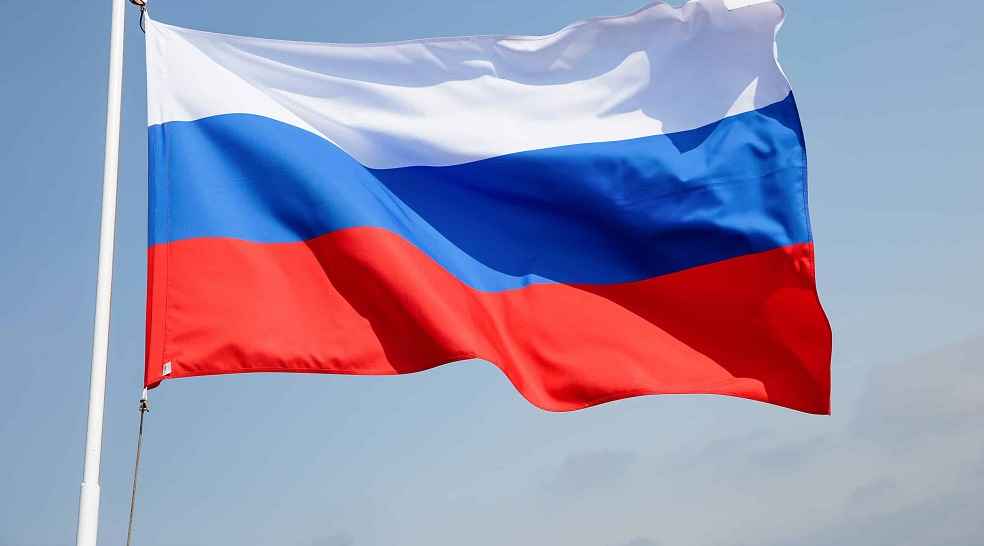
He added that the agreement reflects a clear preference for trade liberalization rather than tariff escalation. “It’s not like some other country that applied high tariffs for you and asked you to sign a tariff deal. We try to liberalize our bilateral trade,” he said, in a thinly veiled reference to recent U.S. trade measures.
Under the pact, Indonesia has committed to cutting its average tariff rate on EAEU goods from 10.2% to 2%, according to the Eurasian Economic Commission. Trade Minister Budi Santoso previously said that Indonesian palm oil exports to the bloc would face tariffs “close to zero percent.”
In return, the EAEU will grant preferential treatment to Indonesian products across 90.5% of its tariff lines. The government is expected to release more details on final tariff schedules once the agreement formally enters into force. Indonesia’s trade with the EAEU was estimated at $4.4 billion in 2024.
Tolchenov’s remarks come as Jakarta continues negotiations with Washington over a separate tariff arrangement. Talks began in April 2025, the same month the Trump administration imposed reciprocal tariffs on Indonesia and several other trading partners.

The U.S. later agreed to reduce import duties on Indonesian goods from 32% to 19%, following a series of concessions by Jakarta, including easing tariffs and non-tariff barriers on American products. Indonesia is aiming to finalize the U.S. deal within this month.
Among the five EAEU members, Russia is Indonesia’s largest trading partner. Bilateral trade reached nearly $4.4 billion between January and November 2025. Indonesia’s trade deficit with Russia more than doubled to $934.6 million over the same period compared with the previous year, according to Trade Ministry data.
Tolchenov said the two economies complement rather than compete with each other. “Our economies are not concurrent, but complementary. Russia has strong potential in energy, grains, and fertilizers, while Indonesia has tropical agricultural products that we do not have,” he said.
ENERGY INDUSTRY | U.S. Weighs Blockade on Cuba’s Oil Imports to Pressure Havana