


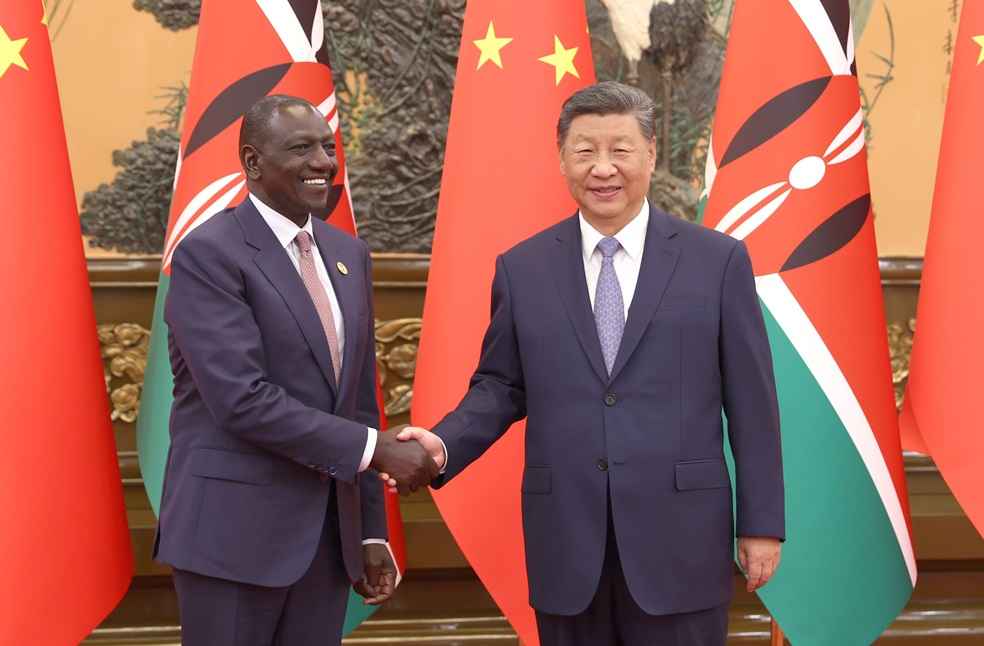
Kenya declared on Thursday that it has secured a preliminary trade agreement with China, granting duty-free access to 98.2% of its exports to the Chinese market, according to the country’s trade ministry.
The development comes as Kenya and China work toward a comprehensive bilateral deal, following Nairobi’s exclusion from Beijing’s roster of least developed countries eligible for duty- and quota-free access, Bloomberg reported.
During a state visit to Beijing last year, Kenyan President William Ruto strengthened relations with China, signing multiple financing and cooperation agreements to promote trade and investment.
“We have initiated discussions with China to negotiate a bilateral trade agreement,” the trade ministry said, adding that “these engagements have resulted in a preliminary agreement.”
Ruto has justified Kenya’s closer ties with China, stressing the need to expand exports to Asian markets to address a trade deficit that benefits Beijing. According to Trade Minister Lee Kinyanjui, the Kenya-China agreement is intended to diversify the East African nation’s markets and ‘reduce trade imbalances.’
Many African nations are turning increasingly to China and other trading partners following steep global tariffs imposed by U.S. President Donald Trump last year.
While Kenya faced the lowest tariff hike of 10% under Trump’s administration, it was also affected by the expiration of the African Growth and Opportunity Act (AGOA) in September—a long-standing agreement that granted duty-free access to the U.S. market for cars, clothing, and other goods from 32 African countries.
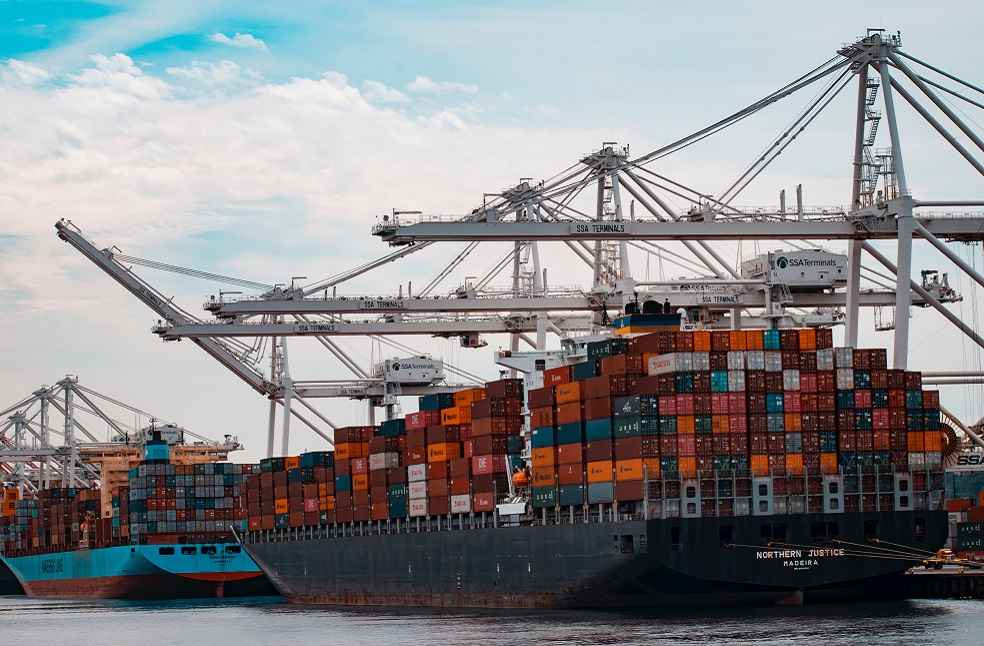
Kenyan officials view the deal with China as a safeguard against economic challenges. According to reports, the agreement would remove tariffs on Kenyan tea, coffee, horticultural produce, processed foods, and other value-added goods, providing an alternative market for major agricultural exports and helping offset rising costs in the United States.
In 2024, U.S. Senator James Risch urged an inquiry into Kenya’s trade ties with Beijing, citing China’s extensive investments in the country’s infrastructure.
The Ministry of Investments, Trade, and Industry anticipates that expanded market access will boost production, draw investment into export-driven sectors, and generate employment throughout supply and value chains. Higher exports are also expected to strengthen foreign exchange earnings and contribute to overall economic growth.
TRADE TECH | Trump Slaps 25% Tariff on Computing Chips, Citing Security