


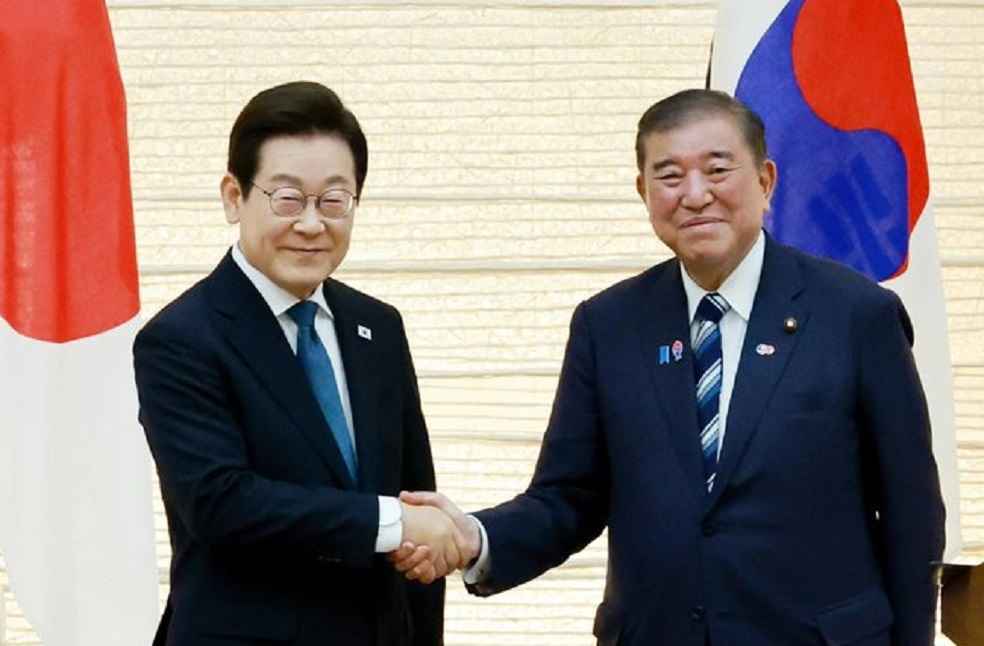
The leaders of South Korea and Japan pledged closer economic ties on Tuesday in a wide range of areas as both nations navigate an evolving global trade environment, according to Seoul-based Yonhap News.
South Korean President Lee Jae Myung hosted Japanese Prime Minister Shigeru Ishiba in the port city of Busan, marking the first visit in 21 years by a Japanese leader to a South Korean city outside the capital.
Presidential spokeswoman Kang Yu-jung said the leaders agreed on the need for deeper coordination and expanding collaboration into new areas, including Arctic shipping routes. Lee expressed hope that the two countries could “build a very close relationship that goes beyond relatable social issues to encompass economic and security issues.”
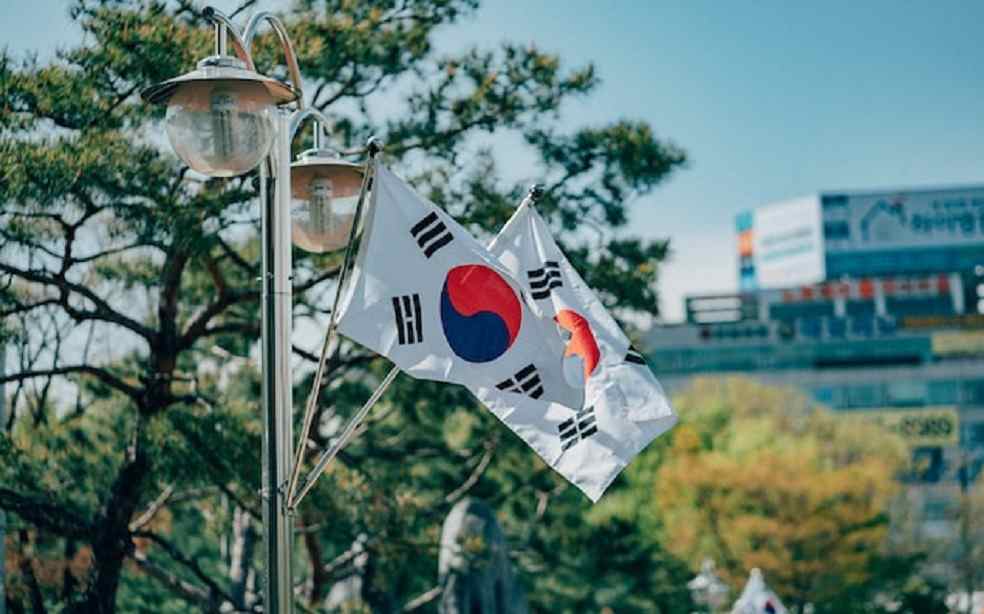
Lee also highlighted his administration’s aim to ease tensions on the Korean Peninsula, seek trust-building measures, and resolve the North Korean nuclear issue, asking for Japan’s support. Kang added that both leaders reaffirmed their shared commitment to the complete denuclearization of the Korean Peninsula and the pursuit of lasting peace.
Prime Minister Ishiba stressed the importance of frequent leadership exchanges, saying, “They are extremely significant. It is possible to increase their frequency to live up to the name shuttle diplomacy,” according to Kyodo News.
Ishiba’s two-day trip to South Korea follows Lee’s visit to Japan last month and marks his first trip to the country since taking office in October last year. Earlier this month, Ishiba announced his resignation after his ruling coalition lost its majority in both houses of parliament amid voter dissatisfaction with the rising cost of living. The Liberal Democratic Party is set to elect its successor on October 4.
The meeting took place against the backdrop of shifting trade alignments involving both countries and the United States. Japan signed a trade deal with Washington in September that set a baseline 15% tariff on nearly all Japanese imports in return for $550 billion in Japanese investment in U.S. projects.
South Korea reached a framework agreement with the U.S. in July to lower tariffs on Korean imports from 25% to 15% in exchange for $350 billion in U.S. investments. The two sides remain at odds over structuring the investment fund, leaving the possibility that tariffs on South Korean goods could revert to 25% if no agreement is finalized.
BANKING & FINANCE | RBI Moves to Globalize Rupee as Nepal, Sri Lanka, Bhutan Adopt INR