


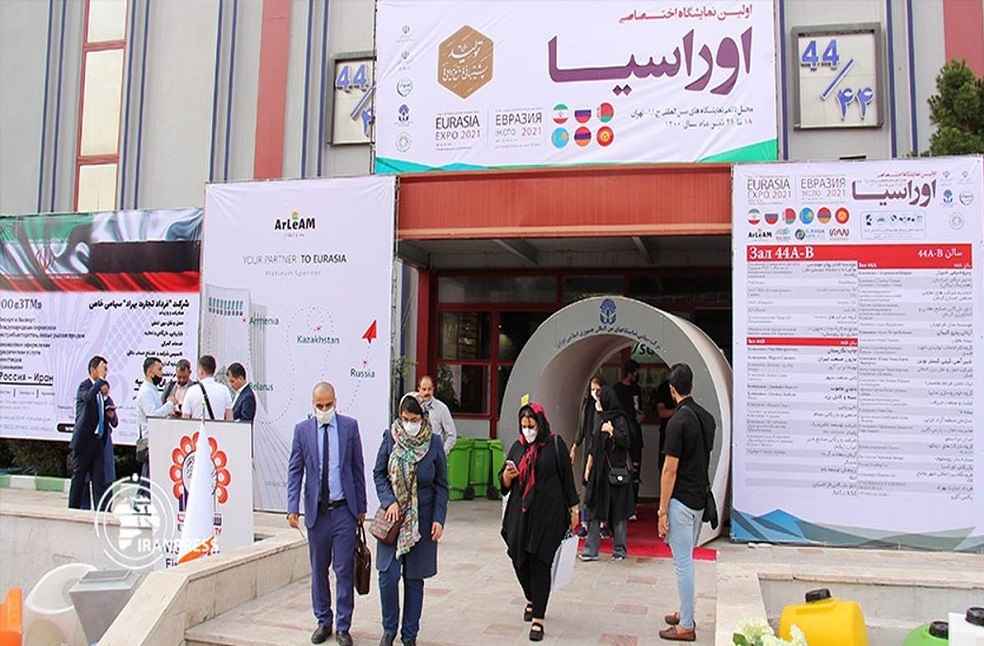
The fourth Eurasia International Trade Exhibition has been postponed to the second half of the Iranian calendar month Farvardin, corresponding to late March or early April, to allow for improved organization and a more comprehensive hosting of the international event.
According to an announcement by the Trade Promotion Organization of Iran (TPO), the exhibition was originally scheduled to take place from February 1 to 4 at the Tehran Permanent International Fairgrounds.
The postponement was attributed to disruptions in communication networks, logistical challenges, and the approaching holy month of Ramadan, according to reporting by The Caspian Post, citing foreign media.
The TPO said the decision was based on assessments that emphasized the importance of dignified and well-coordinated hosting of foreign delegations, traders, and merchants, which is among the core objectives of the exhibition.
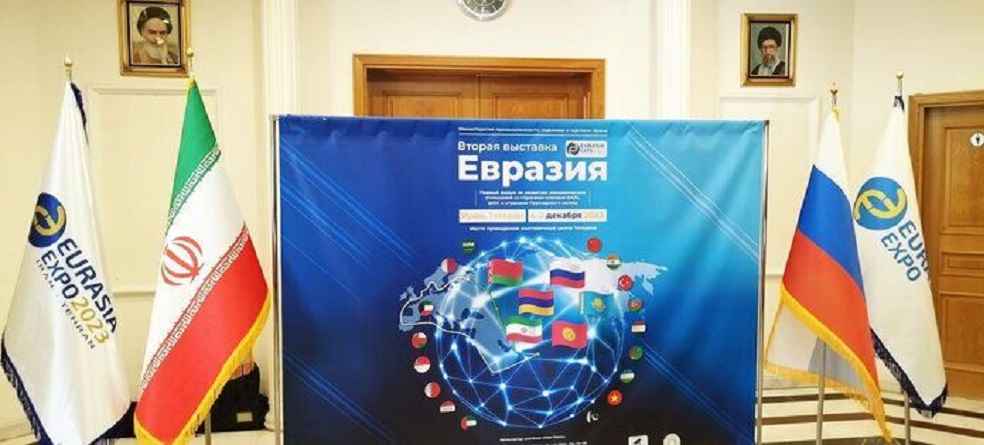
The organization noted that the inaugural session of the Iran–Eurasia Trade-Economic Cooperation Meeting was also planned to be held on the sidelines of the exhibition, making comprehensive planning and a holistic approach essential.
TPO Head Mohammad Ali Dehghan Dehnavi recently highlighted the significance of Iran’s free trade agreement with the Eurasian Economic Union, stating that 87% of goods exchanged between Iran and the bloc’s five member states are now subject to zero tariffs.
He said the agreement has created unprecedented capacity for export growth, noting that Iran’s exports to the Eurasian region rose by 16% during the first eight months of the current year.
Citing research conducted by the Trade Promotion Organization, Dehghan Dehnavi said aligning Iran’s existing export goods with the import needs of Eurasian Union members reveals substantial untapped potential.
He noted that Russia alone represents an estimated $12 billion in potential trade capacity, nearly ten times Iran’s current exports to that market. He added that activating existing production capacities and adapting domestically produced goods for export could significantly expand Iran’s presence in Eurasian markets.
Dehghan Dehnavi also stressed the need to remove non-tariff barriers, particularly in standards and transportation. He said differences in standard systems between Iran and Eurasian countries have created challenges for Iranian producers and that establishing a shared standards framework could unlock further export growth.
On transport connectivity, he said progress has been made on the eastern side of the Caspian Sea, while projects such as the Rasht–Astara railway on the western side are underway. Additional rail routes through Nakhchivan and Armenia are also being considered.
Emphasizing the role of trade promotion, Dehghan Dehnavi said creating platforms for dialogue, negotiation, and contract signing is critical to expanding trade relations, describing exhibitions as one of the most effective tools for this purpose.
He noted that Iran’s private sector, particularly in medical equipment, has successfully expanded exports to Eurasian countries by registering products and meeting regulatory requirements.
He also pointed to the role of customs authorities in implementing the free trade agreement, saying Iran Customs has contributed effectively through joint committee negotiations and by advancing toward electronic information exchange to reduce non-tariff barriers.
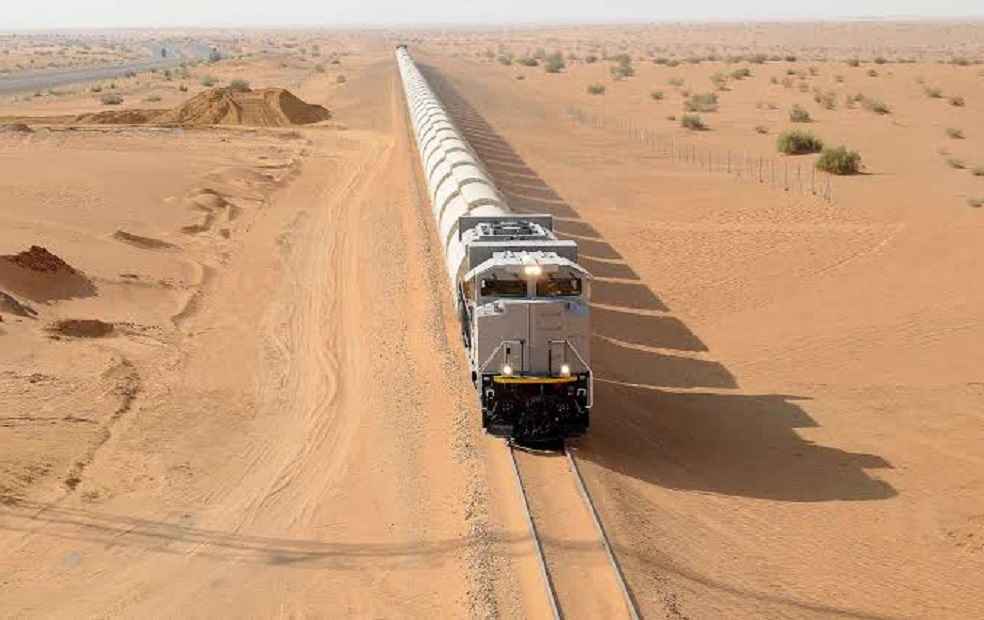
While progress has been made in rail transport through agreements with Eurasian countries and the activation of key routes, he said, road transport continues to face challenges, including long truck waiting times that negatively affect exports and require more decisive action.
In early December, Amir Roshan, deputy head of the TPO, said the 2026 Eurasia International Trade Exhibition has been structured to emphasize regional economic cooperation and ensure high-level participation.
He said hosting costs for official delegations and chambers of commerce from Eurasian Economic Union member states would be covered under approved budgets and existing protocols to encourage broad attendance.
Roshan said the exhibition’s program will include dedicated sections on monetary and financial cooperation, described as a priority area for Eurasian members, as well as discussions on the International North-South Transit Corridor (INSTC), which is expected to improve access to regional, European, and Arab markets via Iran.
Additional sections will address export-related challenges such as logistics and standards, and showcase goods and services with comparative advantages, particularly in energy, healthcare, and other high-value sectors.
IMEX SECTOR | Indonesia’s 40 New Fish Units Obtain Export Approval from China
