


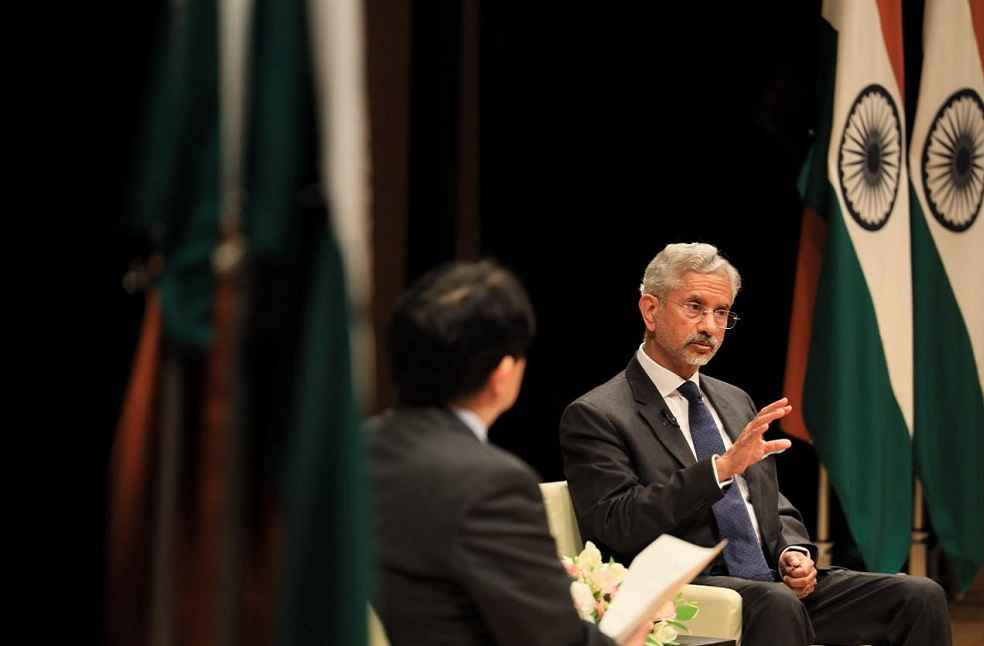
India will continue negotiating new trade deals but only under a firmly ‘people-centric vision,’ External Affairs Minister Dr S Jaishankar said, stressing that global uncertainty and shifting power dynamics require a cautious and strategic approach.
Speaking after receiving an honorary doctorate from the Indian Institute of Management Calcutta, Dr Jaishankar described a world in which long-standing economic assumptions are being rewritten.
He said the United States, traditionally the architect of the modern global system, is now setting “radically new terms of engagement”, often through bilateral arrangements rather than established multilateral regimes, while China “has long played by its own rules and is now doing so even more”.

In this environment, he noted, most countries are hedging rather than choosing sides, leading to a rise in bilateral and regional free-trade agreements. “We are today endeavoring to forge new trade arrangements and promote fresh connectivity initiatives,” he said.
“They reflect our policy priorities and the importance the world attaches to ties with India. As we ascend the global economic hierarchy, the case for them will only get stronger.”
He warned that India must engage with caution. “These exercises have long-term repercussions and therefore need to be embarked upon with great judiciousness. When it comes to trade, we will naturally be guided by our people-centric vision, just as our connectivity plans will be by strategic as well as economic considerations.”
Dr Jaishankar highlighted the fragility of global supply chains, noting that a third of global manufacturing remains concentrated in China. He pointed to energy transitions, sanctions, and blockchain-driven disruption as additional forces reshaping India’s external outlook.
Trade and technology, he said, now sit alongside tourism as the ‘3Ts’ that Indian diplomacy uses to measure success, underscoring a shift toward economic statecraft.
On security, he broadened the scope beyond defence to include energy, food, health, and fertilizer security. India’s ability to quickly secure vaccines during COVID-19, and to obtain alternative energy and fertilizer supplies during the Ukraine conflict, demonstrated that “a responsive foreign policy can indeed deliver for every citizen”.
He added: “In an uncertain world, it is all the more important that we continuously diversify supply sources to guarantee our national needs.”
The remarks come as India advances trade negotiations or implementation with partners including the United States, United Kingdom, Australia, the UAE, and EFTA countries, while remaining outside large blocs such as the Regional Comprehensive Economic Partnership (RCEP).
LOGISTICS INDUSTRY | PM Calls for Faster Green, Digital Shift in Vietnam’s Logistics Sector