



India and the European Union have agreed on what leaders described as the “mother of all” trade deals, creating a vast free trade zone covering nearly two billion people and marking one of the most ambitious economic partnerships ever concluded by both sides.
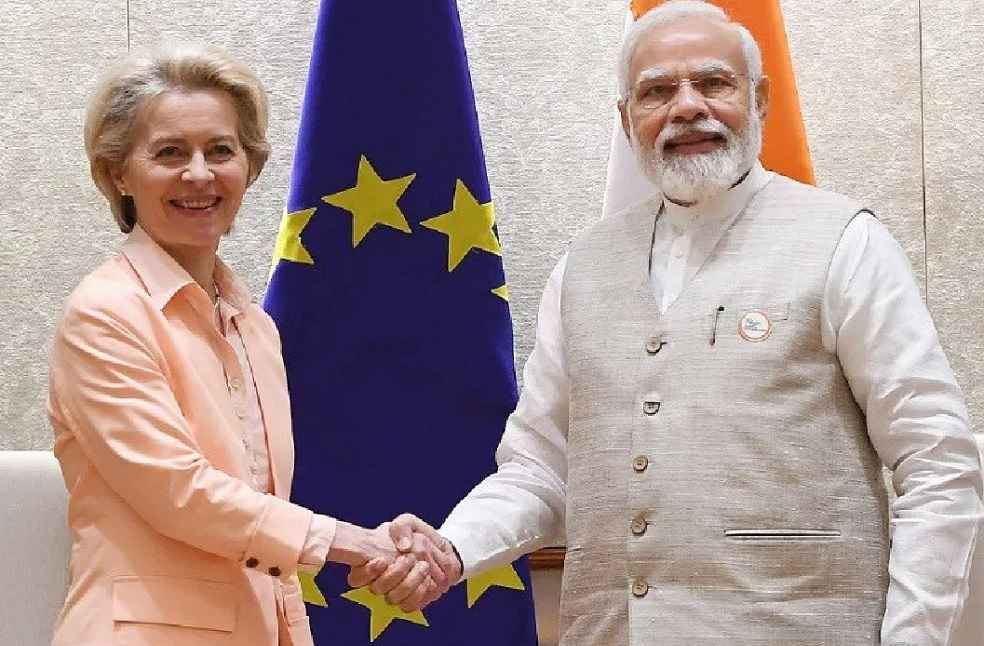
European Commission President Ursula von der Leyen announced the breakthrough during her visit to New Delhi on Tuesday, posting on X that the two parties were “making history” by finalizing an agreement designed to benefit both economies.
Indian Prime Minister Narendra Modi confirmed the deal shortly before meeting von der Leyen and European Council President Antonio Costa, saying the agreement followed almost two decades of intermittent negotiations and would open significant opportunities for India’s 1.4 billion people and millions across the EU.
Modi said the pact would cover roughly 25% of global gross domestic product, with India expected to gain strongly in sectors such as textiles, gems and jewellery, and leather goods.
EU officials described the agreement as the most ambitious trade pact India has ever entered into, reflecting a shared push by Brussels and New Delhi to diversify markets amid U.S. tariff policies and Chinese export controls.
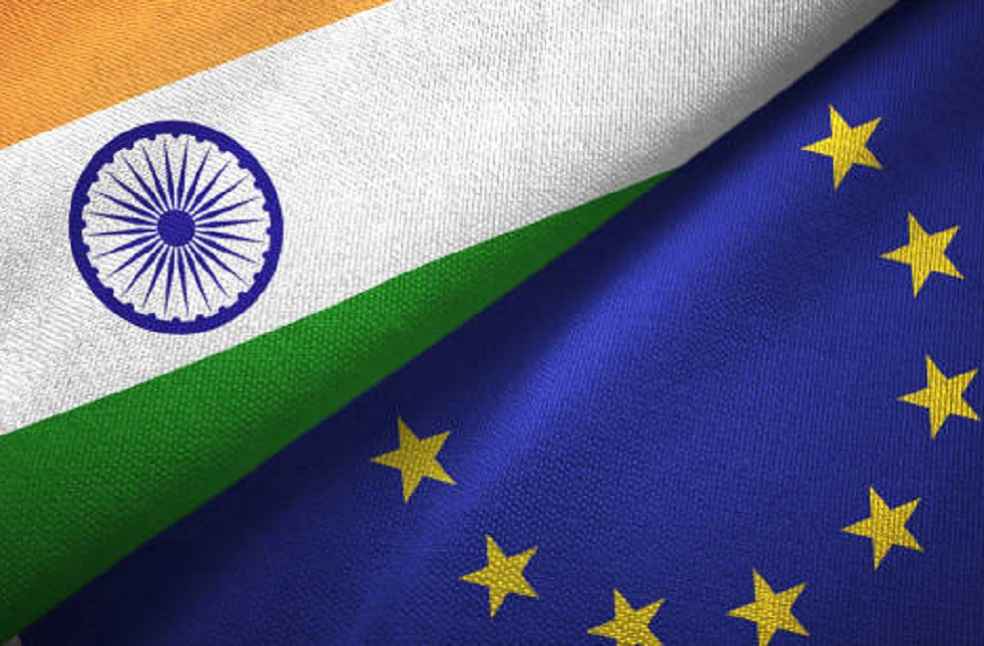
The agreement is set to open India’s traditionally protected market to freer trade with the 27-nation EU, already India’s largest trading partner. The EU views India as a major long-term growth market, with European companies expected to gain a first-mover advantage. India, in turn, sees Europe as an important source of advanced technology and investment.
Formal signing will take place after legal vetting, expected to last five to six months, according to an Indian government official quoted by Reuters. Implementation is anticipated within a year.
The EU expects its exports to India to double by 2032 as a result of the deal. Bilateral trade in goods between India and the EU has already grown by nearly 90% over the past decade, reaching €120 billion in 2024, with an additional €60 billion in services trade, according to EU data.
Under the agreement, tariffs on 96.6% of EU goods exports to India will be eliminated or reduced, saving European exporters up to €4 billion annually in duties. Major product categories benefiting from near-total tariff removal include machinery, chemicals, and pharmaceuticals.
Car tariffs will gradually fall to 10% under a quota of 250,000 vehicles per year, while EU service providers will gain preferential access in sectors such as financial and maritime services. Tariffs on aircraft and spacecraft will be eliminated for almost all products.
Duties on EU wine will be reduced to 20–30%, spirits to 40%, and beer to 50%. Tariffs on fruit juices and processed foods will be removed entirely. Von der Leyen said the agreement grants the EU the highest level of market access ever offered by India to a trade partner, delivering a strong competitive advantage in key industrial and agricultural sectors.
Negotiators resolved several last-minute issues on Monday, including concerns over the impact of the EU’s carbon border tax on steel, sources familiar with the talks told AFP.
Economists see the agreement as strategically significant. Deepanshu Mohan, professor of economics at OP Jindal Global University, said the deal offers “a fresh hope” for both sides, particularly as India seeks to expand goods exports amid high tariffs in the U.S. market.
He noted that many Indian exports come from labor-intensive industries with strong job creation potential, while European firms gain expanded access to a fast-growing economy at a time when several European markets face slower growth.
Mohan added that the timing is notable, coming during strained transatlantic trade relations and ongoing tariff tensions between India and the United States. He said the agreement reflects a shift toward deeper bilateral cooperation at a time when unilateral approaches are increasingly shaping global trade negotiations.
POLICY & LAW | Nigeria to End Fertilizer Imports as it Prepares for Urea Export
