


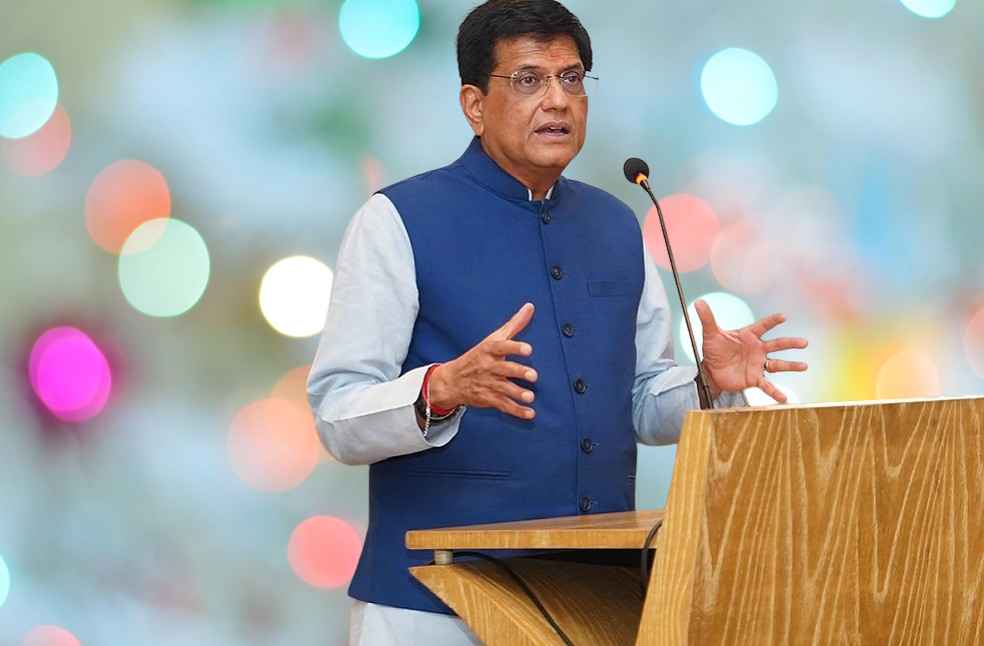
India’s trade minister has said the country will not “bow down” to the United States following Washington’s decision to impose steep new tariffs on Indian exports, vowing instead to focus on new markets.
Speaking at a construction industry event in New Delhi on Friday, Piyush Goyal said India remained open to trade deals but would not compromise its position. “We are always ready if anyone wants to have a free trade agreement with us. But India will neither bow down nor ever appear weak,” he declared. “We will continue to move together and capture new markets.”
The comments came after the U.S. imposed 50% tariffs on a wide range of Indian goods this week, citing New Delhi’s large-scale purchases of Russian oil. Washington has sought to use trade measures to pressure Moscow as the war in Ukraine extends into its fourth year.

Since returning to office, U.S. President Donald Trump has made tariffs a centrepiece of his policy agenda, unsettling global trade relations. The latest move has strained ties with India, which has already denounced the measures as unfair, unjustified, and unreasonable.’
Trade negotiations between the two countries remain stalled, with disagreements over access to agricultural and dairy markets. Trump has pushed for greater entry for U.S. producers, while Prime Minister Narendra Modi has pledged to protect Indian farmers, a crucial voting base.
The U.S. was India’s largest export destination in 2024, accounting for $87.3 billion in shipments. Analysts warn that a 50% duty amounts to a near embargo, putting pressure on smaller exporters. Businesses in sectors such as textiles, seafood, and jewellery have already reported cancellations of U.S. orders, with rivals in Bangladesh and Vietnam stepping in to fill the gap. Industry groups fear the fallout could trigger widespread job losses.

Goyal said the government would announce measures in the coming days to support exporters. “I can say with confidence that India’s exports this year will exceed 2024-25 numbers,” he added.
Meanwhile, in Washington, the U.S Court of Appeals for the Federal Circuit upheld most of a ruling that found Trump had overstepped his authority when imposing blanket tariffs on all trading partners.
The administration had invoked the International Emergency Economic Powers Act, arguing that trade deficits posed a ‘national emergency.’ The appeals court rejected that reasoning, though it allowed the tariffs to remain in effect until October 14 while the government appeals to the Supreme Court.
GLOBAL ROUNDUP | Japan to Invest 10 Trillion Yen in India Over Next Decade