


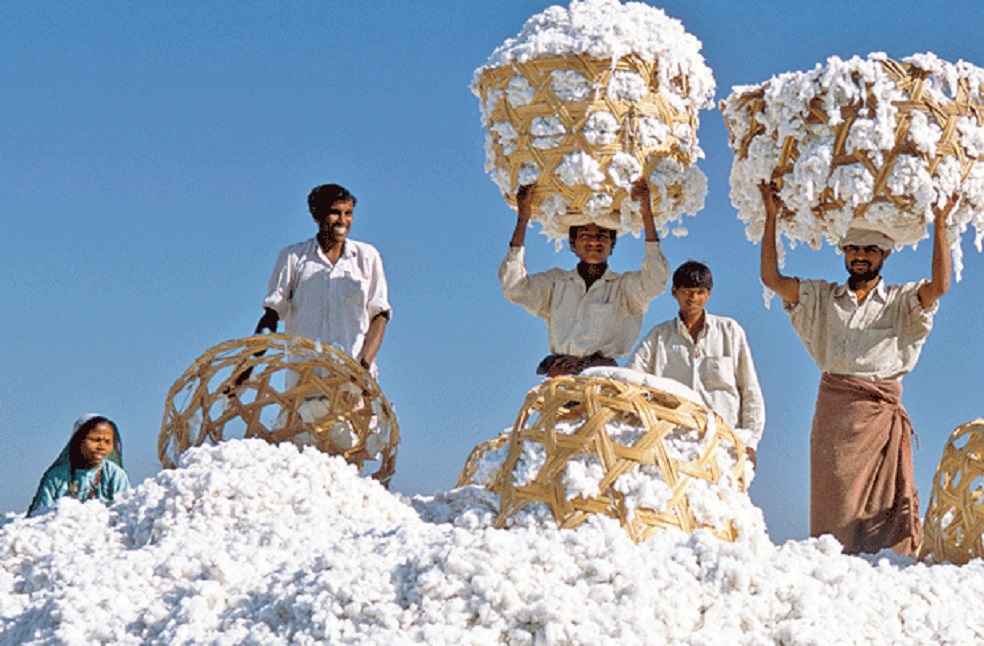
India recorded a sharp rise in cotton imports during the December quarter, with nearly three million bales brought in as traders and mills rushed to benefit from a temporary zero-duty import window that closed at the end of the year.
The surge is expected to push the country toward a second consecutive year of record cotton imports in FY26, driven by lower domestic output, weather-affected crop quality, and higher local prices.
Industry estimates suggest total imports in the October–September cotton marketing season could reach between five and six million bales, depending on government policy decisions, U.S. tariff developments, and progress on trade agreements with the European Union and the United Kingdom.
The import spike followed the government’s decision to suspend the 11% import duty on cotton from August 19 to December 31, responding to long-standing requests from textile and yarn producers who had warned of supply shortages.

Cotton cultivation has been declining for two consecutive years, with acreage falling 3.5% in kharif 2025 compared with the previous year, after a sharper 9.5% drop in kharif 2024 from 2023 levels.
Industry leaders said large buyers moved quickly to lock in supplies. Atul Ganatra, chairman of Radhalakshmi Group and former president of the Cotton Association of India, said the country’s top 10 mills have already covered their cotton requirements through imports until May or June.
He added that another two to three million bales are likely to be imported in the remaining months of the marketing year.
Quality concerns have also played a major role in boosting imports. Adverse weather has damaged a significant portion of the domestic crop, affecting fibre strength and appearance.
K. Selvaraju, secretary general of the Southern India Mills Association, said at least half of this season’s cotton production has seen quality deterioration, making it unsuitable for certain export-oriented textile products.
Export commitments require contamination-free and extra-long staple cotton, grades that India largely sources from overseas.
Ganatra said mills plan to import around 300,000 bales of Australian cotton between June and August, while at least 500,000 bales of duty-free extra-long staple cotton are expected to arrive by September to meet routine demand. He added that more than 500,000 bales could also be imported from African countries, which attract lower duties.
Under current rules, cotton imported by processing mills for captive consumption attracts only a 4% duty, and large mills can secure lower effective import costs when domestic prices remain above international levels, further encouraging overseas purchases.
Meanwhile, the state-run Cotton Corporation of India is holding more than 20% of this year’s crop through procurement at the minimum support price, which has also limited the availability of free-market supplies and contributed to firm domestic prices.
With domestic production under pressure and quality concerns persisting, industry participants expect imports to remain elevated unless there is a significant policy shift or improvement in the next crop cycle.
FASHION INDUSTRY | Vietnam PM Urges May 10 to Become Global Fashion Group