

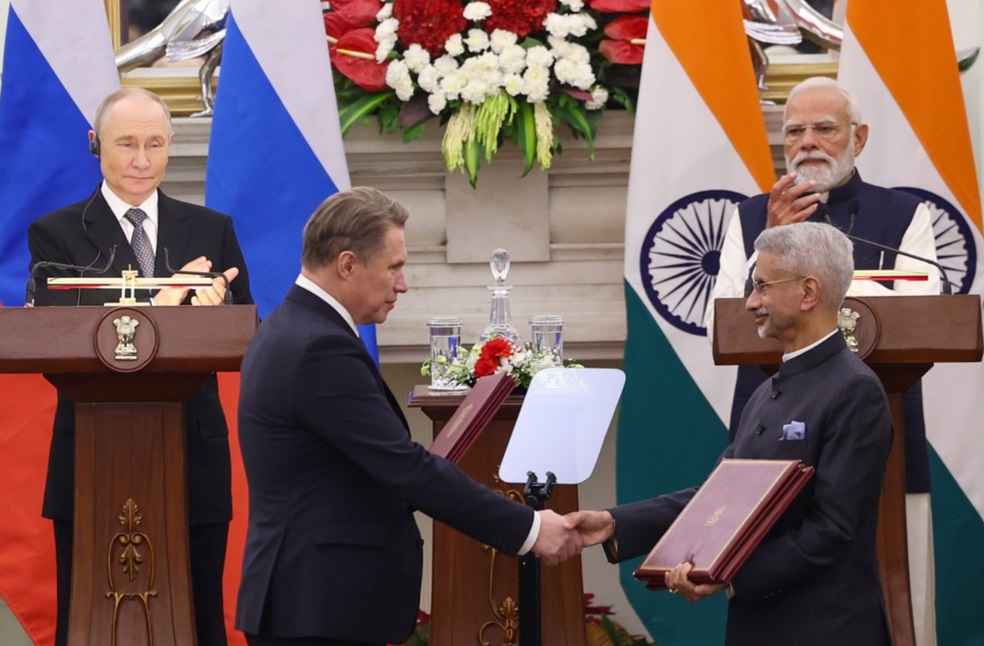
India and Russia on Friday agreed to a joint ‘Program for Economic Cooperation’ through 2030, aiming to reach $100 billion in bilateral trade by boosting Indian exports to Moscow by easing non-tariff barriers and regulatory obstacles.
Russian President Vladimir Putin was on a visit to India to attend the 23rd India-Russia Annual Summit and hold talks with Indian Prime Minister Narendra Modi. On Friday, he stated that Moscow and New Delhi are working to raise bilateral trade to $100 billion, noting that trade between the two nations has reached record levels.
“Both sides emphasized that addressing tariff and non-tariff trade barriers, removing bottlenecks in logistics, promoting connectivity, ensuring smooth payment mechanisms, finding mutually acceptable solutions for issues of insurance and reinsurance and regular interaction between the businesses of the two countries are among the key elements for timely achievement of the revised bilateral trade target of $100 billion by 2030,” a joint statement read.

The two countries signed agreements on labor mobility, enabling Russian construction, engineering, and IT industries to recruit semi-skilled and skilled Indian workers. Additional accords covered fertilizer supply, training Indian seafarers for polar waters, and collaboration in shipbuilding. They also discussed plans to finalize a second site in India for a Russia-supported nuclear power plant.
Both leaders emphasized the need to swiftly conclude the India–Eurasian Economic Union free-trade agreement and a bilateral investment treaty. They further underscored the importance of connectivity initiatives such as the International North-South Transport Corridor, the Northern Sea Route, and the Chennai–Vladivostok maritime link.
The summit took place amid Washington’s punitive tariffs on India and its sanctions regime, as noted in the joint communiqué.
While highlighting defense cooperation as a ‘pillar’ of India-Russia relations, in the communiqué issued after the summit, the leaders placed strong emphasis on expanding trade, increasing Indian exports, enhancing industrial collaboration, and developing new technology and investment partnerships, particularly in advanced high-tech industries.
On energy cooperation, Putin affirmed that Russia remains a ‘reliable supplier’ of oil, gas, and coal and is prepared to maintain uninterrupted deliveries to support India’s rapidly growing economy. He stressed the need to move beyond trade and foster collaboration in broader areas such as industry and artificial intelligence (AI).
Putin also encouraged Indian businesses to develop new products and strengthen technology partnerships, particularly in AI, digitalization, robotics, pharmaceuticals, and advanced medical equipment. The two countries agreed to continue enhancing bilateral settlement systems using their national currencies and to work toward interoperability between national payment systems, financial messaging platforms, and central bank digital currencies.
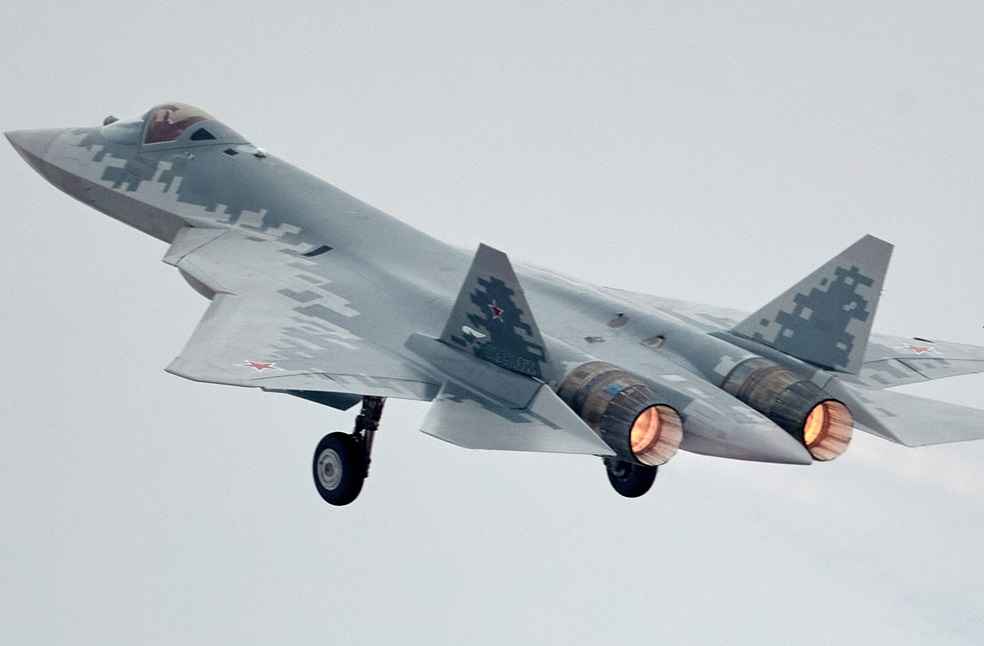
Modi highlighted collaboration in ‘critical minerals’ to ensure diversified global supply chains and announced a free 30-day e-Tourist Visa and a 30-day group visa for Russian travelers. Though no new defense agreements were declared, the joint statement reaffirmed Russia’s support for India’s push for defense self-reliance, noting a shift in the partnership toward joint R&D, co-development, and co-production of advanced military technologies. Ahead of the summit, Russia had proposed joint production of Su-57 fighter jets.
Since the outbreak of the Russia‑Ukraine conflict in 2022, India’s economic engagement with Moscow has grown significantly. Bilateral trade climbed to $68 billion in the last financial year, driven mainly by oil imports, while India has been pushing for expanded access for its exports to Russia.
TRADE WORLD | Nigeria Launches New Framework to Boost Agricultural Trade