

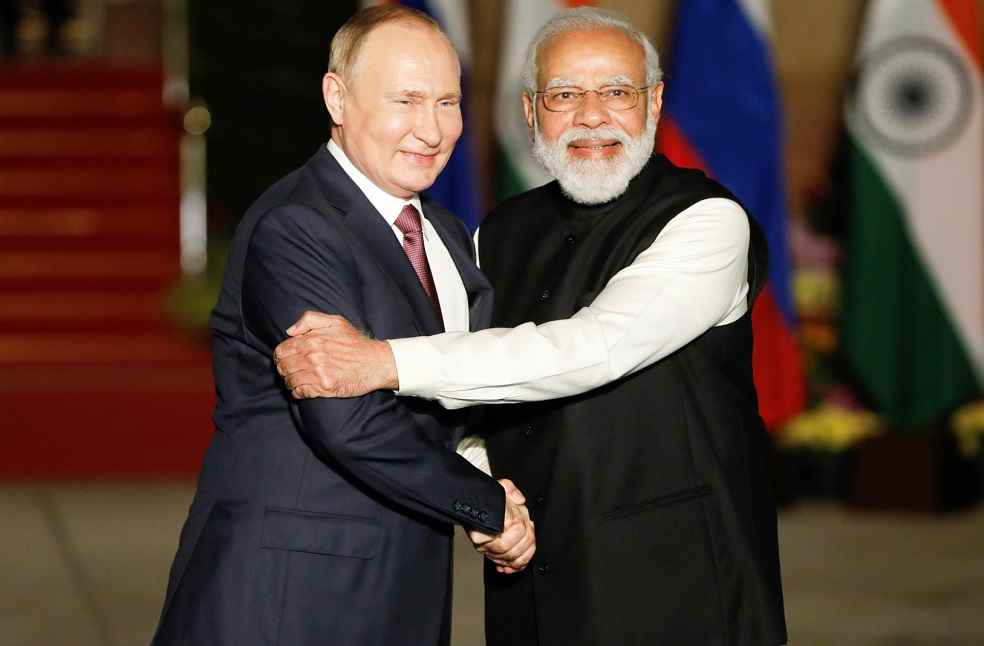
India and Russia have announced a joint ambition to boost bilateral trade turnover to $100 billion, building on existing cooperation and charting new strategic pathways during the St. Petersburg International Economic Forum (SPIEF), held from 18 to 21 June.
The high-level forum brought together key government figures and private sector leaders to explore enhanced partnerships in logistics, pharmaceuticals, finance, education, digital transformation, and scientific innovation. Notably, discussions highlighted the creation of sustainable logistics corridors and joint ventures in advanced technologies as key pillars of future collaboration.
Sergey Cheremin, Minister of the Moscow Government and Head of the Department for External Economic and International Relations, underscored that trade between Moscow and India surpassed $38 billion in 2024 and expressed confidence in sustained growth through diversified investment and innovation.
“The dialogue showed that both sides are committed not only to trade expansion but also to strategic cooperation across high-tech, logistics, and interregional domains,” Cheremin said during the session.
The forum took place amid evolving global trade dynamics and continued geopolitical tensions between Russia and the West. Russian President Vladimir Putin used the occasion to reaffirm Russia’s commitment to the World Trade Organisation (WTO) and a rules-based global trade order. He criticized recent trade measures by some Western countries as ‘unilateral and politicized’ and urged emerging economies to protect multilateral frameworks like the WTO to ensure global market stability.
“We firmly oppose all forms of trade wars, restrictions, and so on,” Putin told international media on 19 June. “We advocate for a just world order and for respecting the rules of the World Trade Organisation, rather than changing them month to month based on shifting political agendas.”

Alongside strengthening India-Russia ties, the Russian President also highlighted broader engagement across Asia, calling the region a “natural sphere of cooperation” and noting accelerating trade and development projects with Southeast Asian nations. He described Russia’s deepening economic ties with China as “historic,” with collaborative projects now valued at over $200 billion.
Within the India-Russia framework, both sides discussed leveraging the International North-South Transport Corridor (INSTC) to reduce transit times and enhance supply chain resilience across South Asia, Russia, and Central Asia. Other key initiatives include joint pharmaceutical manufacturing, healthcare innovation, digital security partnerships, educational exchanges, green energy ventures, and AI-based industrial development.
Forum participants emphasized that the partnership is moving beyond symbolic gestures toward implementable action plans. Structured roadmaps are expected to guide future cooperation amid ongoing global economic disruptions.
In his broader remarks at SPIEF, President Putin also pushed back against Western military narratives, describing claims of a Russian threat to NATO as exaggerated and politically motivated.
“There is no threat coming from Russia, none at all,” Putin stated. “This myth is being used to justify defence spending at 3.5 or even 5% of GDP,” arguing that such rhetoric serves to boost military budgets while deflecting attention from internal challenges within Europe.
IMEX SECTOR | India Sets Mango Export Record from Mumbai to Global Cities